
Last updated November 2, 2026
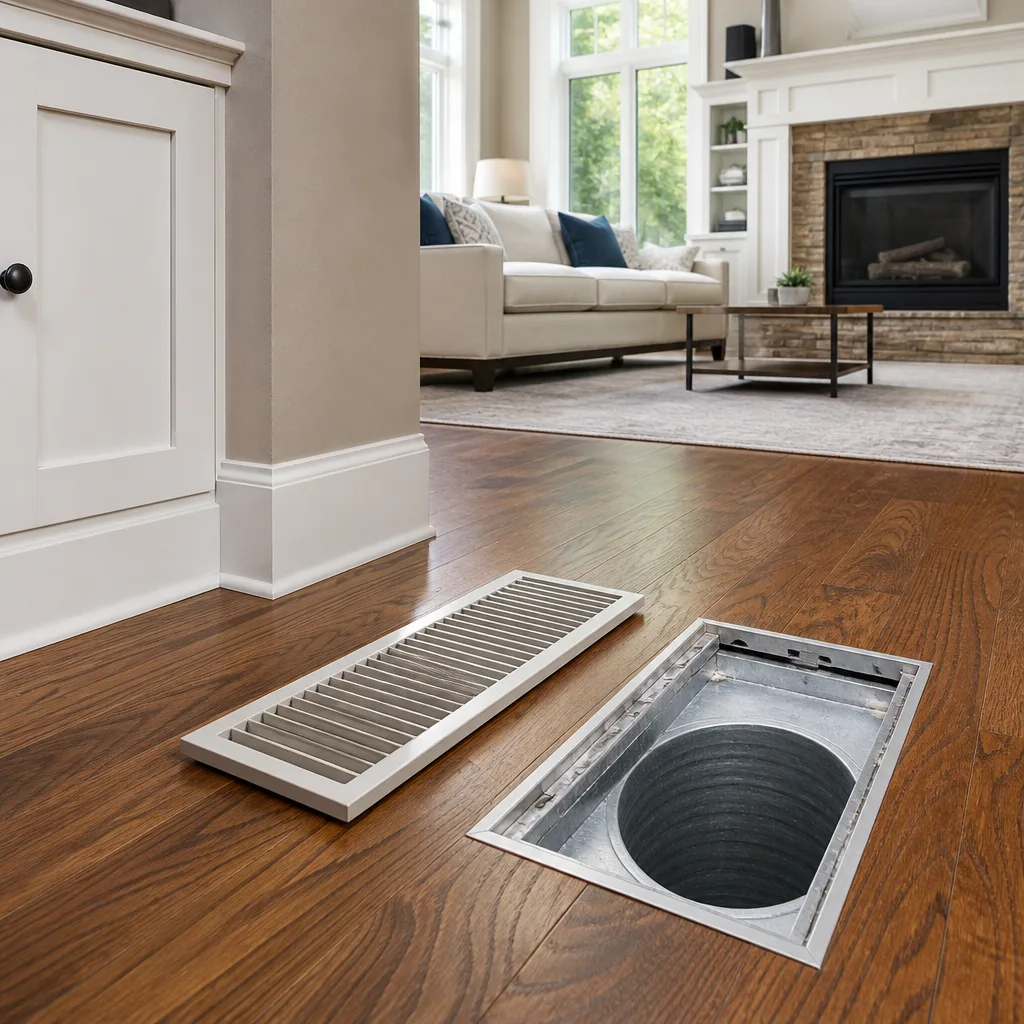 Whole-home duct cleaning
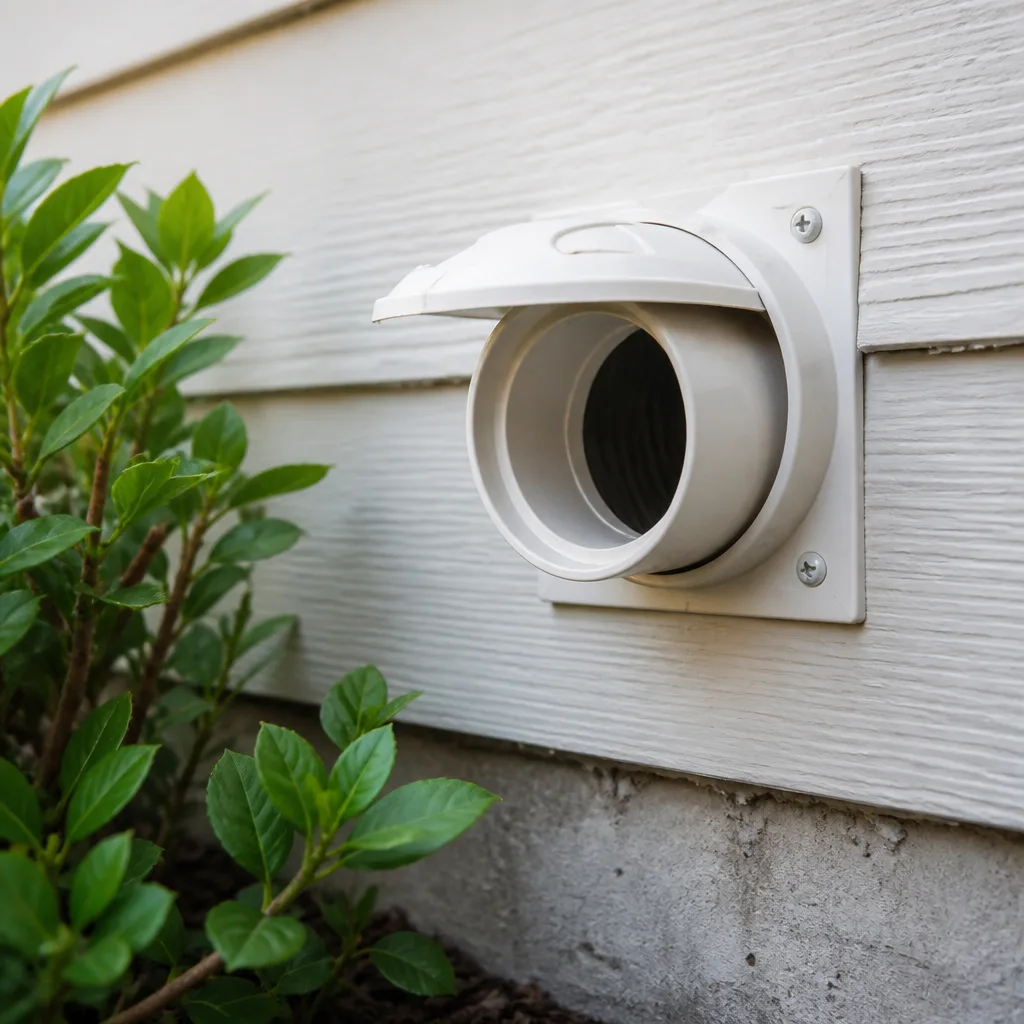 Dryer vent cleaning
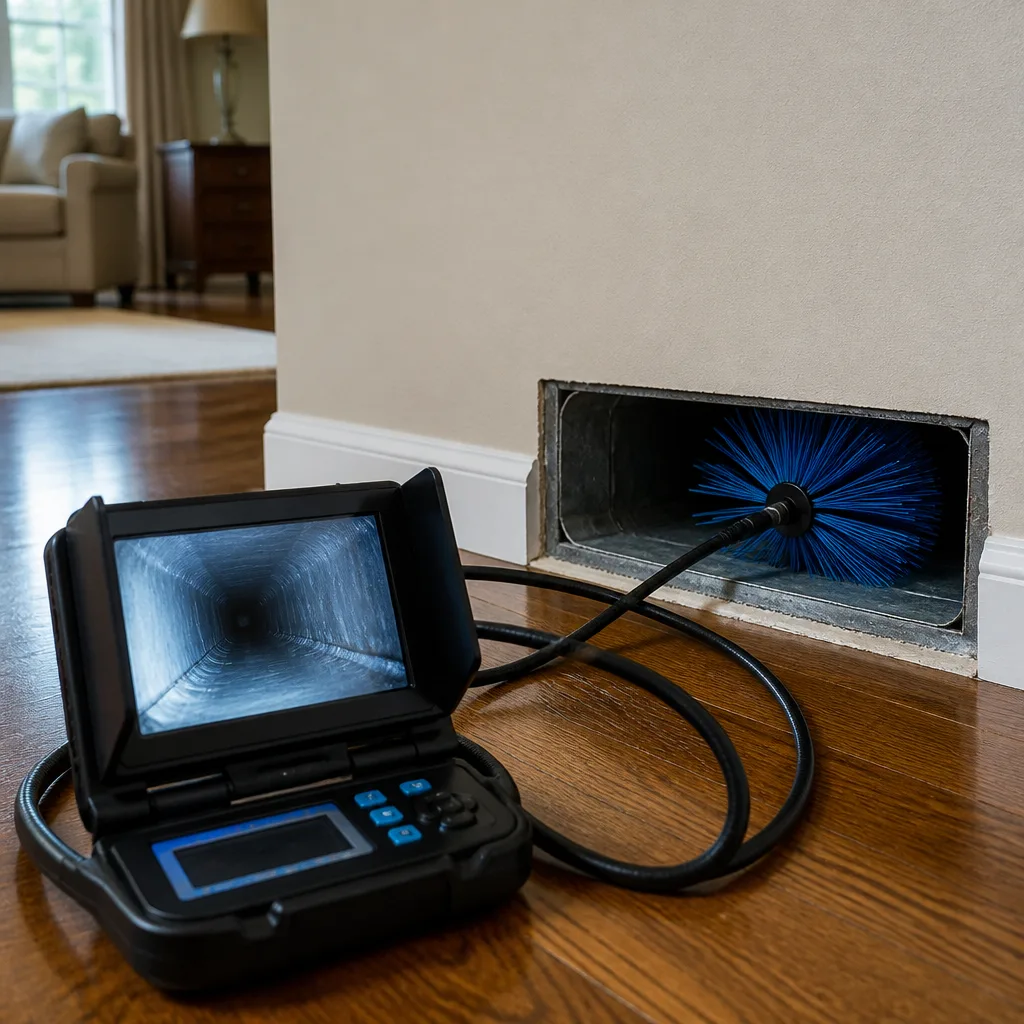 Camera inspection
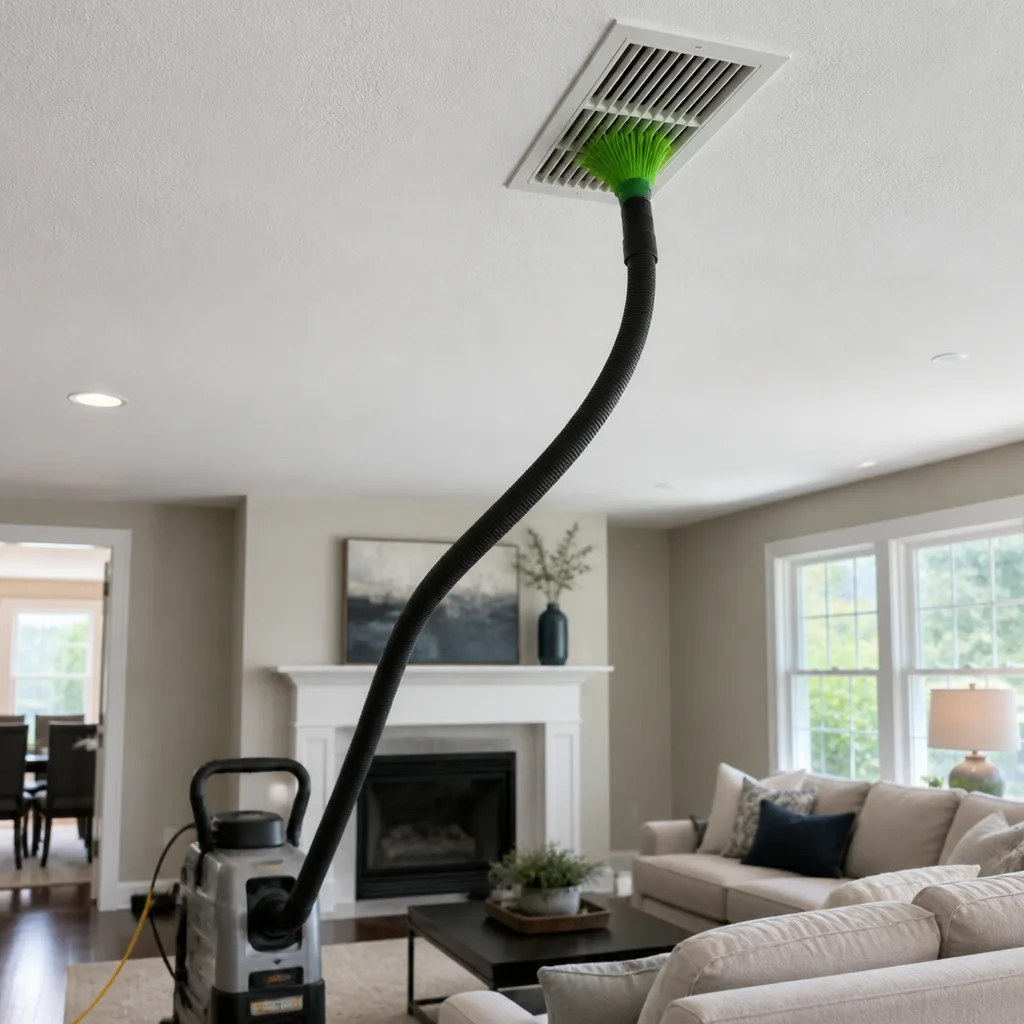 Sanitizing & deodorizing
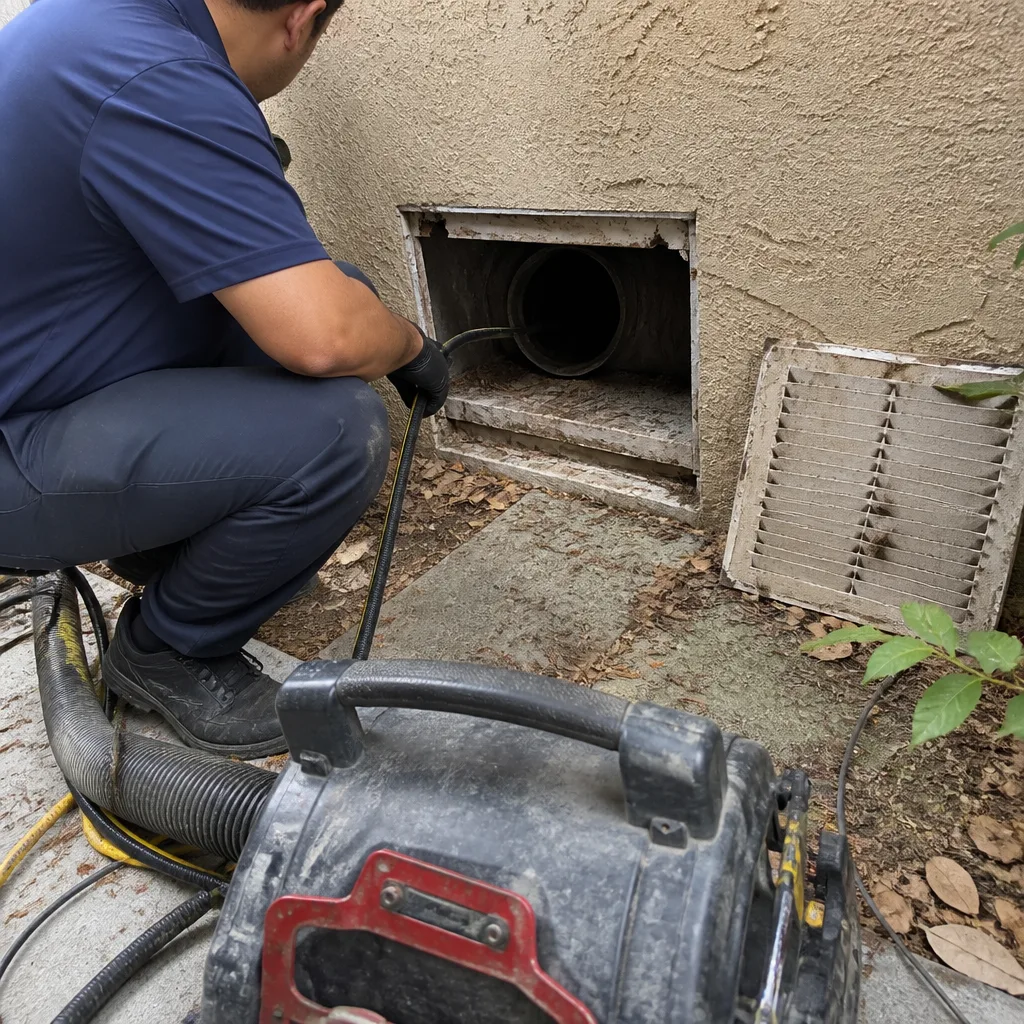
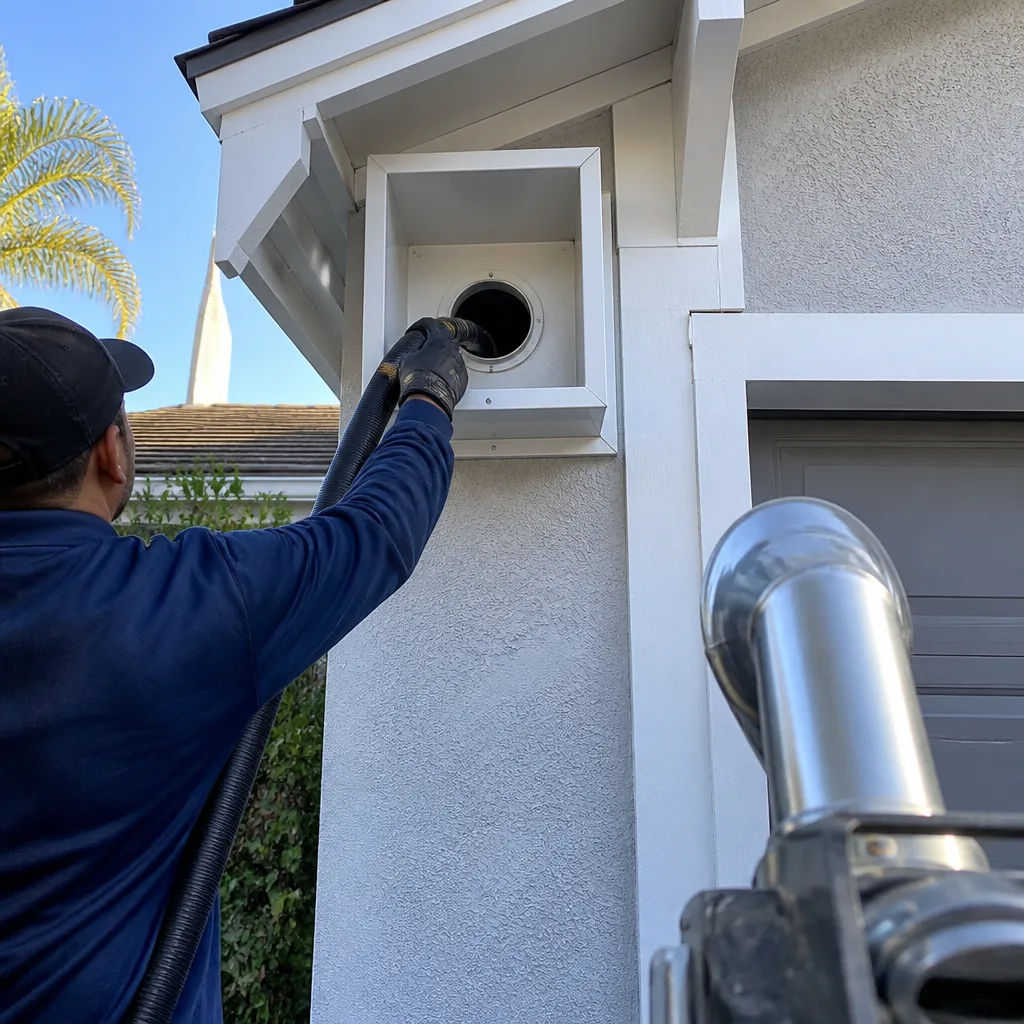
Whole-system duct and dryer vent check with before-and-after photos - you see exactly what came out of your vents
That "$99 whole-house special" is a bait ad - the real number appears once they are in your hallway, or the "clean" is a shop-vac at the register. We photograph the inside of your ducts before and after instead.
Air Duct Cleaning Maintenance Checklist for Anaheim Homeowners
If your return-air filter is loading up in under three weeks on MERV-8 media, the problem isn’t outdoor air. It’s the ductwork upstream. Anaheim’s dry climate, combined with Santa Ana wind events and the fine dust that settles across Orange County, creates a perfect environment for duct contamination that most homeowners don’t notice until the system starts underperforming. This checklist gives you a diagnostic framework to track what’s happening inside your ducts between professional cleanings. You’ll learn which visual cues signal duct-wall buildup versus simple filter bypass, how to use filter-change data as a proxy for duct condition, and when a contractor-level assessment is actually warranted. By the time you finish this guide, you’ll have a working maintenance protocol specific to Anaheim’s climate and housing stock.
Styles & brands we work with
- Whole-home duct cleaning
- Dryer vent cleaning
- Camera inspection
- Sanitizing & deodorizing
Quick Answer
An effective air duct cleaning maintenance checklist for Anaheim homeowners has three tiers: monthly visual checks of grille color and filter loading rate, quarterly observations of airflow balance and startup odors, and annual contractor-level tasks like professional cleaning or inspection. The best checklists use observable evidence like filter debris color and post-Santa Ana dust patterns rather than calendar intervals alone, because Anaheim’s wind events and dry-air dust make contamination rates highly variable across neighborhoods.
Table of Contents
- The Tiered Checklist Structure: Why Monthly, Quarterly, and Annual Tasks Each Matter
- Visual Cues at Return Grilles and Supply Registers: Reading Buildup vs. Bypass
- Filter-Change Data as a Proxy Metric: Loading Rate and Debris Color
- Logging Santa Ana Events and Post-Construction Activity as Maintenance Triggers
- What to Document Before and After a Professional Cleaning
- Quarterly Airflow Balance and Startup Odor Observations
- Dryer Vent Maintenance: A Separate But Connected Checklist Item
- Common Mistakes to Avoid
- When to Call a Professional
- Frequently Asked Questions
- The Bottom Line
The Tiered Checklist Structure: Why Monthly, Quarterly, and Annual Tasks Each Matter
Most maintenance checklists treat duct cleaning as a single annual task. That’s a mistake. The duct system is constantly accumulating material at different rates depending on the season, household activity, and events like windstorms or renovations. A tiered approach matches the level of attention to the rate of change you can actually observe. Here’s the framework we use when advising Anaheim homeowners.
Monthly Visual Checks
These are five-minute observations that require no tools and no disassembly. Walk the house and look at every return-air grille and supply register. What you’re checking: visible dust accumulation on grille faces, any discoloration at the edges of the register, and whether airflow feels noticeably weaker than the month before. In Anaheim homes with stucco exteriors and older duct runs, return grilles in hallways often accumulate a fine tan-to-gray film that indicates airborne dust is being pulled through the return path. Note the color and thickness. If you wipe a grille clean and it’s visibly dusty again within two weeks, your filter loading data becomes more important.
Quarterly System Observations
Every three months, spend ten minutes running the system and paying attention to what it’s doing. Turn the HVAC fan on manually (most thermostats have a fan setting) and walk to each supply register. Listen for rattling, whistling, or changes in airflow noise. Pay attention to the first thirty seconds of operation: a musty or stale odor on startup often indicates microbial growth or accumulated organic material in the duct lining, especially in Anaheim homes where condensation forms on cool duct surfaces during humid coastal mornings. Check whether any rooms feel warmer or cooler than others, which can signal a disconnected or partially collapsed length of flex duct.
Annual Contractor-Level Tasks
Once a year, the system merits a professional look, whether that’s a full cleaning or a visual inspection with a camera. Anaheim’s housing stock includes a lot of 1970s and 1980s construction where duct systems are original, meaning thirty to fifty years of accumulated material. A contractor-level assessment should include checking duct-wall buildup thickness, identifying any disconnected joints, verifying that flex duct hasn’t been crushed or kinked by attic storage or pest activity, and assessing whether the return-air path is adequately sized. This is also the time to have dryer vents inspected, which we’ll cover below.
Visual Cues at Return Grilles and Supply Registers: Reading Buildup vs. Bypass
One of the most common misunderstandings we encounter is the difference between duct-wall buildup and filter bypass. They look similar to a homeowner but require very different responses. Understanding the distinction is what turns this checklist into a diagnostic tool rather than a vague reminder.
Duct-wall buildup is what accumulates on the interior surfaces of the duct runs themselves. It’s typically a gray-tan, fibrous material that includes dust, skin cells, pet dander, and fine particulate from Anaheim’s dry, dusty environment. When buildup is significant, you’ll see it at the supply registers the furthest from the air handler first, because material that’s been disturbed and re-entrained tends to settle where airflow velocity drops. The cue at the register is a darkening or staining around the edge of the register face, not just loose dust on the surface.
Filter bypass, by contrast, happens when air is getting around the filter instead of through it. This occurs when the filter doesn’t seat properly in its slot, when the filter frame is bent, or when the return-air chase has gaps that allow unfiltered air to be pulled in. The visual cue is different: you’ll see clean streaking or a distinct clean zone on the filter face where air has channeled through, while the rest of the filter loads normally. Supply registers will show loose, sandy debris rather than the fibrous, compacted material that indicates duct-wall buildup.
Here’s a simple field test any Anaheim homeowner can run:
- Remove the filter and look at its face. If you see a clean streak or channel, you have a bypass problem at the filter slot or return chase. Fix the seating before spending money on duct cleaning.
- Wipe a supply register with a white cloth. If the material is loose and sandy, it’s likely bypassed outdoor dust. If it’s greasy, fibrous, or sticky, it’s duct-wall accumulation being re-entrained.
- Check the return grille in the hallway or main living area. Heavy, uniform loading across the entire grille face suggests the duct system is pulling significant dust from the house; that dust is either settling in the ducts or being caught by the filter.
We see filter bypass frequently in Anaheim homes where homeowners have retrofitted higher-MERV filters into filter slots that were designed for basic fiberglass media. The higher resistance of a MERV-11 or MERV-13 filter increases the pressure differential, which makes air more likely to find a path around the filter rather than through it. If you’re running a Honeywell or Aprilaire media filter that’s designed for higher MERV ratings, make sure the filter housing is sealed and the filter seats firmly. Loose seating defeats the purpose of the upgrade.
Filter-Change Data as a Proxy Metric: Loading Rate and Debris Color
Your filter is a diagnostic instrument. Every time you change it, you’re collecting data about what’s moving through your home’s air system. Most homeowners throw the old filter away without looking at it. That’s a wasted opportunity. Here’s how to read what your filter is telling you.
Loading rate is the simplest metric: how long does it take for the filter to go from clean to visibly loaded? In Anaheim, with average occupancy and no unusual dust sources, a standard one-inch MERV-8 filter should last roughly 30 to 60 days before showing significant loading. If you’re seeing heavy loading in under three weeks, you have an upstream contamination source. The most common sources in Anaheim homes are leaky return ducts pulling attic or crawlspace air, pet dander from multiple animals, or duct-wall buildup that’s being re-entrained and re-deposited on the filter.
Debris color tells you about composition. A filter that loads with light tan or gray fibrous material is capturing normal household dust: skin cells, fabric fibers, paper dust. That’s expected. A filter that loads with dark, greasy, or sooty material is capturing combustion byproducts or degraded duct liner. In Anaheim, homes near freeways or major arterials like the 5, 91, or 57 will show darker particulate loading from vehicle emissions and brake dust. A filter that shows reddish or orange-brown material may be capturing rust from an aging duct system or from the air handler cabinet itself.
Track this data on your phone or in a simple notebook. Each filter change, record the date, the filter grade, the loading description, and any notable events since the last change (windstorms, construction, new pets, illness in the household). Over a year, this becomes a trend line that tells you whether your duct system is stable, improving, or degrading. If loading rate accelerates without an obvious cause, that’s a signal to schedule a professional inspection. Air duct cleaning in Anaheim addresses the upstream problem, while filter data tells you when that upstream problem is growing.
Logging Santa Ana Events and Post-Construction Activity as Maintenance Triggers
Anaheim is uniquely positioned in the Santa Ana wind corridor. When those hot, dry winds blow in from the deserts through the Cajon Pass and Santa Ana Canyon, they carry fine dust, pollen, and particulate that settles across northern Orange County. The winds are powerful enough to force dust through window seals, door sweeps, and attic vents. Homes in Anaheim Hills and the eastern stretches of the city get the brunt of this, but the entire city sees elevated dust levels during Santa Ana events, which occur most frequently from September through January.
Each significant Santa Ana event should be logged as a maintenance trigger. After a wind event, run your HVAC fan for fifteen minutes, then pull the filter and check loading. More importantly, listen for any new rattling or airflow changes. Santa Ana winds can shift duct runs that have loose hangers, and they can drive dust into return-air cavities that aren’t perfectly sealed. If your filter loads noticeably faster after a wind event, that’s an indication that your return-air path is pulling in outdoor dust, which means it’s also pulling in dust when there’s no wind event at all, just more slowly.
Post-construction activity is the other major trigger that’s easy to overlook. If you’ve had drywall work, flooring installation, kitchen or bath remodeling, or even just significant furniture moving in an Anaheim home, the dust load in your ducts has changed. Construction dust is denser and more abrasive than household dust. It settles into duct-wall buildup faster and it’s harder to remove once it’s compacted. If you’ve had any construction work done, log it and consider a professional cleaning once the project is complete, especially if the HVAC system ran during the work. Our Duct Cleaning Anaheim home page covers the full scope of what a professional cleaning addresses after construction activity.
What to Document Before and After a Professional Cleaning
Professional duct cleaning changes the baseline. If you don’t document the before and after, you lose the ability to track future accumulation rates against a known clean condition. Here’s the documentation protocol we recommend to every Anaheim homeowner before we start a job.
Before cleaning, photograph the following:
- Each return grille and supply register, close enough to show dust accumulation at the edges. This gives you a visual baseline for how quickly new accumulation appears.
- The filter exactly as it sits in the slot, showing the loading pattern. Note the date and filter grade on the photo.
- Any visible duct runs in the attic or crawlspace, especially flex duct that looks kinked, crushed, or sagging.
Record the feel of airflow at each register. This doesn’t require instruments. Place your hand at each supply register and rate the flow on a simple scale of one to five. Note any registers that feel weak compared to the rest. After cleaning, repeat this exercise. A properly cleaned duct system should show more uniform airflow across all registers. If one register was weak before and remains weak after, the problem is more likely a duct configuration issue or a damper position than contamination. That’s where air duct repair in Anaheim comes in: cleaning reveals the damage, and repair fixes what cleaning can’t address.
Document the filter grade you’re using. If you’re running a basic fiberglass filter, your ducts will accumulate material faster than if you’re running a MERV-8 or higher pleated filter. This matters for interpreting your loading-rate data. We work with homeowners who run Honeywell media cabinets and Aprilaire filtration systems, and the accumulation rates are meaningfully different. Your filter grade is part of your baseline.
Quarterly Airflow Balance and Startup Odor Observations
Airflow balance is one of the most reliable indicators of duct system health, and it’s something any homeowner can observe without specialized tools. In a properly functioning system, each supply register should deliver airflow that feels roughly proportional to the room size. A bedroom should feel similar to another bedroom of the same size. When balance is off, the causes are usually mechanical: a disconnected flex duct joint, a crushed section of duct, a damper that’s drifted closed, or a return-air restriction that’s starving the system.
Here’s a quarterly airflow balance checklist:
- Set the HVAC fan to run continuously (fan only, no heating or cooling).
- Walk to each supply register and hold your hand six inches from the face. Rate the flow on a one-to-five scale.
- Compare rooms of similar size. If one bedroom is a two while another is a four, note it.
- Listen at each register for whistling, which indicates an airflow restriction somewhere upstream.
- Check the return grille in the main hallway or living area. Is it pulling air strongly? A weak return pull often means the return duct is undersized or partially blocked.
Startup odor is a separate observation with different implications. When the fan first starts, air that’s been sitting in the ducts begins to move. If you notice a stale, musty, or sour odor in the first thirty seconds that fades as the system runs, that’s material inside the ducts that’s releasing volatile compounds when airflow resumes. In Anaheim’s climate, the most common cause is accumulated dust and organic material that’s absorbed moisture during humid morning hours (especially in June and July when the marine layer reaches inland) and then dried out during the hot afternoon. This cycle of wetting and drying binds the material to the duct walls and makes it harder to remove with suction alone. Professional cleaning with mechanical agitation, which is what Rotobrush rotary-brush and Nikro negative-pressure systems provide, is needed to remove this type of bound material. For help diagnosing issues yourself first, see our Air Duct Cleaning Troubleshooting: Common Problems and How to Fix Them.
Dryer Vent Maintenance: A Separate But Connected Checklist Item
Dryer vents are technically separate from the HVAC duct system, but they belong on every Anaheim homeowner’s checklist because the consequences of neglect are severe. The U.S. Fire Administration links clogged dryer vents to thousands of house fires every year, and lint accumulation is the leading cause of dryer-related fires. This is a fire-prevention task, not an air-quality preference.
Add these dryer vent checks to your quarterly routine:
- Verify that the exterior vent flap opens fully when the dryer is running and closes when it’s off. A partially opening flap indicates a lint obstruction.
- Check the exterior termination point for visible lint accumulation around the flap or on the ground below.
- Time the dry cycle on a full load of towels. If drying time has gradually increased over several months, the vent is likely restricted.
- Look for any signs of moisture or lint in the laundry room itself, which can indicate a disconnected vent run inside the wall or ceiling.
Anaheim homes with upstairs laundry rooms and long vent runs are especially prone to lint accumulation because the vent pipe has more linear feet to collect material and more bends where lint can catch. We treat dryer vent cleaning in Anaheim as a fire-safety service, which is why it’s a separate checklist line item from HVAC duct cleaning. The cleaning method and equipment are different, and the annual frequency recommendation from the USFA is driven by fire-prevention data, not by air-quality concerns.
Common Mistakes to Avoid
- Replacing the filter more often instead of addressing the source. If you’re changing filters every two weeks to keep up with loading, you’re treating a symptom. The contamination is coming from upstream, and no filter grade will outwork a leaky return duct or a heavily loaded duct system.
- Assuming a dusty house means the ducts are dirty. Dust on furniture and horizontal surfaces is often the result of household activity, especially in Anaheim homes with pets and open windows during the mild months. Check your filter data and register visuals before concluding the ducts need cleaning.
- Using a filter with too high a MERV rating in an unsealed filter slot. Higher-MERV filters create more resistance, which increases bypass around the filter. Air that bypasses the filter is completely unfiltered, which is worse than running a lower-MERV filter that actually seals.
- Cleaning only the supply side during a professional service. The return side is where the majority of air enters the system, and it’s where the greatest contamination accumulates. A proper cleaning addresses both supply and return runs. If a contractor quotes a price without specifying both sides, ask why.
- Ignoring weak airflow in one room because it’s “always been like that.” Weak airflow has a cause, and in most cases that cause is identifiable and fixable. Flex duct that’s been crushed by attic storage, a disconnected joint, or a closed damper are all common in Anaheim homes and none of them fix themselves.
- Skipping the dryer vent because the dryer still works. A dryer that’s taking 50 minutes to dry a load is working, but the vent is telling you it’s heading toward a problem. Lint fires don’t announce themselves. The vent is a fire-prevention item, not a convenience item.
- Not documenting the after-cleaning condition. If you don’t record what the system looks like and feels like after a professional cleaning, you can’t tell whether your ducts are re-contaminating quickly or staying stable. The whole point of this checklist is having a baseline.
When to Call a Professional
Some checklist findings are for information; others are for action. Call a professional when you observe any of the following: filter loading that accelerates noticeably without a corresponding household change, persistent startup odor that doesn’t fade after a minute of operation, visible mold or moisture staining at any register or grille, airflow from a supply register that’s dropped to barely perceptible, or dryer cycles that now take more than twice as long as they did six months ago. If you’ve had construction work done, if you’ve moved into a new home with no documentation of previous cleaning, or if your home sustained water intrusion from Anaheim’s winter rains, a professional assessment is warranted. Learn about Air Duct Cleaning Permits, Codes & Inspections in CA: What You Need to Know before scheduling. Duct Cleaning Anaheim offers free estimates in Anaheim. Call (866) 596-8314 and we’ll walk through the checklist findings with you before recommending what’s actually needed.
Frequently Asked Questions
In Anaheim’s dry, dusty climate with periodic Santa Ana wind events, most homes benefit from professional Air Duct Cleaning services every 2 to 4 years. Homes with pets, recent construction, or occupants with allergies or asthma often need cleaning more frequently. Use your filter-loading rate and register observations to determine your own schedule rather than following a fixed calendar interval.
Air duct cleaning in Anaheim typically costs between $350 and $750 for a complete system on a standard single-family home, depending on square footage, number of registers, and accessibility of the duct runs. Our pricing is a single flat rate per system agreed before work starts, so the number you’re quoted is the number you pay. Call (866) 596-8314 for a free estimate on your home.
Cheaper quotes generally reflect different equipment and different scope. A service using a portable consumer-grade vacuum is doing suction-only cleaning, which leaves bound material on duct walls. Professional systems like Rotobrush rotary-brush and Nikro negative-pressure equipment mechanically agitate and extract debris. A cheap price for suction-only work on half the system isn’t a better deal; it’s a different, less effective service.
Documentation is the answer. Request before-and-after photos of the duct interior from the contractor. Reputable companies using camera-equipped equipment can show you the duct walls before and after. You should also feel more uniform airflow at your supply registers after cleaning, and your filter should load more slowly in the weeks following. If a contractor can’t show you what was done, that’s a signal to ask harder questions.
Yes. Construction dust from drywall, flooring, and demolition is denser and more abrasive than household dust, and if your HVAC system ran during the work, that dust was pulled through the return path and deposited in the ducts. Cleaning after renovations gives you a clean baseline and removes material that would otherwise be re-entrained into your living space for months afterward.
Yes. The U.S. Fire Administration links clogged dryer vents to thousands of house fires annually, and the vent can be dangerously restricted while the dryer still functions. The warning sign is longer drying times: when a full load of towels takes more than 45 to 50 minutes, the vent is likely compromised. Dryer vent cleaning is a fire-prevention service, not just a maintenance chore.
The Bottom Line
A maintenance checklist is only useful if it’s built on observable evidence rather than calendar intervals. Monthly grille observations, quarterly airflow checks, and filter-change data give you a continuous read on duct condition in Anaheim’s variable climate. Santa Ana events, construction projects, and water intrusion are triggers that reset your timeline. Document everything before and after professional cleanings so you have a baseline for future comparison. And when the checklist points to action, use a contractor with the equipment to do the job right: professional-grade agitation and negative-pressure containment, not a shop vac and a coupon. For more guides & resources, visit our blog. Ten minutes of monthly observation beats twenty years of accumulated contamination.
Written by the team at Duct Cleaning Anaheim, serving Anaheim since 2011.
See the difference
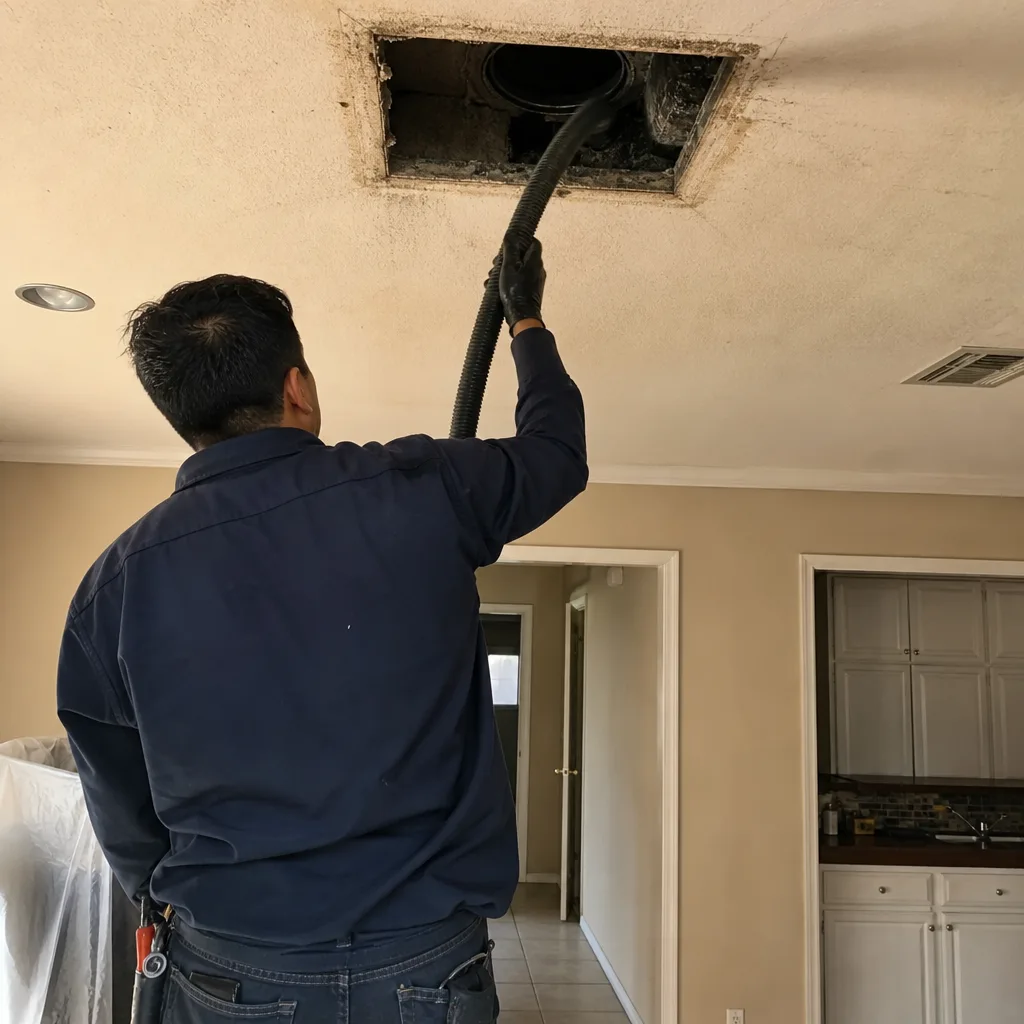 Before
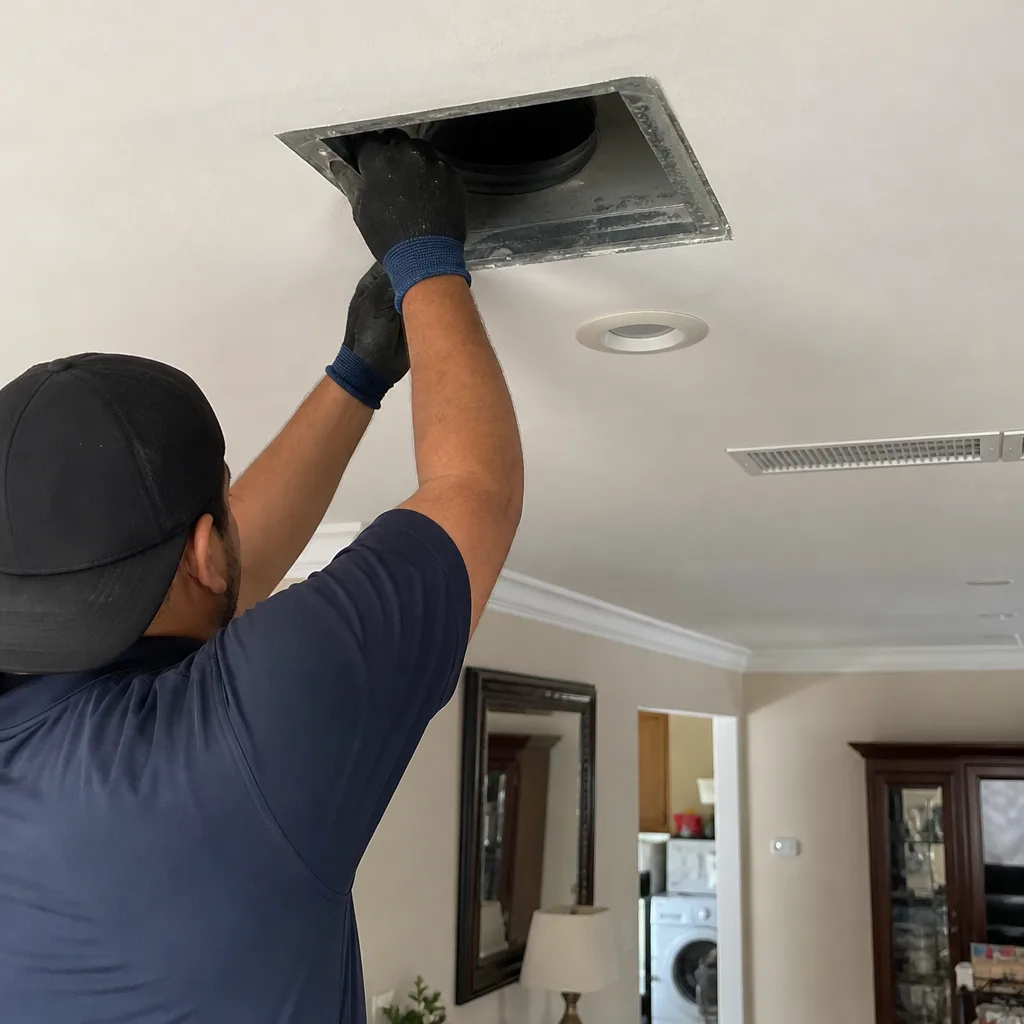 After
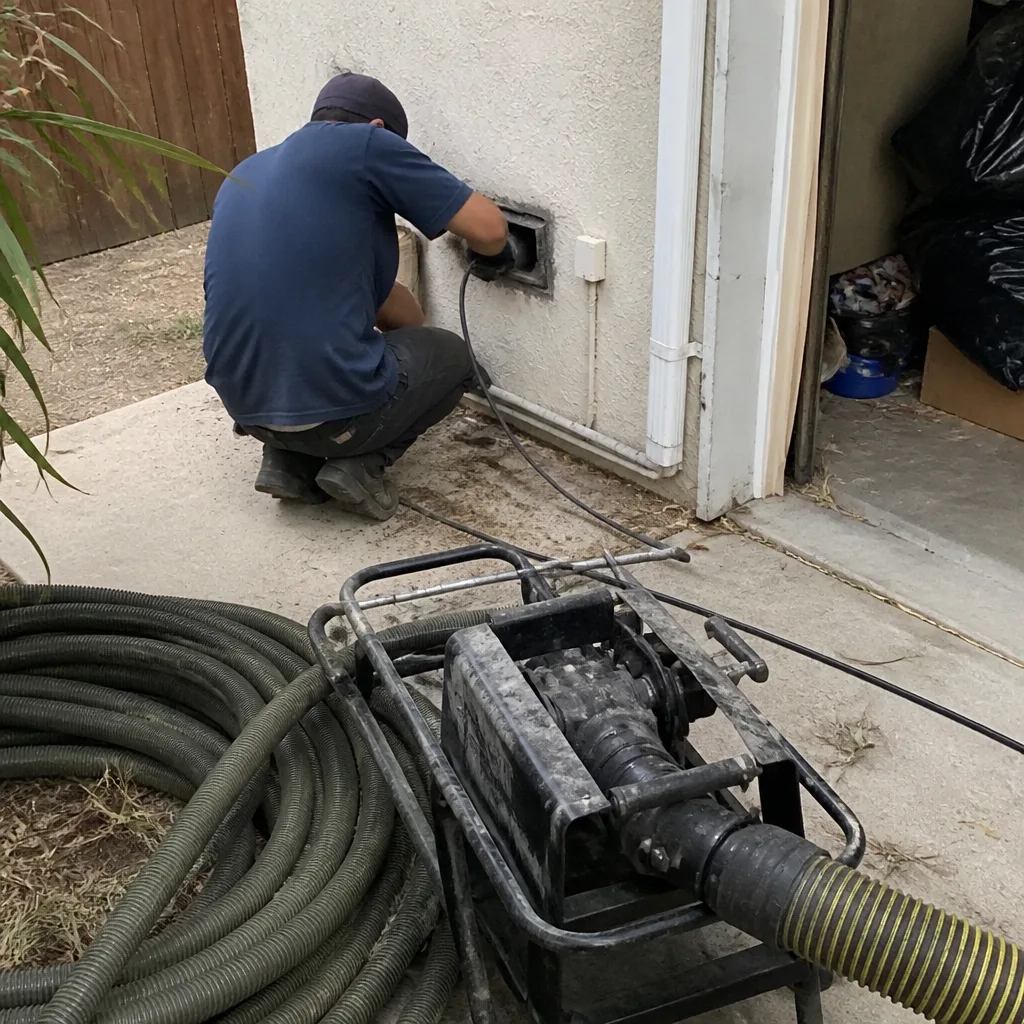 Before
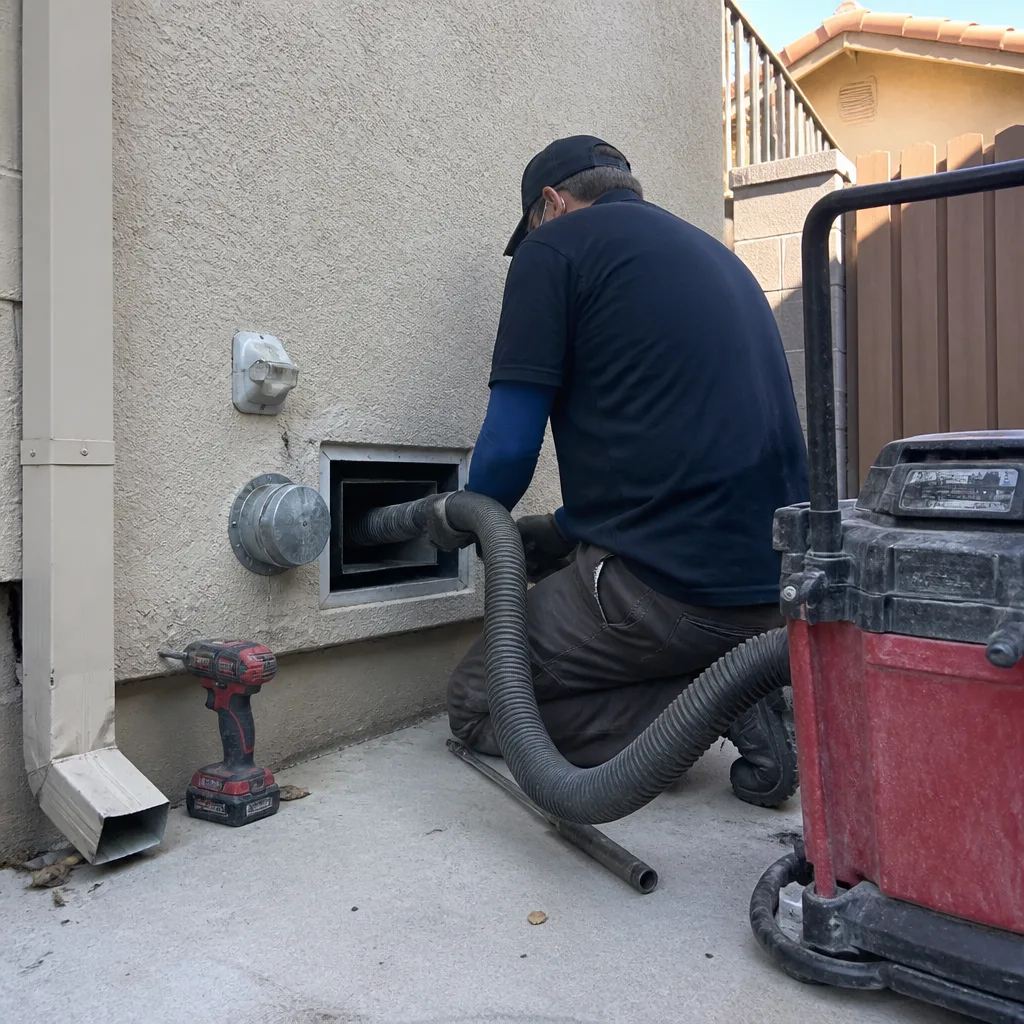 After
 Before
 After