
Last updated November 2, 2026
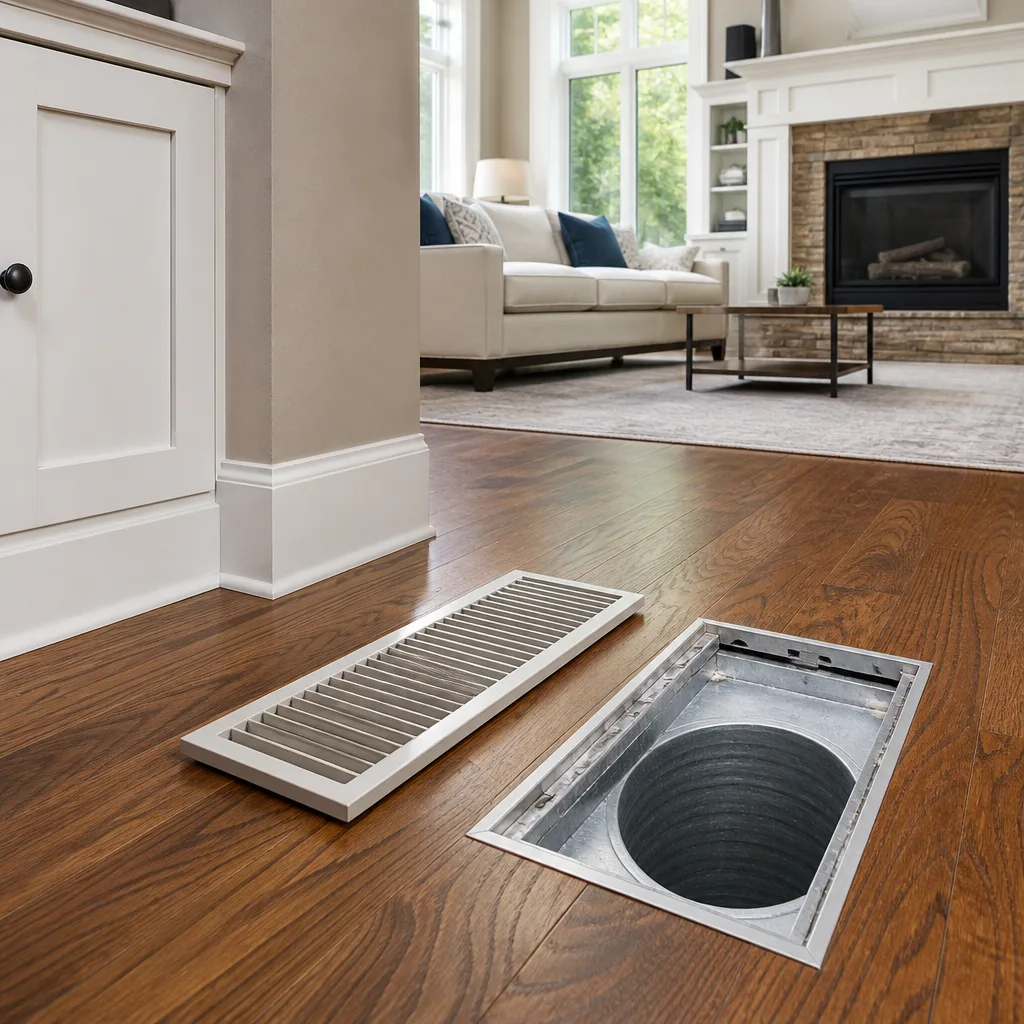 Whole-home duct cleaning
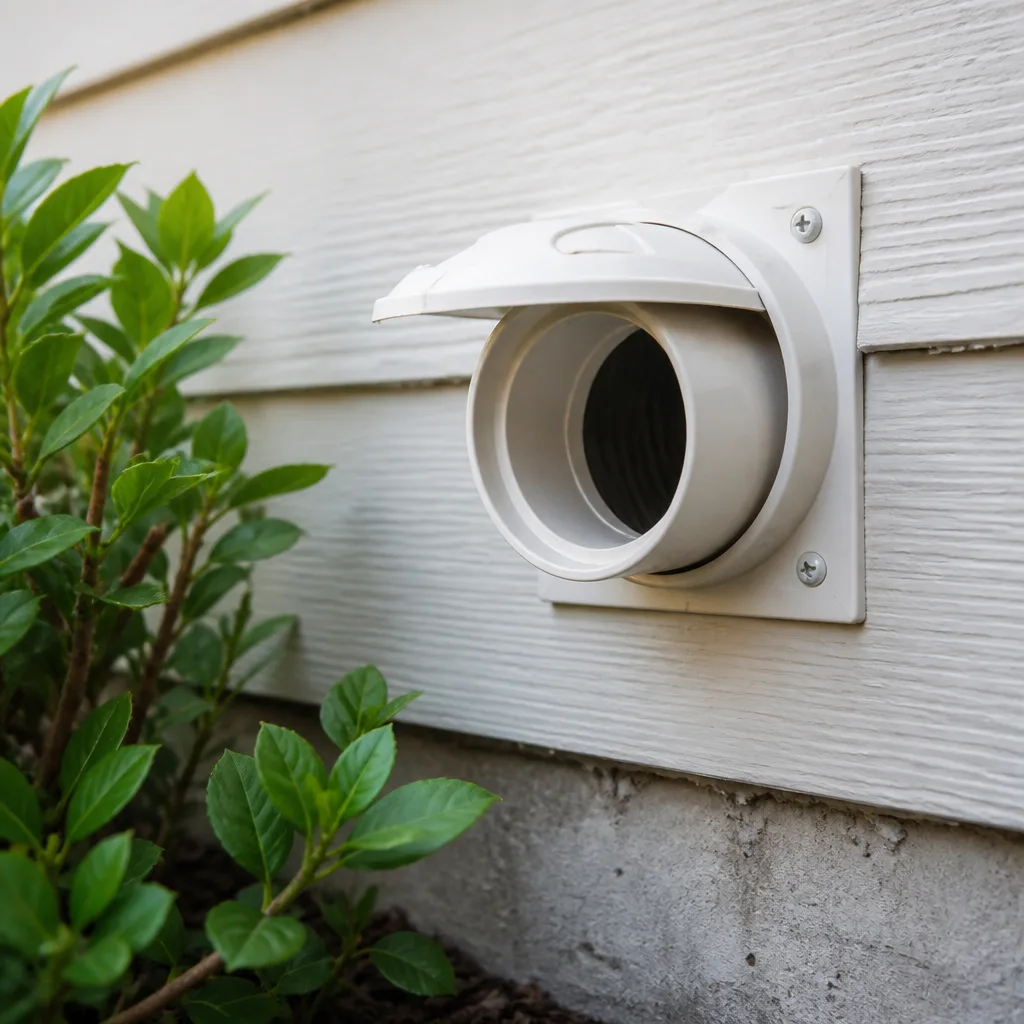 Dryer vent cleaning
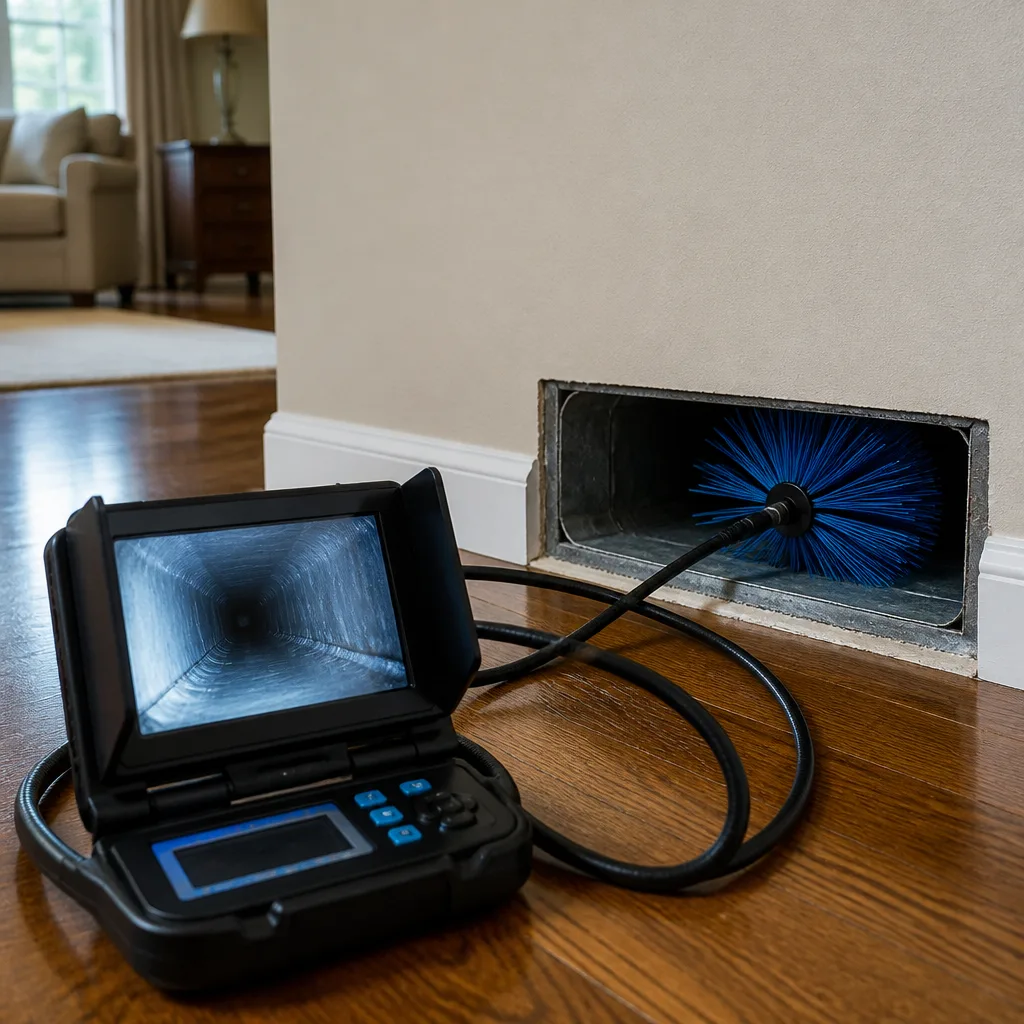 Camera inspection
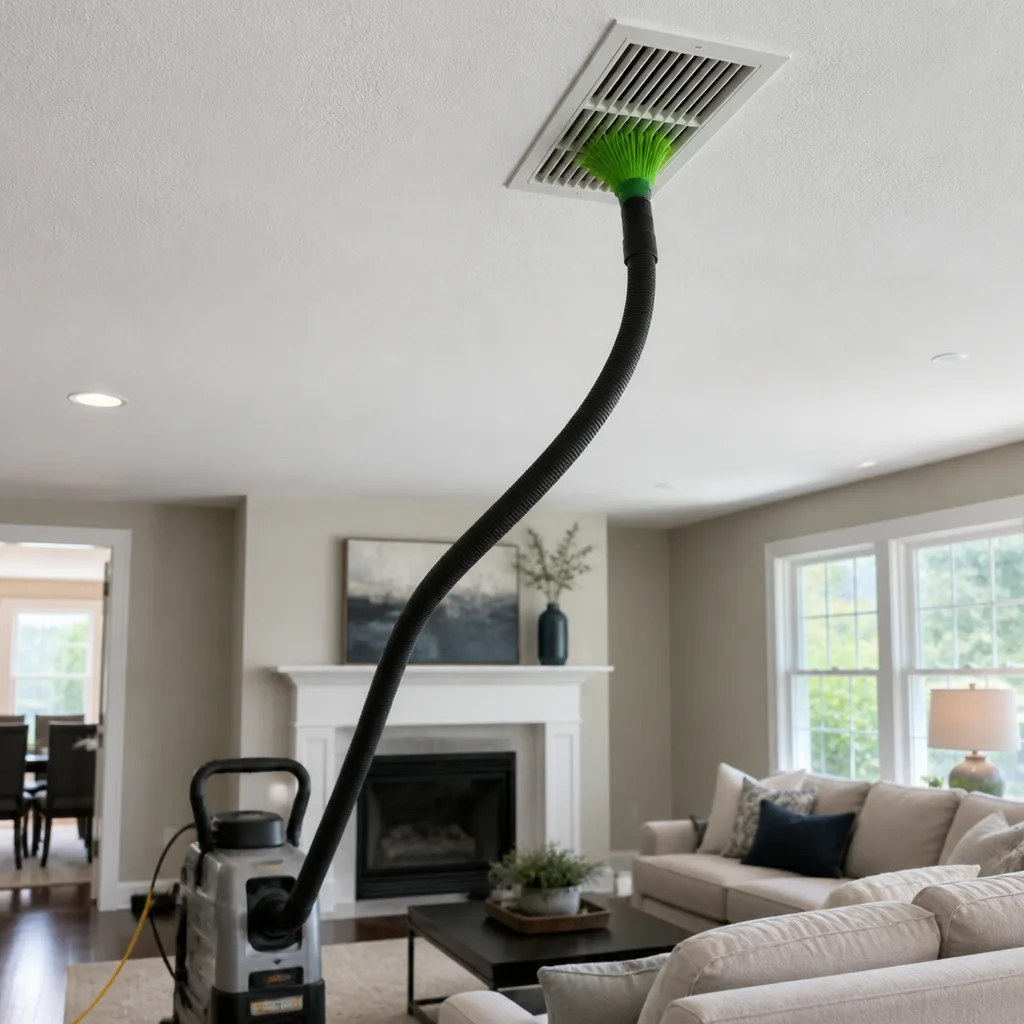 Sanitizing & deodorizing
Whole-system duct and dryer vent check with before-and-after photos - you see exactly what came out of your vents
That "$99 whole-house special" is a bait ad - the real number appears once they are in your hallway, or the "clean" is a shop-vac at the register. We photograph the inside of your ducts before and after instead.
Air Duct Cleaning Permits, Codes & Inspections in CA: What You Need to Know
That crumbling gray tape on your 1974 Anaheim home’s duct connections almost certainly contains chrysotile asbestos – and a duct cleaning crew that disturbs it without a Cal/OSHA-compliant asbestos contractor on site has just created a hazmat situation, not solved an air-quality problem. Most homeowners assume air duct cleaning is a straightforward maintenance call. In California, it rarely is. This guide breaks down exactly what requires a permit, what triggers a code violation, what license classifications actually matter, and what you need to verify before anyone touches your ductwork in Anaheim. You’ll learn where the legal line sits between cleaning, repair, and remediation – and why that line protects you far more than it inconveniences you.
Quick Answer
Air duct cleaning itself does not require a permit in California and falls under routine maintenance, not construction. However, any duct repair, replacement, sealing, or rerouting requires a mechanical permit from the City of Anaheim Building Division, and disturbing pre-1980 duct insulation or tape triggers California asbestos notification requirements under CCR Title 8 Section 1529. A C-20 HVAC license is required for duct repair work; an unlicensed cleaning crew cannot legally perform repairs in California.
Styles & brands we work with
- Whole-home duct cleaning
- Dryer vent cleaning
- Camera inspection
- Sanitizing & deodorizing
Table of Contents
- Why Duct Cleaning Is Maintenance (No Permit) – and Where the Line Moves
- California Asbestos Rules: CCR Title 8 Section 1529 and Pre-1980 Ductwork
- CSLB License Classifications: C-20 HVAC vs. What a Cleaning Crew Can Do
- Mold in Duct Systems: When Cleaning Crosses Into Remediation
- Anaheim-Specific Permit Process for Duct Work
- How to Verify a Contractor’s CSLB License, Workers’ Comp, and Insurance
- What Inspectors Look For After Duct Repair in Anaheim
Why Duct Cleaning Is Maintenance (No Permit) – and Where the Line Moves
Air duct cleaning is classified as maintenance, not construction, under California building codes. The California Mechanical Code and the City of Anaheim’s adopted code treat cleaning as a non-structural activity that doesn’t alter the building envelope or modify mechanical systems. You won’t find a permit application for “duct cleaning” at the Anaheim Building Division because one doesn’t exist. We field calls regularly from Anaheim homeowners who’ve been told by a contractor that a permit is “required” for cleaning – that’s a red flag, not a service upgrade.
But the classification shifts the moment the work moves beyond cleaning. Here’s the practical boundary:
- No permit needed: Rotary-brush cleaning of duct interiors, negative-pressure debris extraction, register and grille cleaning, blower fan cleaning, drain pan cleaning.
- Permit required: Duct replacement, duct sealing that involves mastic application to joints, duct rerouting, adding or removing supply/return branches, replacing plenums, installing dampers, repairing disconnected or collapsed sections that require mechanical fastening or new materials.
The distinction matters because in Anaheim, unpermitted duct modification creates a disclosure problem when you sell. The City of Anaheim requires sellers to disclose unpermitted work, and buyers increasingly request permit history during escrow. A cleaning job that quietly becomes a duct repair changes your property’s paperwork trail. If the company doing the work can’t pull a permit, the repair shouldn’t happen.
In our experience running professional-grade rotary-brush and negative-pressure systems through Anaheim homes, the moment a cleaning reveals a damaged section – and it often does in homes built before 1985 – the job legally pauses until the repair scope is defined. That’s not bureaucracy. That’s the boundary between maintenance and construction doing its job. For more detail on what cleaning actually covers, see Air Duct Cleaning in Anaheim.
California Asbestos Rules: CCR Title 8 Section 1529 and Pre-1980 Ductwork
California’s asbestos regulations are stricter than federal EPA rules, and they apply directly to duct cleaning in older Anaheim homes. Under CCR Title 8 Section 1529, any contractor who disturbs asbestos-containing material (ACM) in quantities above the trigger threshold must comply with specific notification, training, and work-practice requirements – and in most cases, that means a Cal/OSHA-registered asbestos contractor must be on site.
Here’s what Anaheim homeowners need to understand:
- Pre-1980 duct tape and insulation is presumed ACM. The white or gray cloth tape on ducts in homes built before 1980 often contains chrysotile asbestos. Insulation wrap on older ducts can contain it too. Anaheim has thousands of homes from the 1950s through 1970s, particularly in neighborhoods like West Anaheim, the Colony, and areas around Lincoln Avenue, where this tape is still present.
- Disturbance is the trigger, not intent. A cleaning brush that scrapes against asbestos tape is disturbing it. Negative-pressure air movement isn’t the issue; mechanical contact is. Any cleaning method that touches or abrades suspected ACM crosses into regulated territory.
- Notification and certification requirements kick in. When ACM disturbance exceeds 100 square feet of surface area, the contractor must notify Cal/OSHA and use certified asbestos workers. Even below that threshold, contractors must follow specific work practices, including wet methods and HEPA filtration.
- Homeowners doing their own cleaning face the same risk. The regulation applies to anyone disturbing ACM, not just licensed contractors. If you’re in a 1972 Anaheim rancher and decide to clean the ducts yourself with a rented machine, you are legally responsible for the same containment and disposal rules.
The practical takeaway: before any duct cleaning in a pre-1980 Anaheim home, the duct tape and insulation need to be visually assessed. If it’s suspect, testing through a certified asbestos consultant costs a few hundred dollars and settles the question definitively. Professional crews who know older Anaheim housing stock will ask about construction year before quoting. Those who don’t ask are telling you something about their experience level.
CSLB License Classifications: C-20 HVAC vs. What a Cleaning Crew Can Do
California’s Contractors State License Board (CSLB) regulates who can legally perform different types of work. For duct work, the relevant classification is C-20 – Warm-Air Heating, Ventilating and Air Conditioning. Here’s the license boundary that most Anaheim homeowners never learn:
- C-20 licensed contractor: Can clean, repair, replace, modify, seal, and install duct systems. This is the only classification that permits physical modification of ductwork.
- Unlicensed duct cleaning company: Can perform cleaning only. Cannot remove and reattach duct sections. Cannot apply mastic sealant. Cannot replace flex duct. Cannot repair disconnected joints. Cannot install dampers. Any of those activities performed without a C-20 license is unlicensed contracting under California Business and Professions Code Section 7028.
The legal exposure runs both ways. An unlicensed crew that performs a repair has committed a misdemeanor in California. But the homeowner who hired them also carries liability – if the repair fails and causes property damage, homeowner’s insurance may deny the claim on grounds that unlicensed work was performed. We’ve seen this scenario in Anaheim more than once: a homeowner saves $150 on a repair, the repair fails during a heat wave in August, and the insurance adjuster asks for the contractor’s license number.
Our position on this is simple: a professional duct cleaning company should be open about what it will and won’t do. When our cleaning process reveals a torn flex duct or a disconnected branch in an Anaheim home, we can perform the repair because the work falls under the C-20 classification we operate under through our Air Duct Repair in Anaheim service. If you’re working with a cleaning-only crew, ask them directly: “If you find a disconnected duct during cleaning, can you legally repair it?” The answer tells you everything.
Mold in Duct Systems: When Cleaning Crosses Into Remediation
Mold in ductwork is where California’s regulatory framework gets genuinely complicated, and Anaheim’s climate makes it a recurring issue. The humidity that builds up during summer months, combined with condensation on cool duct surfaces, creates conditions where mold can establish in duct interiors. When that happens, the question is no longer “cleaning” – it’s whether the work is “remediation.”
California Health and Safety Code and the California Department of Public Health draw a functional line:
- Cleaning (maintenance): Removal of dust, debris, and surface particulates from ducts. No specialized mold licensing required.
- Remediation (mold work): Removal of mold growth on building materials. When mold is present inside ducts above the 10-square-foot threshold used in California industry standards, the work is remediation, not cleaning.
What this means practically for an Anaheim homeowner:
- If mold is visible inside ducts during a cleaning, work should pause. The crew should document it, discuss it with the homeowner, and determine scope before continuing.
- Remediation requires specialized protocols. Containment, negative air pressure, HEPA filtration, and proper disposal of contaminated materials. This is the domain of mold remediation contractors, not general duct cleaners.
- Cleaning a mold-contaminated duct without remediation protocols can spread spores. A brush that hits a mold colony disperses spores into the air stream. Without containment, the problem gets worse, not better.
- Some duct materials must be replaced, not cleaned. Porous materials – fiberglass duct board, internally lined flex duct – that have absorbed mold typically cannot be effectively cleaned and must be replaced. That replacement falls under C-20 work and requires a permit under the mechanical code.
- Determine scope. The C-20 contractor assesses what’s needed. A single torn flex duct replacement may be minor enough that Anaheim’s mechanical permit requirements treat it as a like-for-like replacement. Full duct replacement or rerouting is a full mechanical permit.
- Submit application. The contractor submits a mechanical permit application to the Anaheim Building Division, typically online through the city’s permit portal. Included are a scope description, floor plan showing duct locations, and equipment specifications.
- Pay fees. Anaheim’s mechanical permit fees are based on valuation of the work. Small repairs run at the minimum fee tier; full duct replacement scales up.
- Schedule inspection. Once work is complete, an Anaheim building inspector visits to verify the work matches the permit scope. Inspectors check duct connections, sealing, support straps, and code compliance with the California Mechanical Code as adopted by Anaheim.
- Receive sign-off. The inspector signs off and the permit is closed. That final inspection record becomes part of your property’s permit history in Anaheim.
- Check the CSLB license online. Go to the CSLB website and search the license number. Confirm: (a) the license is active, (b) the classification is C-20 if repair work is involved, (c) the business name on the license matches the company you’re talking to, and (d) the license has no outstanding suspensions or citations. A license number printed on a business card is not verification.
- Confirm workers’ compensation coverage. Under California Labor Code Section 3700, any contractor with employees must carry workers’ comp. If a crew member is injured in your home and the contractor lacks workers’ comp, you can be held liable as the property owner. Ask to see the certificate, or verify through the CSLB’s workers’ comp status field.
- Request a certificate of insurance for general liability. This is a one-page document issued by the contractor’s insurer. It lists policy types, limits, and effective dates. Call the insurer if anything looks off. Liability insurance is what pays if the contractor damages your home during the work.
- Connection integrity. Duck joints must be mechanically fastened, not just taped. Sheet metal screws or equivalent fasteners at every connection, with mastic or approved tape over seams.
- Support. Flex duct must be supported with straps at intervals specified in the California Mechanical Code, typically every 4-5 feet with no sagging that exceeds code allowances.
- Sealing. All joints, seams, and connections in supply and return ducts must be sealed with mastic or UL-listed tape. Duct tape (the cloth-backed gray stuff) is not code-compliant for duct sealing in California.
- Insulation. Supply ducts in unconditioned spaces – like Anaheim attics, where summer attic temperatures routinely exceed 130°F – must be insulated to the R-value specified in Title 24. Uninsulated or under-insulated ducts in a hot attic lose cooling energy through the duct walls.
- Clearance and accessibility. Ducts must maintain proper clearance from combustible materials and be accessible for future maintenance.
This is where equipment matters. A professional setup using negative-pressure containment – the approach we use with Abatement Technologies air filtration equipment – is designed so that whatever is dislodged during cleaning goes into the collection system, not back into living space. That’s the difference between a remediation-aware approach and a blow-and-go service. In Anaheim’s climate, where humidity sits high from June through October, this distinction matters more than in drier parts of California. Our Duct Cleaning Anaheim home page covers the equipment side in more detail.
Anaheim-Specific Permit Process for Duct Work
When duct repair, replacement, or sealing requires a permit in Anaheim, the process runs through the City of Anaheim Building Division. Here’s a step-by-step walkthrough of what actually happens, based on how the process typically works for residential mechanical work:
One thing worth knowing: Anaheim’s adopted code includes specific requirements for duct sealing and insulation. California’s Title 24 energy efficiency standards apply to duct work, which means that when ducts are repaired or replaced in Anaheim, the new work must meet current insulation and air-sealing standards. A repair that wasn’t permitted probably didn’t meet those standards. That’s not a paperwork technicality – it’s an energy bill you’ll pay for years.
How to Verify a Contractor’s CSLB License, Workers’ Comp, and Insurance
Before any duct access work begins in Anaheim, you should verify three things. This takes 15 minutes and it’s the highest-leverage step in the entire process. Here’s the step-by-step:
These three verifications aren’t just for duct repair. Cleaning work presents liability exposure too – a technician working in your attic, running hoses through your home, and accessing your HVAC system can cause damage. An uninsured crew that drops a Rotobrush head through your return plenum leaves you arguing with a company that has no incentive to make it right. Anaheim has no shortage of duct cleaning companies; the ones that pass all three checks without hesitation are the ones worth hiring.
What Inspectors Look For After Duct Repair in Anaheim
When an Anaheim building inspector comes out after permitted duct repair or replacement, here’s what they’re checking. Knowing this helps you understand whether the work was done properly:
The inspection exists to confirm the work meets these standards. It’s a quality backstop that protects you from paying full price for work that fails in two years. If a contractor wants to skip the permit “to save you money,” what they’re actually offering is unverified workmanship. In Anaheim’s heat, where poorly sealed ducts bleed cooled air into 140-degree attics all summer, that shortcut costs more than it saves.
Common Mistakes to Avoid
- Hiring a cleaning company that “can fix that too.” If the company isn’t C-20 licensed, that repair is unlicensed contracting in California. It also voids the legal protection you’d otherwise have if the repair fails. Ask for the CSLB license number before any repair discussion.
- Ignoring asbestos tape in a pre-1980 home. The white cloth tape on ducts in many Anaheim homes built before 1980 contains chrysotile asbestos. Disturbing it during cleaning without proper protocols violates CCR Title 8 Section 1529 and creates a contamination risk. Get it tested before cleaning.
- Treating visible mold in ducts as a simple cleaning job. Visible mold means remediation protocols, containment, and potentially material replacement. A brush-and-suction pass without containment spreads spores through the entire duct system and the home.
- Believing a “permit not required” claim without checking. Duct replacement, sealing of joints, and rerouting all require mechanical permits in Anaheim. If the contractor says no permit is needed, verify through the Anaheim Building Division directly.
- Skipping workers’ comp verification. An injured worker on your property without workers’ comp coverage can result in a claim against your homeowner’s insurance or a lawsuit against you personally. The verification takes five minutes online.
- Accepting a low quote without understanding the equipment difference. A $149 duct cleaning special typically means a consumer-grade vacuum and a brush on a drill. Professional rotary-brush systems with negative-pressure containment – the same type of equipment we run, including Rotobrush and Nikro systems – cost more because they actually remove debris rather than redistribute it.
- Not documenting the before-and-after. Professional duct cleaning companies should provide or allow photo documentation of the duct interior before and after the work. This verifies the work was actually performed. A company that won’t let you see the ducts is a company you shouldn’t hire.
See the difference
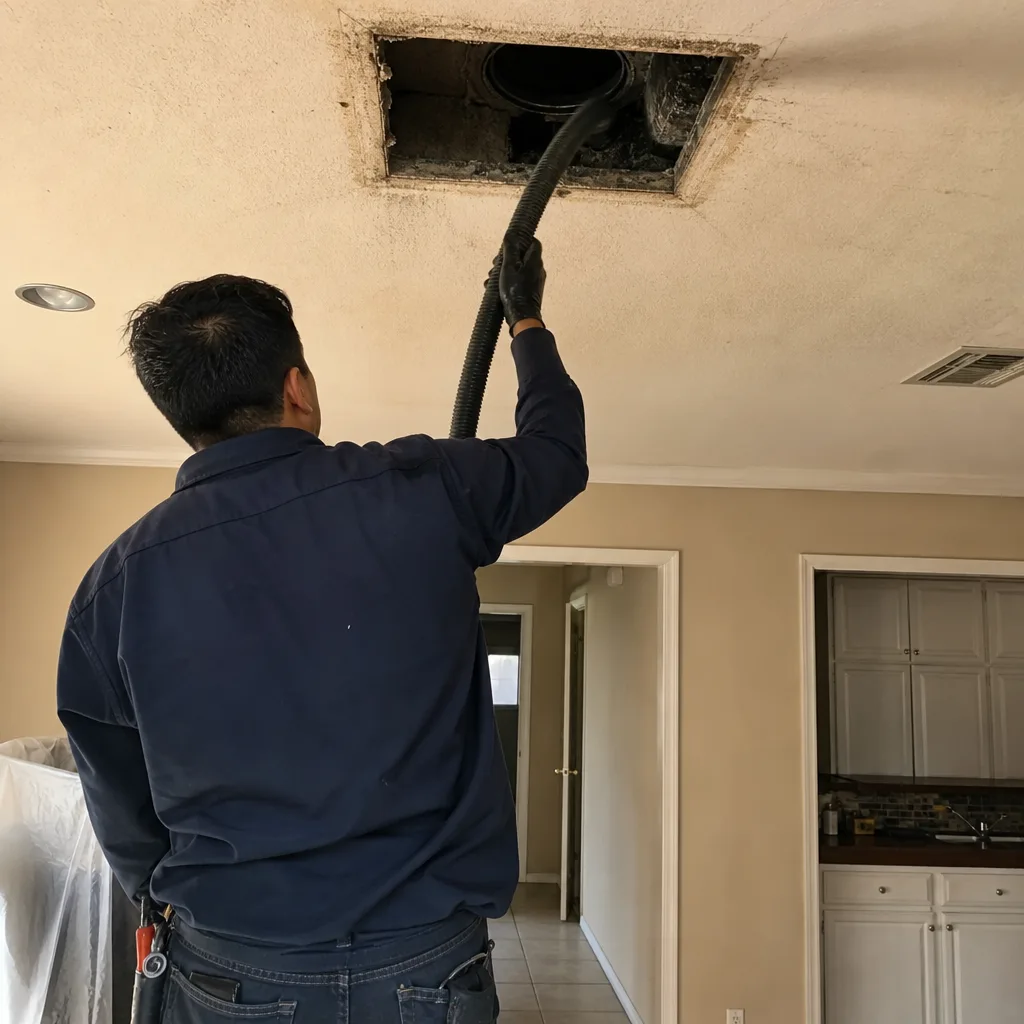 Before
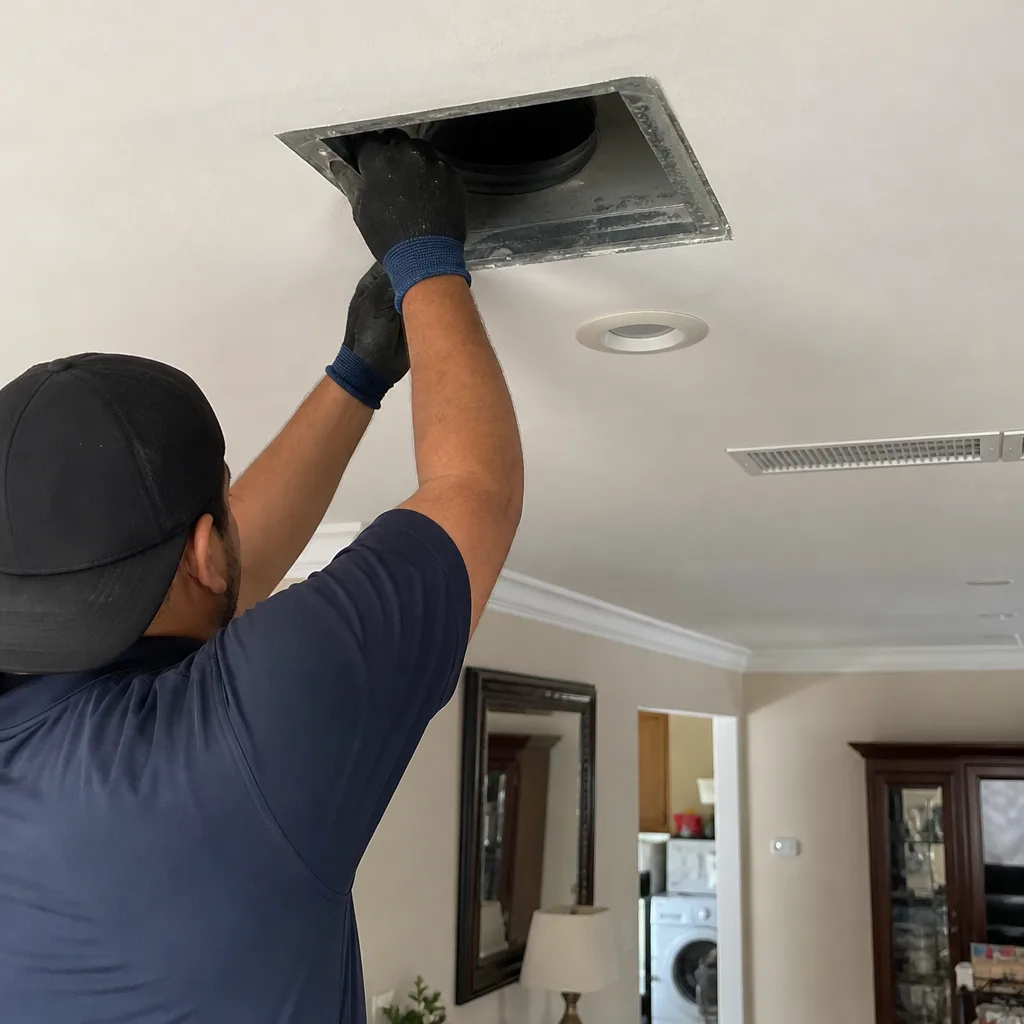 After
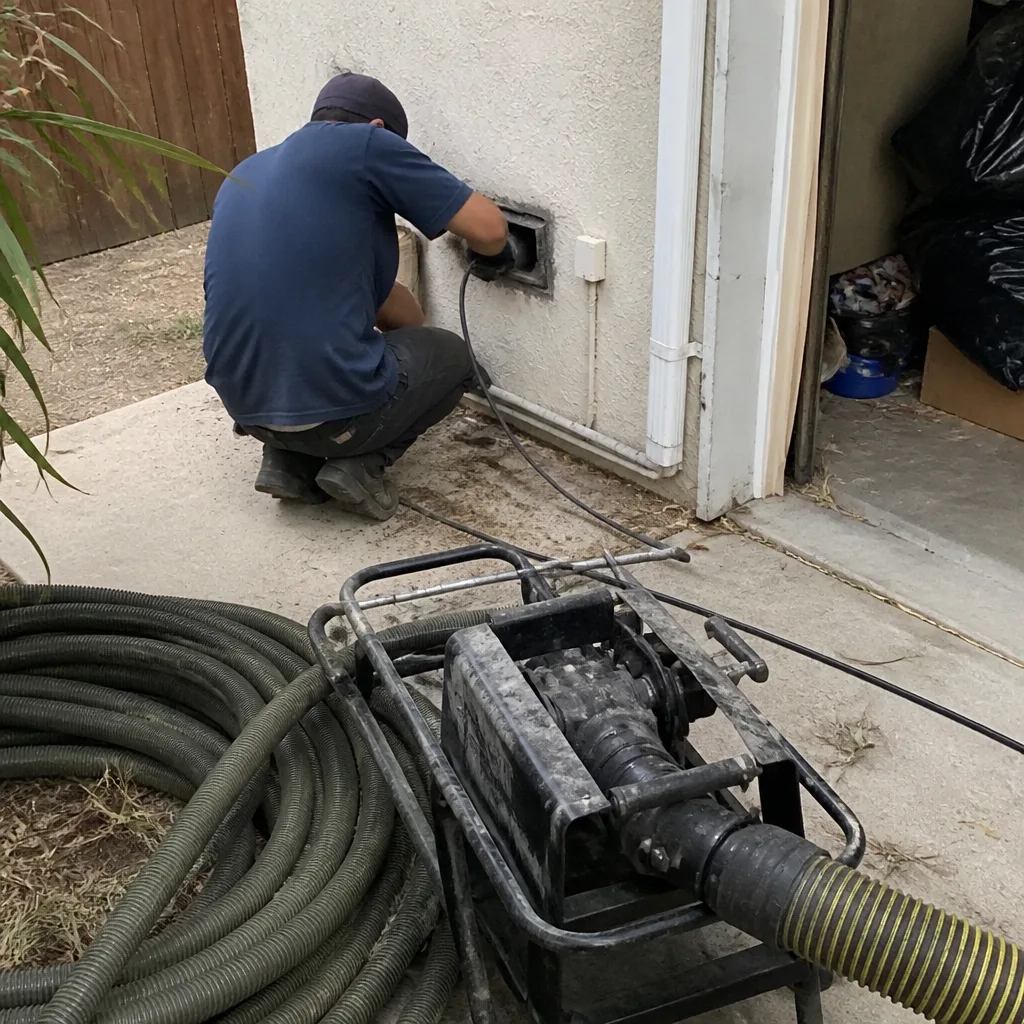 Before
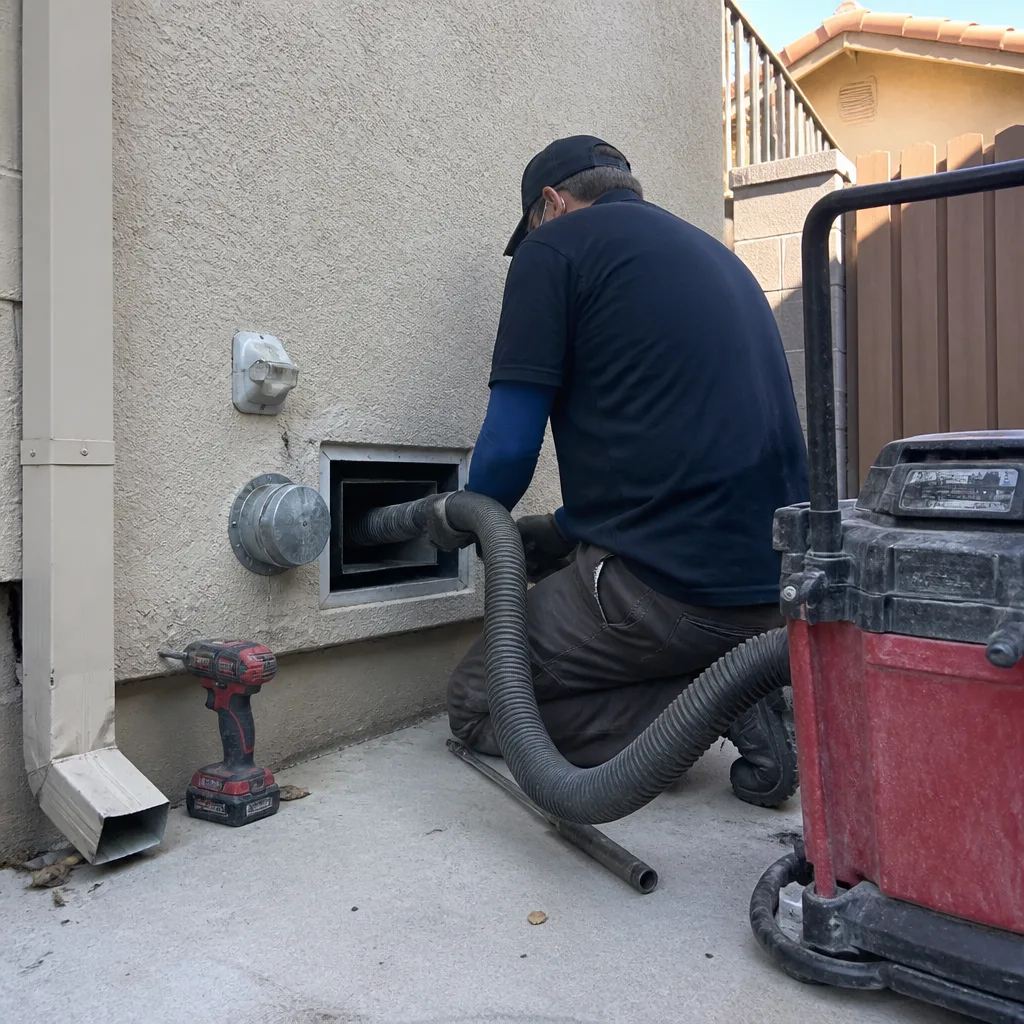 After
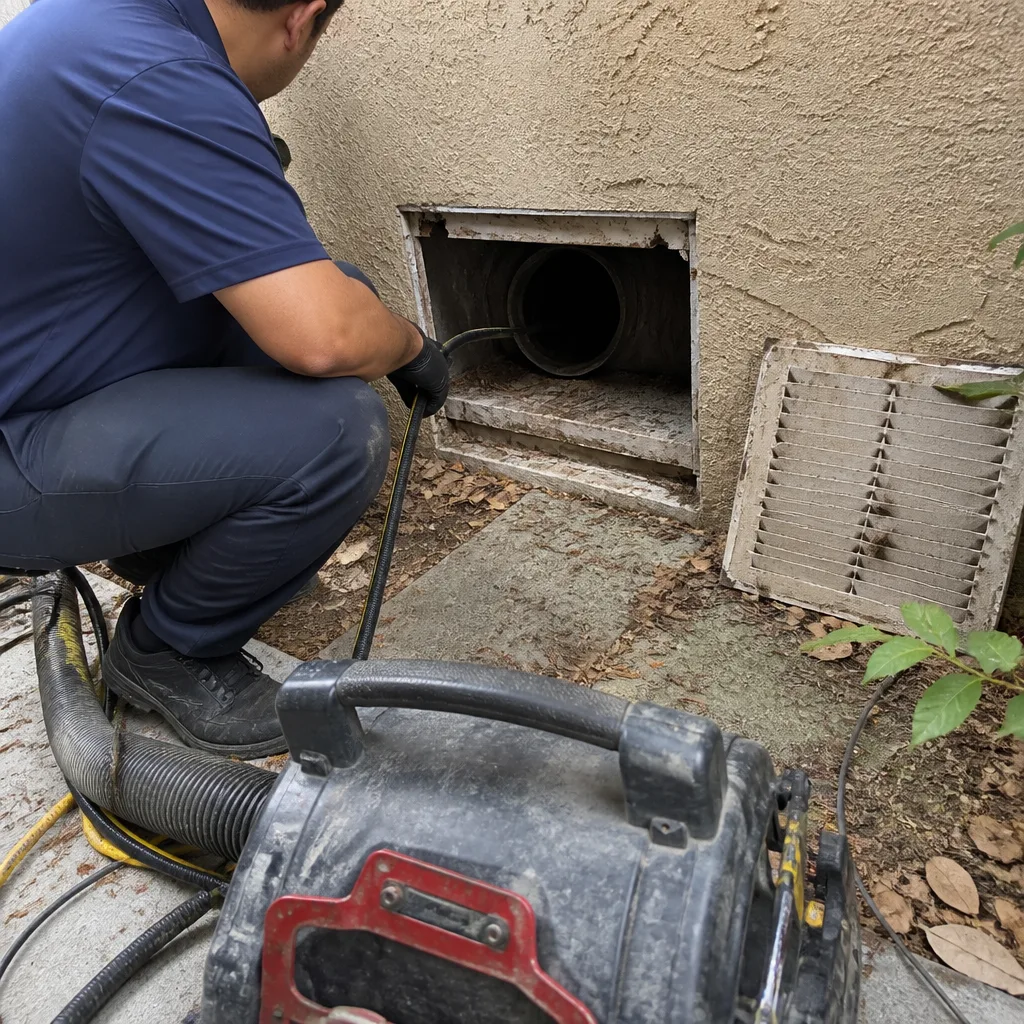 Before
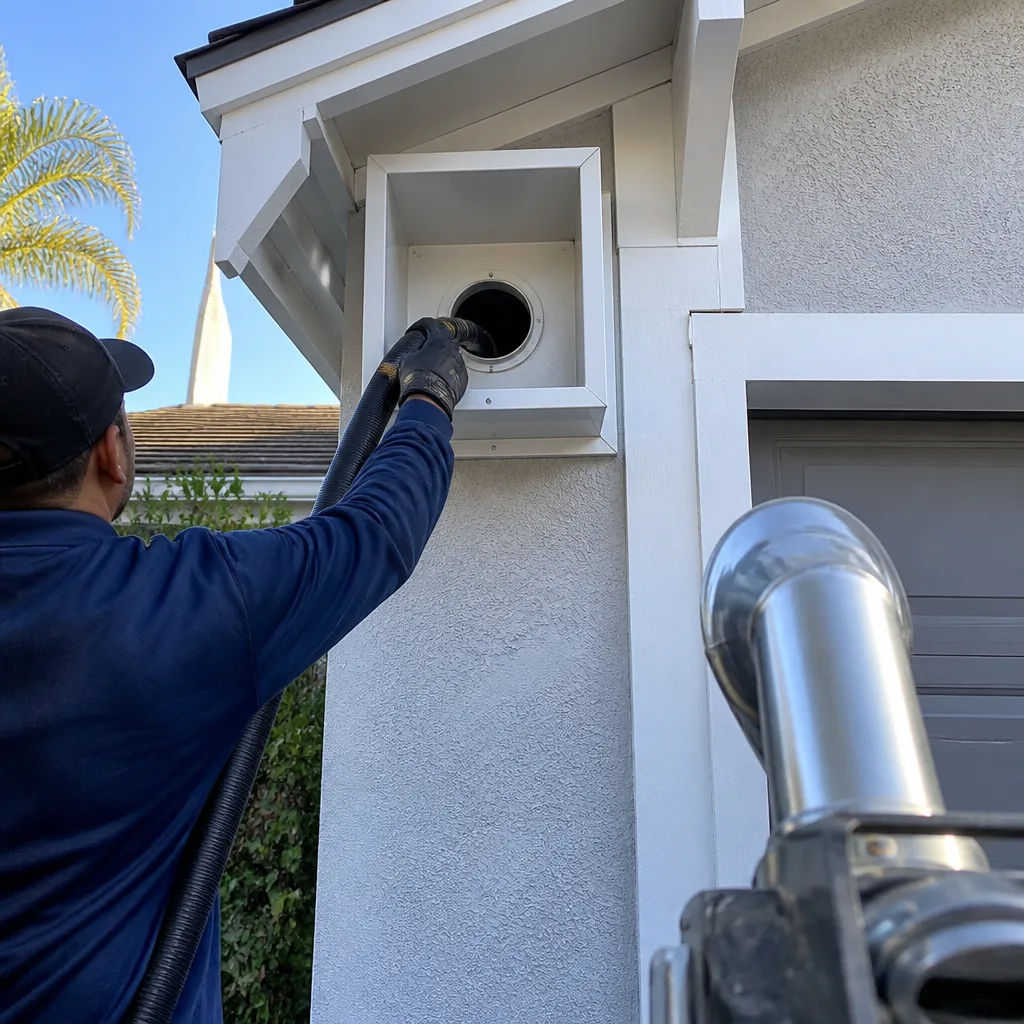 After
When to Call a Professional
Call a professional duct cleaning company when you can see debris inside the registers, when dust returns to surfaces within days of cleaning, when rooms stay persistently stuffy despite HVAC filter changes, or when you’ve just purchased an Anaheim home and have no record of prior duct maintenance. Call a professional who can also handle repairs if the cleaning reveals damaged sections – because in older Anaheim homes, it often does. The strongest signal is watching how a company answers the permit question: a confident, specific answer about California’s licensing and permit boundaries tells you they’ve been doing this long enough to know where the legal lines sit. Duct Cleaning Anaheim offers free estimates in Anaheim – call (866) 596-8314.
Frequently Asked Questions
No. Air Duct Cleaning services are classified as maintenance under the California Mechanical Code and do not require a permit from the City of Anaheim or any California municipality. The permit requirement kicks in only when the work expands to duct repair, sealing, replacement, or rerouting – all of which require a mechanical permit in Anaheim.
Only if it holds a C-20 Warm-Air Heating, Ventilating and Air Conditioning license from the California Contractors State License Board. An unlicensed company performing duct repair is committing unlicensed contracting under Business and Professions Code Section 7028, and the homeowner may lose insurance coverage if the work fails. Always verify the CSLB license before agreeing to any repair work.
Yes. Duct tape and insulation in homes built before 1980, which includes large portions of Anaheim’s housing stock in neighborhoods like West Anaheim and the Colony, often contains chrysotile asbestos. Disturbing this material without proper protocols violates California asbestos regulations under CCR Title 8 Section 1529 and can create a serious contamination problem. Testing costs a few hundred dollars and settles the question.
Mold cleaning removes surface-level debris and light contamination. Mold remediation involves containment, negative air pressure, HEPA filtration, and proper disposal of contaminated materials, and is triggered when mold growth exceeds the 10-square-foot threshold recognized in California industry standards. In many cases, mold-contaminated duct materials must be replaced rather than cleaned. Our work uses Abatement Technologies air filtration equipment specifically to prevent cross-contamination during cleaning.
Most Anaheim homes benefit from professional duct cleaning every 3 to 5 years, with shorter intervals for homes with pets, smokers, recent construction activity, or residents with allergies and asthma. Anaheim’s dry, dusty summers plus the humidity that accelerates mold growth in spring and fall makes the local schedule matter. If you’ve never had the ducts cleaned in a home you’ve owned for more than five years, it’s likely due. For more on our local process, see Air Duct Cleaning in Anaheim.
Request photo documentation of the duct interior before and after the work, which professional equipment like our Rotobrush and Nikro systems can capture as part of the process. Verify the company uses negative-pressure containment, not just a vacuum. Check that the CSLB license, workers’ comp, and general liability certificates all check out. Call (866) 596-8314 for an estimate that includes documentation of the work.
Dryer vent cleaning is classified as maintenance in California and doesn’t require a permit, but it’s treated as a fire-safety service rather than an air-quality service. The U.S. Fire Administration links clogged dryer vents to thousands of house fires annually, and NFPA recommends annual cleaning. This is a task we treat with the same professional equipment and documentation standards as Dryer Vent Cleaning in Anaheim, because a clogged vent is a fire risk, not a dust issue.
The Bottom Line
Air duct cleaning in California sits in a regulatory gray zone that most homeowners never learn about until something goes wrong. Cleaning itself is maintenance – no permit needed. But the moment the work touches damaged ducts, pre-1980 materials, or visible mold, the rules change fast. The practical takeaway is straightforward: hire a C-20 licensed company that uses professional-grade equipment and is honest about where the cleaning-repair-remediation lines sit. Verify the CSLB license, the workers’ comp, and the insurance. And if you own a pre-1980 Anaheim home, get the duct tape tested before anyone runs a brush through it. Every one of these steps protects you from the undisclosed liability that comes with cheap, unlicensed work in a state that regulates this industry tightly for good reason.
Written by the team at Duct Cleaning Anaheim, serving Anaheim since 2011. Explore more guides & resources.