
Last updated November 2, 2026
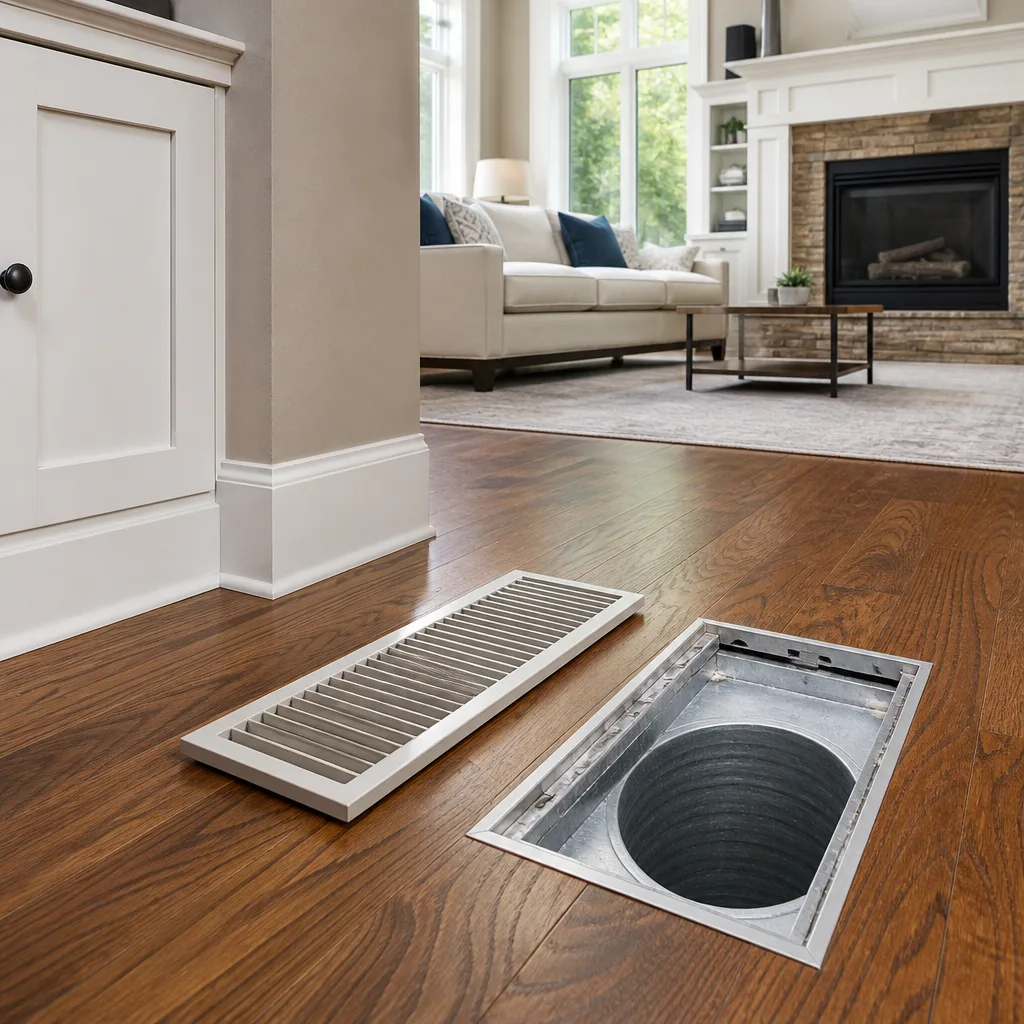 Whole-home duct cleaning
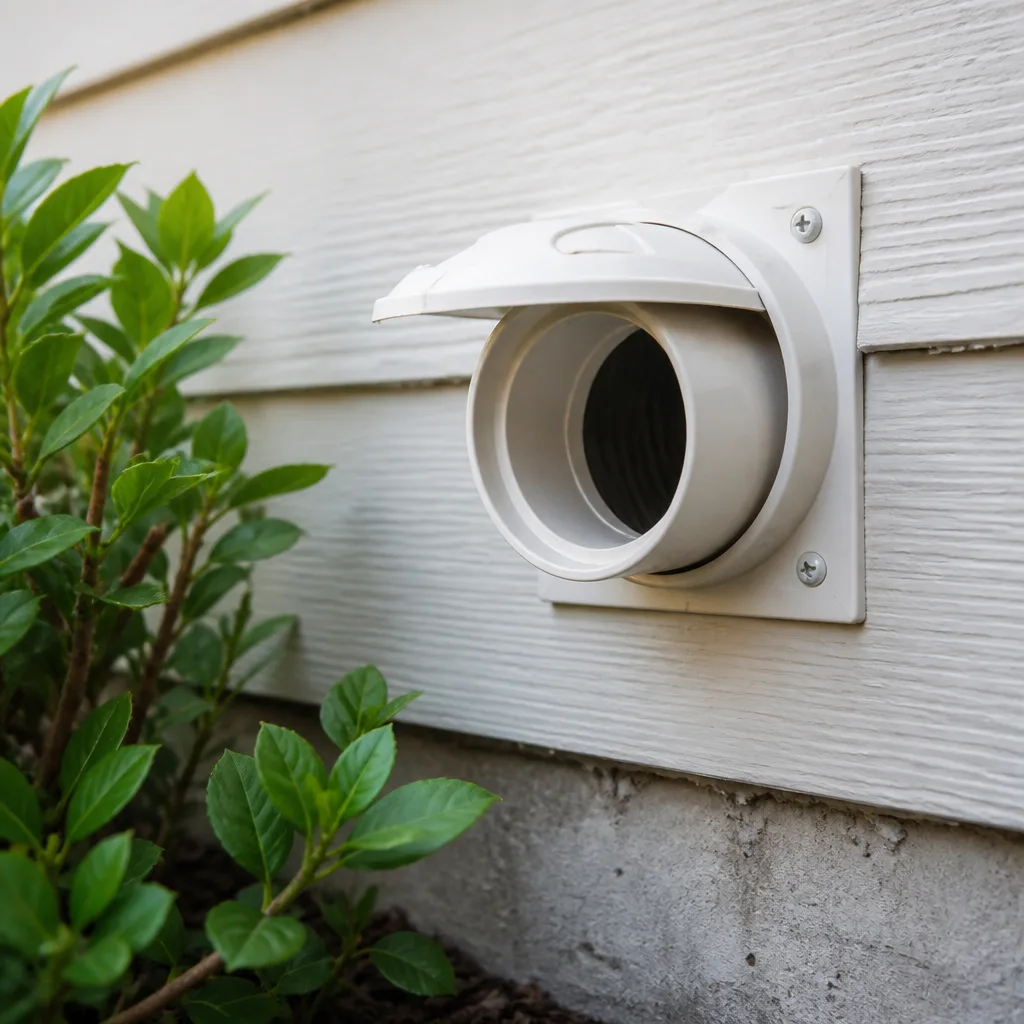 Dryer vent cleaning
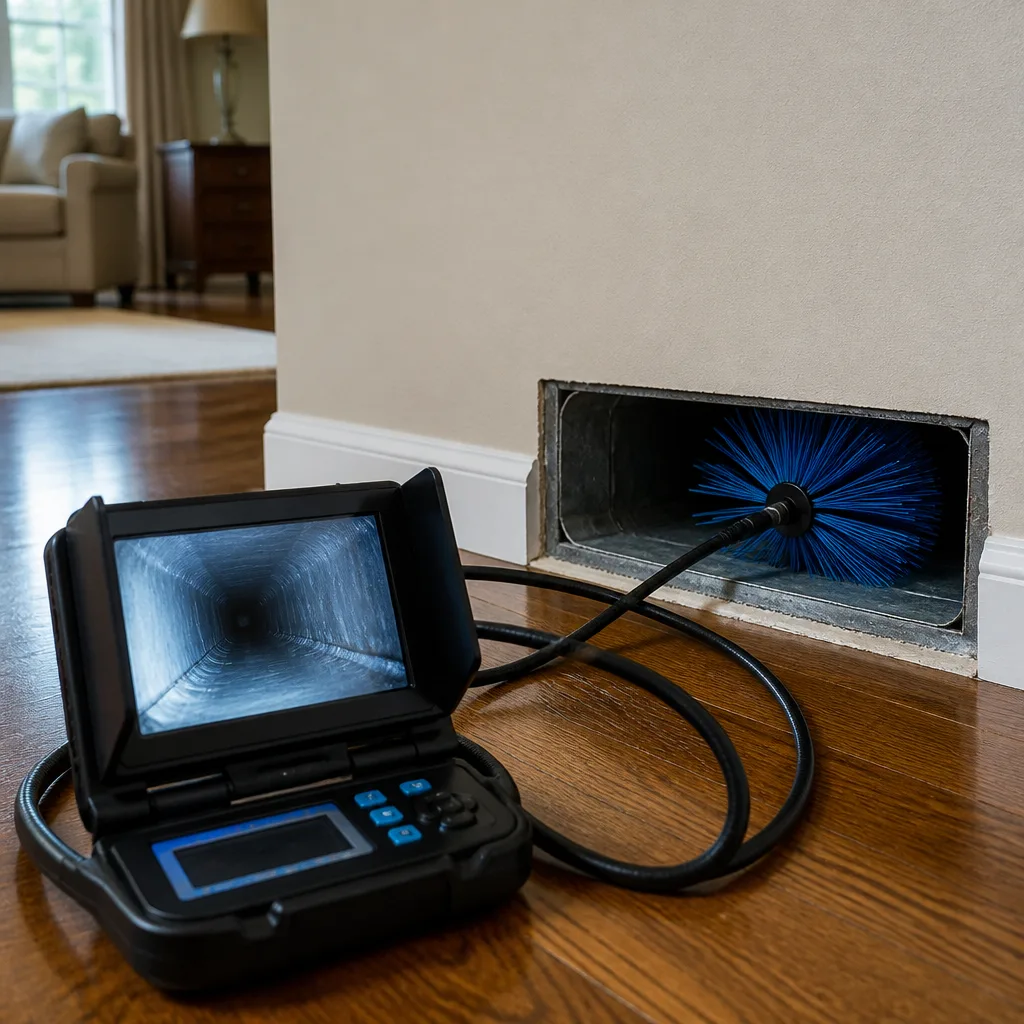 Camera inspection
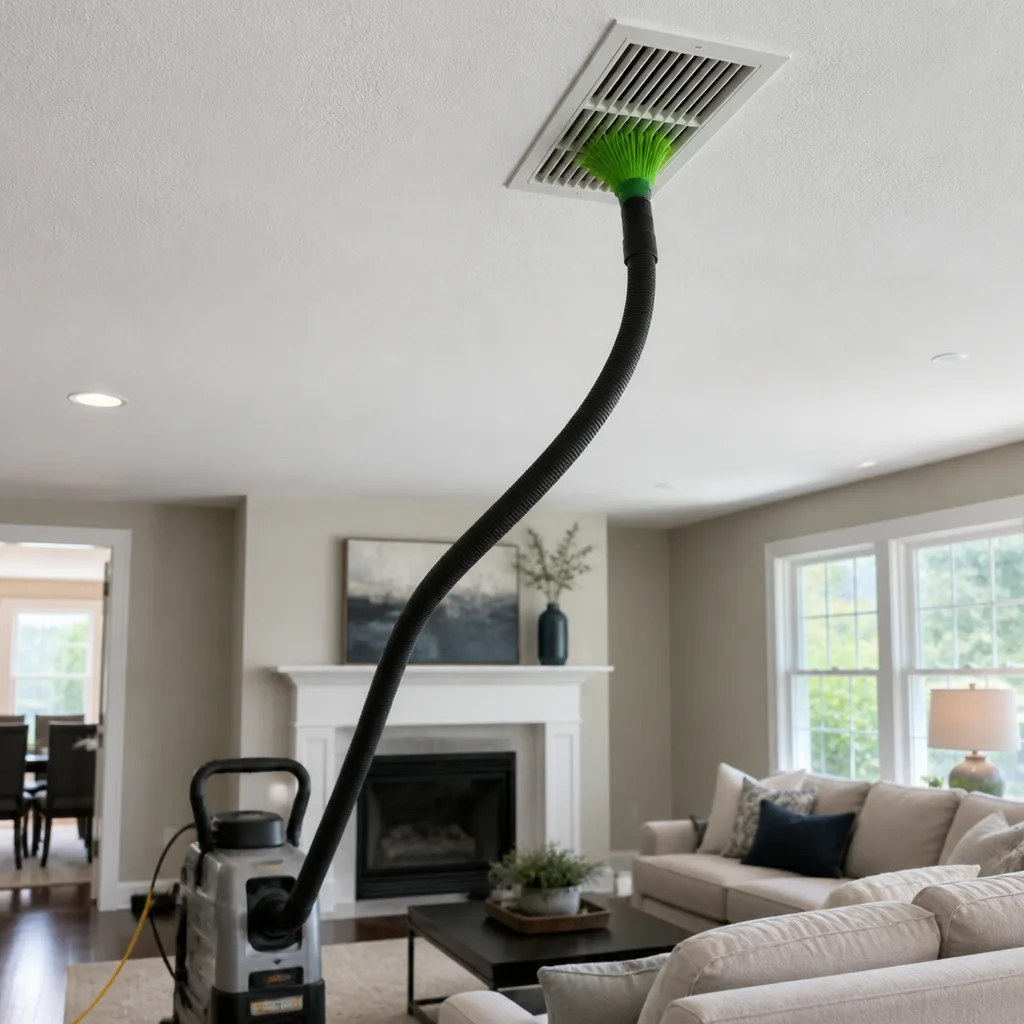 Sanitizing & deodorizing
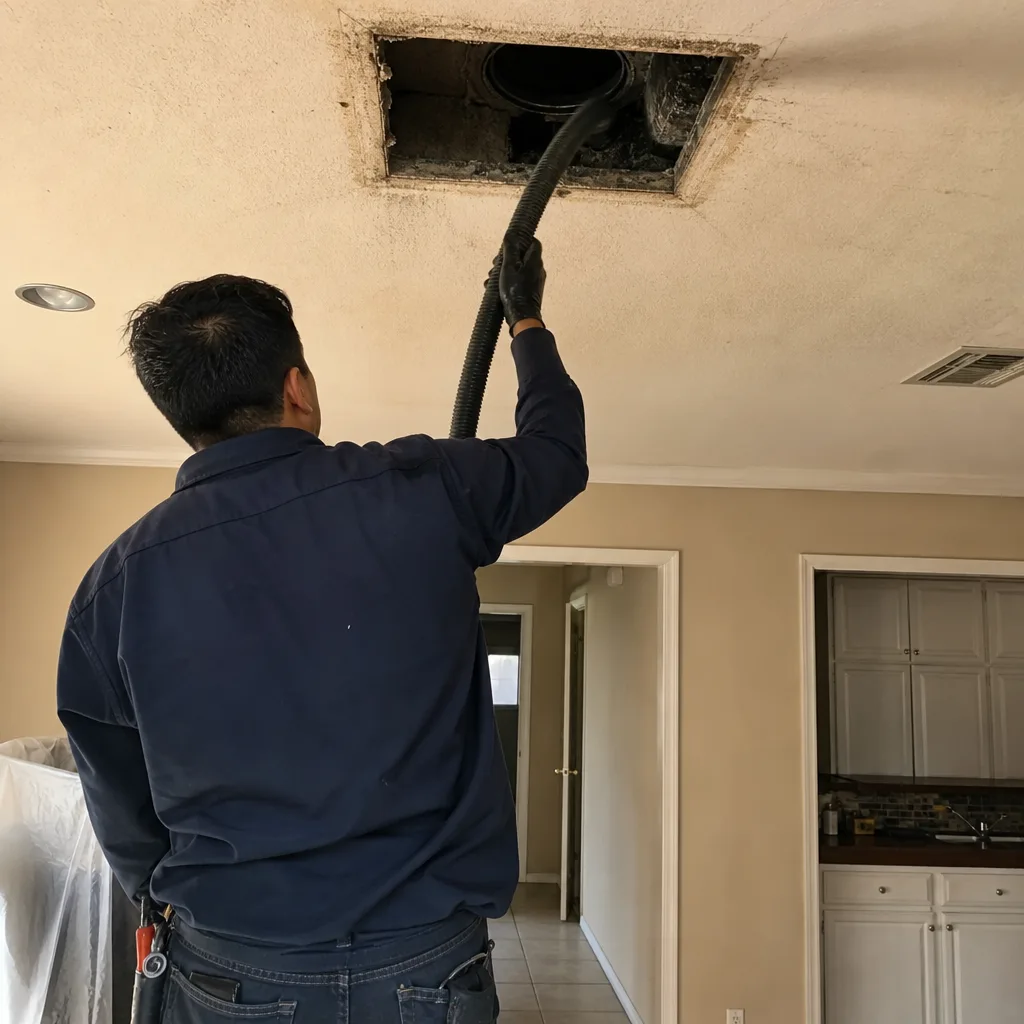
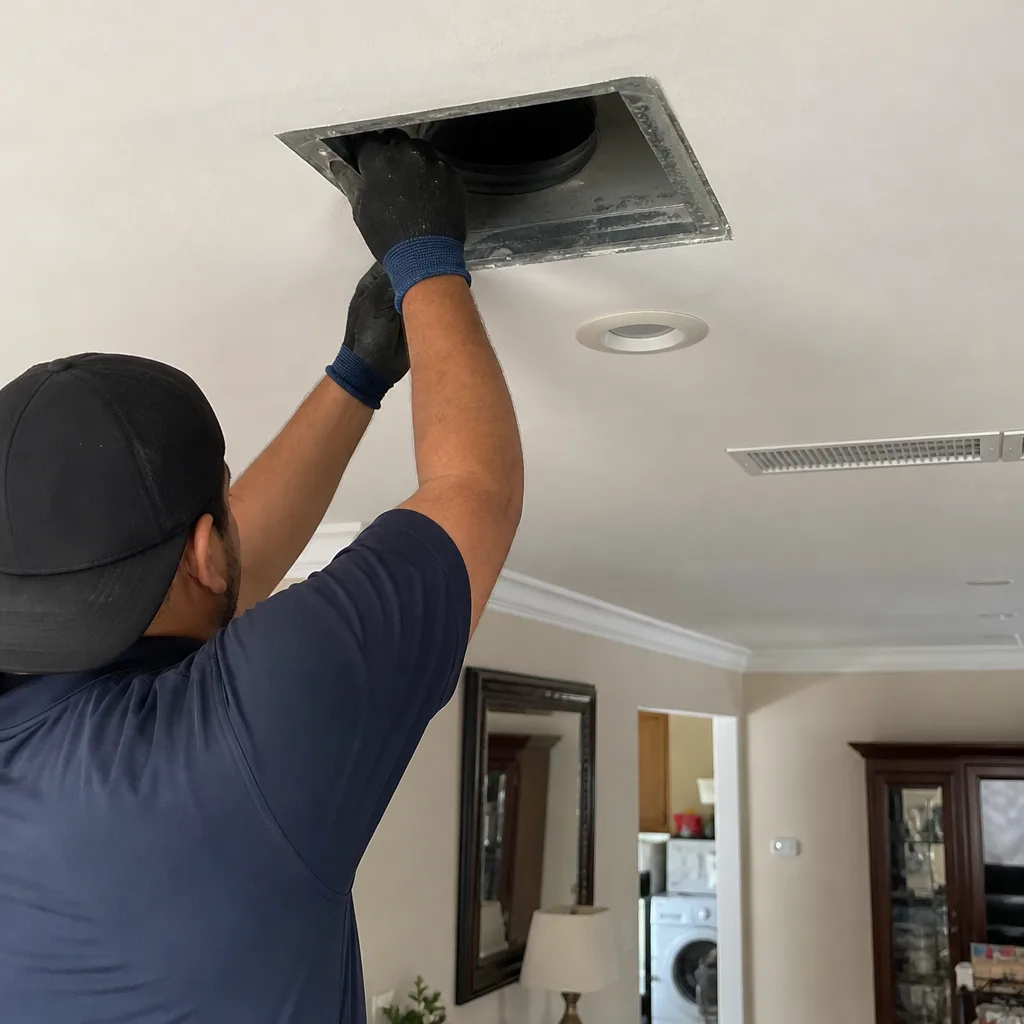
Whole-system duct and dryer vent check with before-and-after photos - you see exactly what came out of your vents
That "$99 whole-house special" is a bait ad - the real number appears once they are in your hallway, or the "clean" is a shop-vac at the register. We photograph the inside of your ducts before and after instead.
Air Duct Cleaning Warning Signs: An Anaheim Homeowner’s Reference Guide
Here’s a pattern we see constantly in Anaheim: a homeowner calls an HVAC company because the system “isn’t blowing right.” The tech shows up, checks the furnace or air handler, replaces a filter, maybe clears a condensate line, and bills for a service call without touching the ductwork. Eight weeks later, the same symptom returns, because the problem was never in the equipment. It was in the ducts the whole time. This guide will teach you how to tell the difference before you spend another dollar on the wrong fix, and it’s written specifically for the way homes age and accumulate dust in Anaheim’s particular climate.
Quick Answer
The clearest warning signs that your Anaheim home needs air duct cleaning are: rooms with noticeably weaker airflow than others, a dusty or burning odor when the system first starts, dust accumulating on surfaces within days of cleaning, filter media clogging in under two weeks, and visible debris or mold at supply registers. Any one of these points to duct contamination; seeing three or more means the problem is almost certainly in the ductwork, not the HVAC unit. Here’s how to read each sign the way a duct specialist would.
Styles & brands we work with
- Whole-home duct cleaning
- Dryer vent cleaning
- Camera inspection
- Sanitizing & deodorizing
Table of Contents
- The Airflow-Balance Test: How to Spot a Partially Blocked Duct Run Without Any Tools
- Burning Dust Odor vs. Burning Component Odor: Don’t Conflate the Two
- Visible Mold at Supply vs. Return Registers: What the Location Tells You
- Why Your MERV-8 Filter Clogging in Two Weeks Is a Duct Wall Problem
- Rodent Activity Indicators in Anaheim’s Older Housing Stock
- Dust Returns Within Days: The Re-Soiling Pattern That Points to Duct Debris Reserves
- Common Mistakes to Avoid
- When to Call a Professional
The Airflow-Balance Test: How to Spot a Partially Blocked Duct Run Without Any Tools
A partially blocked duct run reduces the volume of conditioned air reaching a room. That reduction shows up as a register that blows noticeably weaker than its counterparts elsewhere in the house. The test below takes about fifteen minutes and requires nothing more than your hand and a piece of tissue paper.
What you’re looking for is a measurable imbalance between rooms that should be receiving roughly comparable airflow given their distance from the air handler. In a typical single-story Anaheim ranch, bedrooms on the same hallway should feel similar at the register. When one is obviously weaker, the cause in our experience is either a kinked or collapsed flex duct, a disconnected joint, or enough debris accumulation inside a specific run to effectively narrow the airway.
- Set your thermostat fan to “On” rather than “Auto” so the blower runs continuously during the test.
- Close all exterior doors and windows so the system is operating in a steady state.
- Walk from room to room and hold the back of your hand about four inches from each supply register for five full seconds. Don’t assess with a quick pass; let the airflow register.
- Rank each register on a simple 1-to-3 scale: strong, moderate, weak. You’re not measuring CFM; you’re measuring relative difference.
- Repeat the ranking with a single-ply tissue held at the same distance. A tissue that barely moves on a “weak” register while fluttering hard on a “strong” one confirms the imbalance.
- Note which rooms rank weak and whether they cluster on one trunk line or side of the house.
A single weak register usually indicates a localized problem in the branch run feeding that room: a crushed section of flex duct, a partially detached boot, or a debris plug near the register itself. Two or more weak registers on the same side of the house point to a trunk-line issue, which often means accumulated debris has narrowed the main supply or return plenum. We’ve pulled enough compacted dust, drywall scraps, and abandoned toy parts out of Anaheim duct systems to know that blockage isn’t theoretical; it’s common.
The value of this test is diagnostic clarity. If the blower motor is running normally and the coil is clean, an airflow imbalance that persists room-to-room is nearly always a duct problem, not an equipment problem. Knowing that before you call for service changes who you call and what you ask them to inspect.
Burning Dust Odor vs. Burning Component Odor: Don’t Conflate the Two
When an HVAC system sits unused through a stretch of weather, dust settles on the heat exchanger, the coil, and the interior duct walls near the air handler. The first heating cycle burns that settled layer off, producing a smell that most homeowners describe as “burning dust” or “hot attic.” It typically fades within five to twenty minutes and doesn’t recur until the system sits idle again. This smell, while unpleasant, is rarely dangerous and does not by itself indicate a malfunction.
What it does indicate is that your duct system holds a dust reserve: debris accumulated on duct walls and interior surfaces that re-settles onto heating components whenever airflow stops long enough. In Anaheim, where shoulder seasons mean systems cycle on and off irregularly for months, the burning-dust smell can recur throughout fall and winter, which often prompts unnecessary service calls for a furnace that’s functioning fine. The fix isn’t another furnace inspection; it’s removing the debris source from the ducts.
Here’s how to distinguish the two odor signatures:
- Burning dust: Smells like hot paper or scorched dirt. Appears within the first minutes of heating operation after an idle period. Fades as the system runs. Recurs seasonally. Most noticeable at supply registers, not at the furnace cabinet.
- Burning component: Smells acrid, chemical, or like hot plastic or varnish. Does not fade; often intensifies the longer the system runs. Noticeable near the air handler or furnace cabinet even when you’re not standing at a register. May be accompanied by a humming, buzzing, or intermittent shutdown.
A burning-component odor is an equipment issue that needs an HVAC tech. A burning-dust odor that recurs every time the system sits idle for a few days is a ducting issue that needs an Air Duct Cleaning in Anaheim. Sending an HVAC contractor to solve the latter is like repainting a wall to fix a roof leak; it addresses the symptom, not the source.
Visible Mold at Supply vs. Return Registers: What the Location Tells You
Mold at a register is not subtle. If you see dark green, black, or brown speckling on the metal fins, the interior face of the register, or the surrounding ceiling or wall surface, you’re looking at microbial growth that has already established a colony at a point of condensation. The location of that growth is a diagnostic clue most homeowners miss, and it tells you where moisture is entering the system.
Mold at supply registers means moisture is present downstream of the cooling coil. In Anaheim, this nearly always traces to one of three sources: a coil that’s sweating excessively into the supply plenum, a duct run with a loose or missing insulation wrap that allows condensation on the exterior duct surface in a warm attic, or a supply boot that was never sealed to the ceiling opening, letting humid indoor air contact the cold register surface. Supply-side mold means the duct run itself may be wet inside, and cleaning alone won’t solve the problem unless the moisture source is corrected. This is where a duct inspection that includes repair as a follow-up matters, because a wet duct that gets cleaned but not dried or resealed will re-contaminate.
Mold at return registers tells a different story. Return air is unconditioned room air being pulled back to the blower. Mold on return registers typically reflects elevated indoor humidity in the living space itself, which in Anaheim means either inadequate ventilation, a failed bathroom fan, or a crawlspace moisture issue affecting the surrounding air. The return side of the system is also the side that pulls air from the house, so a moldy return register always warrants checking the return duct run for internal contamination as well.
In both cases, the correct response is to identify the moisture source before cleaning. A professional with remediation-grade equipment can contain and remove visible surface mold during duct cleaning, but the underlying moisture issue must be addressed or the growth returns. That’s why we run Abatement Technologies filtration equipment during jobs where microbial growth is present: the contaminated air gets captured at the source rather than redistributed through the living space during cleaning.
Why Your MERV-8 Filter Clogging in Two Weeks Is a Duct Wall Problem
Filter loading is one of the most useful diagnostic signals a homeowner has, and it’s almost always misread. The assumption is that a dirty filter means the filter is doing its job, so it gets replaced and forgotten. But the rate of loading tells you where the dirt is coming from.
A MERV-8 filter in a typical Anaheim home with no significant duct contamination should last 60 to 90 days before it’s visually loaded enough to replace. If you’re seeing a filter that’s visibly caked in under two weeks, and you’re not running construction dust through the house or living next to a dirt lot in active grading, the most likely source of that loading is debris being released from the duct walls themselves. The filter is catching particulate that’s already inside the system, which means the ducts are acting as a debris reservoir that recontaminates the air stream continuously.
What many homeowners don’t realize is that a clogged filter creates a secondary problem. A loaded MERV-8 restricts airflow across the blower, which raises static pressure, which forces the blower motor to work harder, which shortens its life. Every HVAC technician we talk to in Anaheim has seen blower motors fail prematurely because a homeowner ran a clogged filter for months. The filter wasn’t the root cause; the duct debris loading it was.
If your filter loads in two to three weeks, the correct sequence is: replace the filter, then have the duct system assessed for internal debris accumulation. Cleaning the ducts removes the reserve. Until that happens, the cycle of rapid filter loading will continue regardless of how many filters you swap.
Rodent Activity Indicators in Anaheim’s Older Housing Stock
Anaheim has a substantial inventory of homes built between the 1950s and 1970s, many of which have duct runs through attic spaces and crawlspaces that were never rodent-proofed to modern standards. Attic access points with worn weatherstripping, crawlspace vents without screening, and utility penetrations with gaps all provide entry for rats and mice, and an unsealed duct system gives them a sheltered highway once they’re inside the envelope.
The indicators that matter are specific. Outside of the obvious signs like visible droppings in the attic, homeowners should look for:
- Droppings inside or near return registers: Return ducts pull air from the living space and are often the most accessible point of entry. Droppings visible at the return grille or just inside it mean a rodent has been in the return duct itself.
- Chewed insulation visible at access panels: If you open a duct access panel or look into a plenum and see fibrous insulation that’s been shredded, pulled apart, or tunneled through, that’s rodent activity, not normal wear. Rodents collect insulation for nests and chew through duct walls to move between sections.
- Urine odor that intensifies when the blower runs: Rodent urine has an ammonia-like smell that becomes more pronounced when airflow carries it from the duct cavities into living spaces. If you smell it more strongly at registers than in the open room, the source is inside the ductwork.
- Scratching or scrabbling noises that stop when the blower shuts off: Rodents often move through the ducts when the system is quiet. If you hear activity in walls or ceilings that correlates with HVAC cycles, a duct inspection is warranted.
Rodent contamination is a remediation issue before it’s a cleaning issue. The debris must be removed with proper containment, and any damage to the duct walls must be repaired before the system is resealed. That’s one of the reasons we built Air Duct Repair in Anaheim into our core service scope: a cleaning job that reveals chewed flex duct or a disconnected joint doesn’t end with a shrug and a recommendation to find another contractor. The repair happens in the same visit, with the same crew.
After remediation and repair, we recommend a professional duct sealing pass to close rodent entry points at the same time the system is restored. A cleaned system with open penetrations is an invitation for a repeat infestation.
Dust Returns Within Days: The Re-Soiling Pattern That Points to Duct Debris Reserves
Every home in Anaheim deals with some level of dust. What distinguishes a duct-related dust problem from ambient household dust is the speed and pattern of re-soiling after cleaning. If you wipe down a shelf or a dresser and see a visible dust film return within two to four days, and you’re not running windows open through the Santa Ana winds or doing renovation work, the most likely source is particulate being continuously released from the duct system into the living space.
Here’s the mechanic: dust accumulates on the interior walls of duct runs – especially the return side and the supply trunk. Every time the blower runs, airflow across these surfaces re-entrains some of that debris and carries it through the registers into the room. The result is a house that can’t be kept clean because the HVAC system is actively redistributing its own internal debris load every cycle.
The pattern is telltale. Dust originating from the duct system tends to appear:
- More heavily on surfaces directly in the register airflow path, like the top edge of a bookshelf facing the register or the wall above a supply vent.
- As a fine, uniform gray film rather than the mixed lint-bearing dust that comes from clothing and household textiles.
- Within hours after the system runs, rather than accumulating gradually over a week.
- Even in rooms with closed windows and minimal foot traffic.
This is one of the cases where a Duct Cleaning Anaheim home inspection serves as a diagnostic step, not a luxury service. A visual inspection of the supply and return plenums and a few branch runs tells us pretty quickly whether the duct walls are carrying a debris load thick enough to explain the pattern. When the debris is there, a proper cleaning with rotary agitation removes it. When the debris is not there and ducts are clean, the patient work of finding the real source begins. Either way, you get an answer instead of another guess.
Common Mistakes to Avoid
- Attributing recurring airflow problems to the furnace. If two service calls in eighteen months haven’t fixed it, the HVAC equipment isn’t the problem. Ask for a duct inspection before authorizing another parts replacement.
- Replacing filters without asking why they’re loading fast. A filter that clogs in two weeks is a diagnostic signal. Treating it as routine maintenance buries the data that points to the real issue.
- Ignoring one weak register because “the room is small.” Small rooms don’t need weak airflow. A low-flow register means a restriction in that branch run, and it’s usually fixable with cleaning or a targeted Air Duct Repair in Anaheim resolution.
- Assuming mold at a register means the whole system needs replacing. Visible register mold requires moisture-source correction and professional cleaning, not necessarily a duct teardown. Get a diagnosis before getting a quote for replacement.
- Running the system with a rodent contamination problem. Rodent waste inside ducts gets aerosolized every time the blower runs. This is a health and sanitation issue that doesn’t wait for spring.
- Hiring the cheapest duct cleaning coupon in town. A vacuum pass through the registers does not clean duct walls. If the equipment can’t mechanically agitate the debris, the debris isn’t coming out. Our Air Duct Cleaning in Anaheim service uses the Rotobrush rotary-brush system specifically because suction alone doesn’t remove adhered debris from duct walls.
- Cleaning ducts while ignoring a disconnected or collapsed run. Cleaning can’t fix physical damage. If a run is torn or detached, the system will re-contaminate until the Air Duct Repair in Anaheim issue is corrected.
When to Call a Professional
Call for a duct assessment when any of these conditions apply: a burning-dust odor that recurs every time the system sits idle for a few days; a filter loading in under two to three weeks on a normal MERV-8 rating; dust re-soiling surfaces within days of cleaning; visible mold at any register; rodent droppings or chewed insulation discovered anywhere in the duct path; or an airflow imbalance between rooms that persists after filter replacement. These are not mysteries that resolve on their own. They are duct-system conditions that get worse when left untouched. Duct Cleaning Anaheim offers free estimates in Anaheim – call (866) 596-8314 to schedule a visual inspection.
See the difference
 Before
 After
 Before
 After
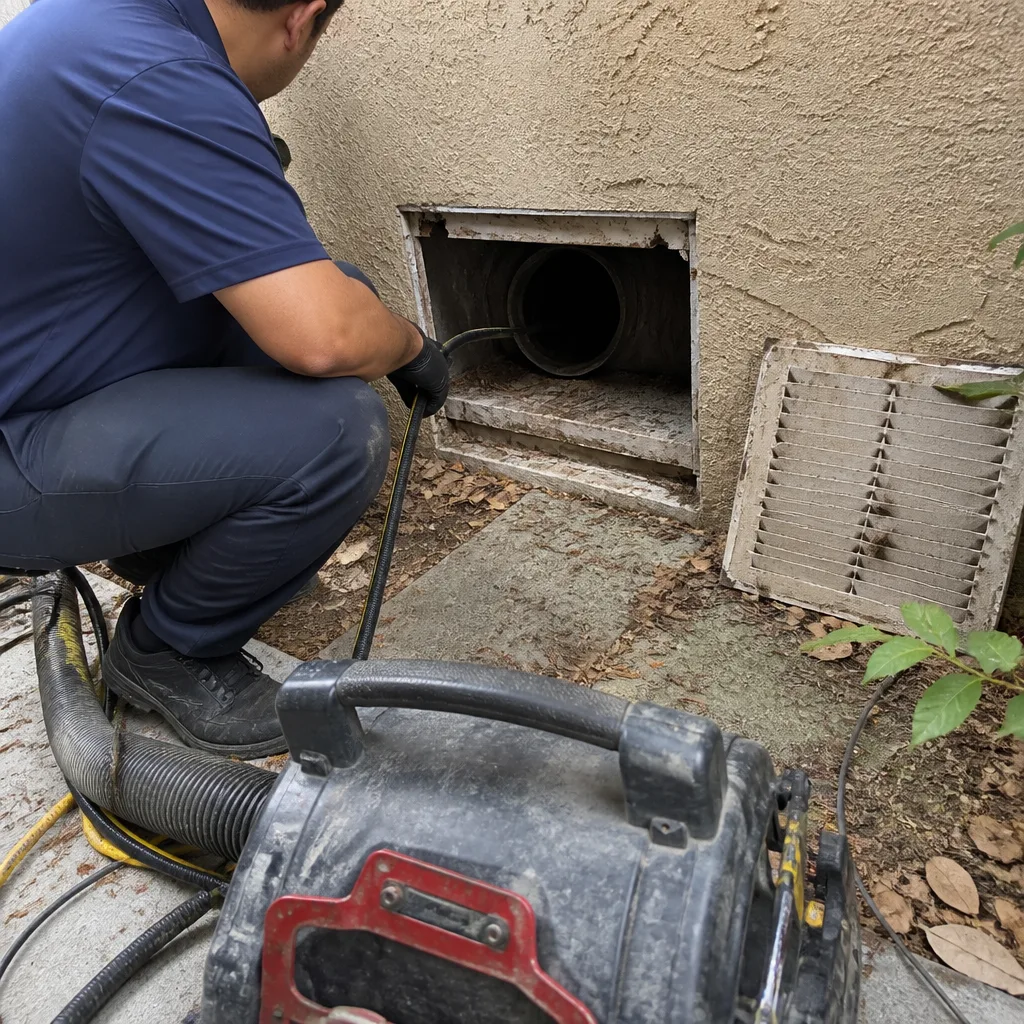 Before
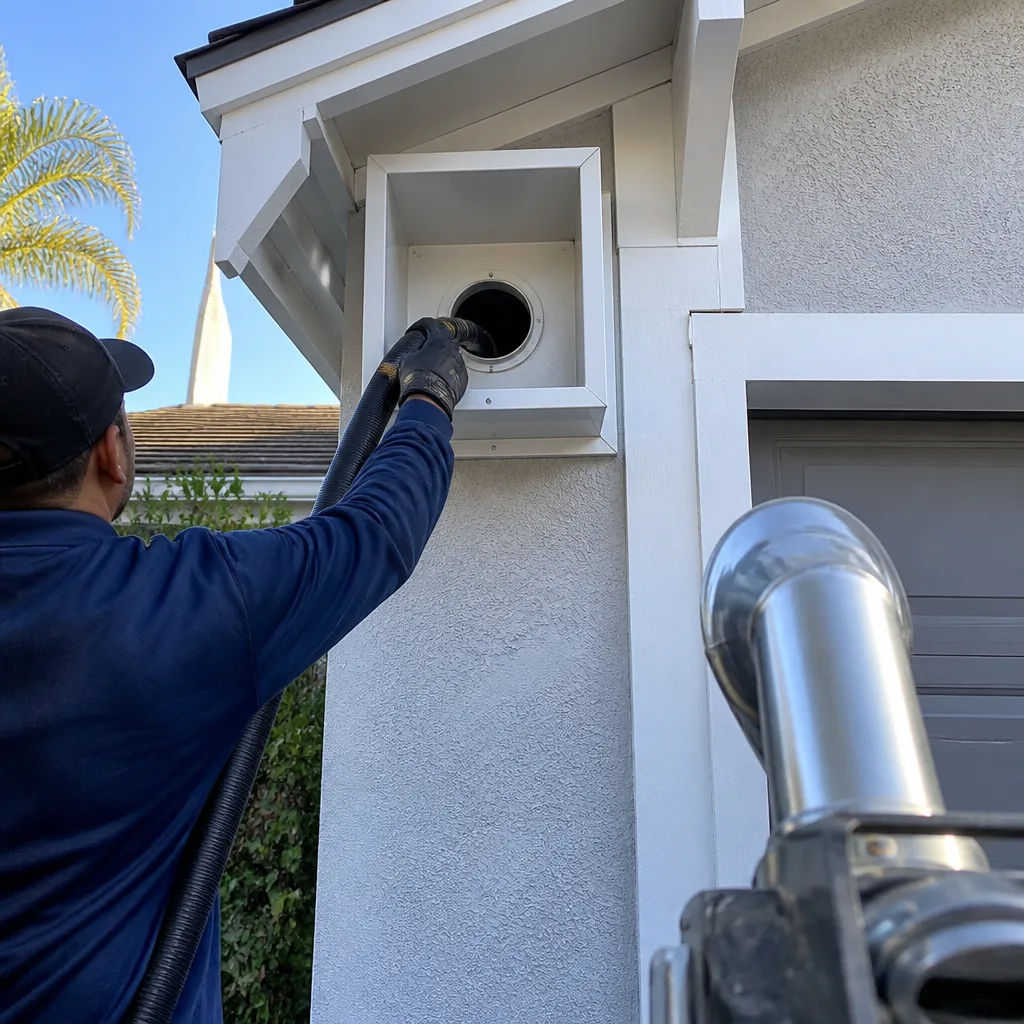 After
Frequently Asked Questions
Air duct cleaning for a typical single-family home in Anaheim generally runs between $350 and $650 depending on the number of systems, the level of contamination, and whether rodent remediation or duct repair is required. Multi-story homes or homes with multiple air handlers can run higher. We quote one flat price per system after a visual inspection, so you know the number before the work starts, not after a van-load of add-ons shows up. Call (866) 596-8314 for an exact quote – estimates are free.
Cheaper quotes typically reflect cheaper equipment and a much shorter cleaning process. A crew that runs a shop-vac hose through a few registers for 45 minutes can’t remove compacted debris from duct walls because they lack rotary agitation and negative-pressure containment. Equipment like the Rotobrush system we run costs real money to own and operate, and that cost is reflected in an honest price. The discount price usually buys a cosmetic pass, not a mechanical cleaning. Call (866) 596-8314 and ask what equipment will actually be used on your system before you book anyone.
You should receive before-and-after photos of your own duct interiors. Any legitimate contractor working with professional inspection equipment can capture images of the supply trunk, return plenum, and branch runs before and after the job. If a company can’t show you what the inside of your ducts looked like before and after, you have no evidence anything was removed. We document every job with photos and show you the debris capture canister from our Nikro negative-pressure system before it’s emptied. Call (866) 596-8314 to ask about our documentation process.
For most Anaheim homes without unusual conditions, air duct cleaning every three to five years is adequate. Homes with pets that shed heavily, residents with asthma or severe allergies, recent renovation work, or a history of rodent activity may benefit from more frequent cleaning, typically every two to three years. The key variable in Anaheim is the long dry season: our air carries fine particulate that settles in ducts during the windy months, and that reserve accumulates faster than homeowners expect. A visual inspection tells you where you stand.
Duct cleaning can reduce the total particulate load in your air by removing the debris reserve that recontaminates living spaces every HVAC cycle. For allergy sufferers, the benefit comes from no longer having that internal source releasing dust and allergen particles. It is not a cure-all, and pairing cleaned ducts with a proper filtration strategy matters. If you’re running a Honeywell or Aprilaire filtration product, a clean duct system allows that filter to do its work on living-space air rather than fighting a constant release of debris from inside the ducts. Call (866) 596-8314 and we can discuss your specific system.
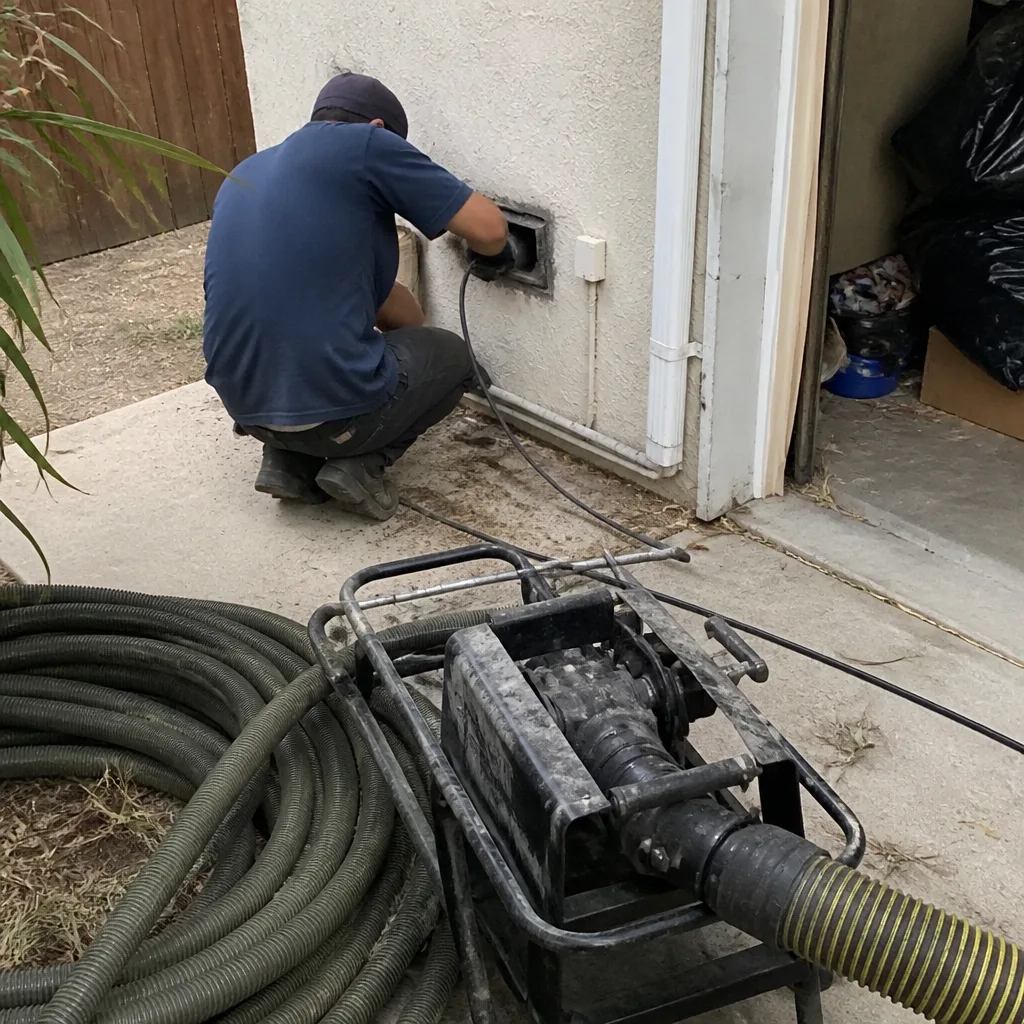
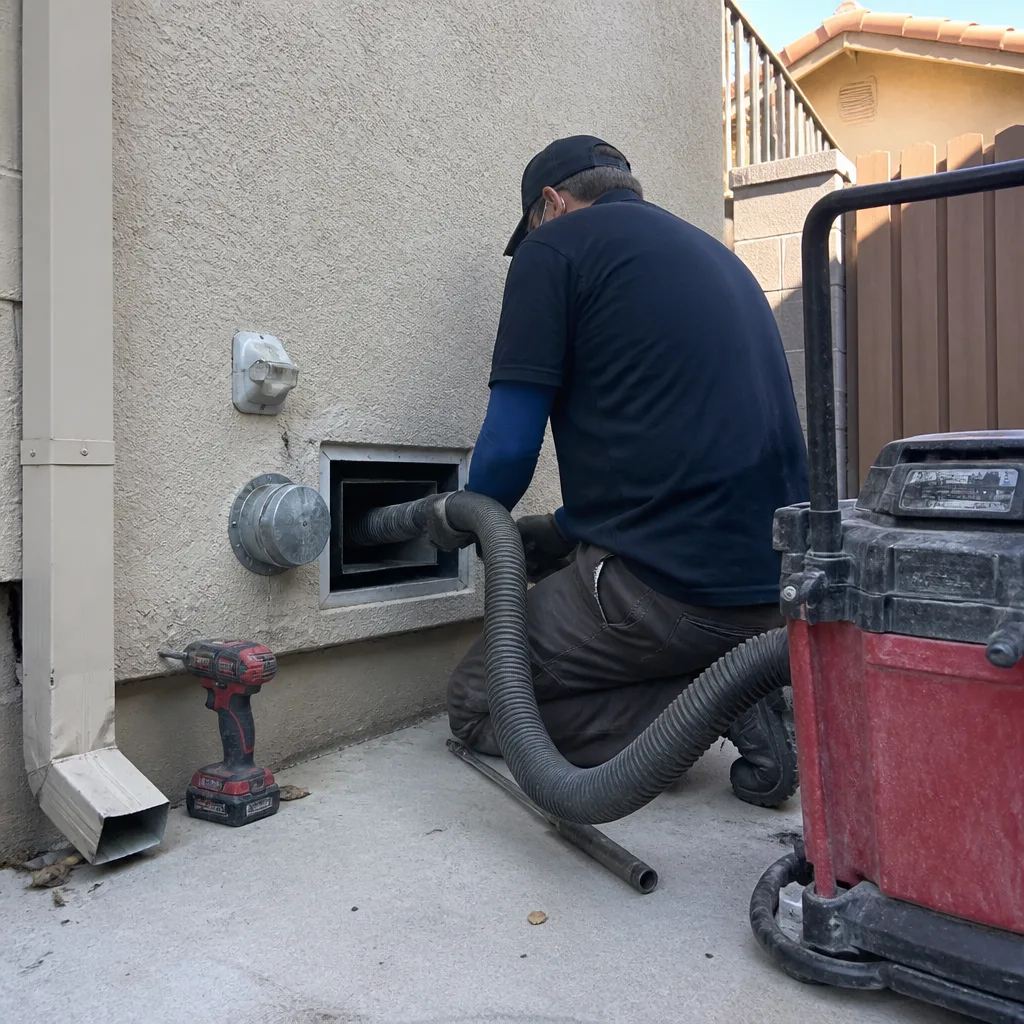
Yes. Dryer vent cleaning is a separate service from air duct cleaning, but we schedule both in the same visit to Anaheim homes regularly. The two systems are not connected, but the scheduling efficiency is real, and the safety case for dryer vent cleaning is independent. The U.S. Fire Administration links clogged dryer vents to thousands of house fires annually, and lint accumulation in a dryer exhaust is a combustion risk that has nothing to do with your HVAC system. Our Dryer Vent Cleaning in Anaheim service treats this as fire prevention, not a bolt-on upsell. Call (866) 596-8314 to schedule both in one trip.
The Bottom Line
Duct-system warning signs get misread because they masquerade as HVAC equipment problems. Weak airflow gets blamed on the blower. Recurring burning-dust smells get blamed on the heat exchanger. Rapid filter loading gets written off as normal. And through all of it, the actual source – a debris-loaded, damaged, or contaminated duct system – keeps doing what it’s doing. Learning to read the signs correctly is the difference between paying for service calls that don’t solve anything and paying for one professional duct cleaning and repair visit that does. If you’ve seen any of the warning patterns described in this guide, get the ducts looked at. The fix is often simpler, faster, and cheaper than the equipment repairs you’ve been chasing. Duct Cleaning Anaheim serves Anaheim homeowners with professional-grade duct cleaning, duct repair, and dryer vent fire-safety service, and you can reach us at (866) 596-8314 for a free estimate.
Written by the team at Duct Cleaning Anaheim, serving Anaheim since 2011.