
Last updated November 2, 2026
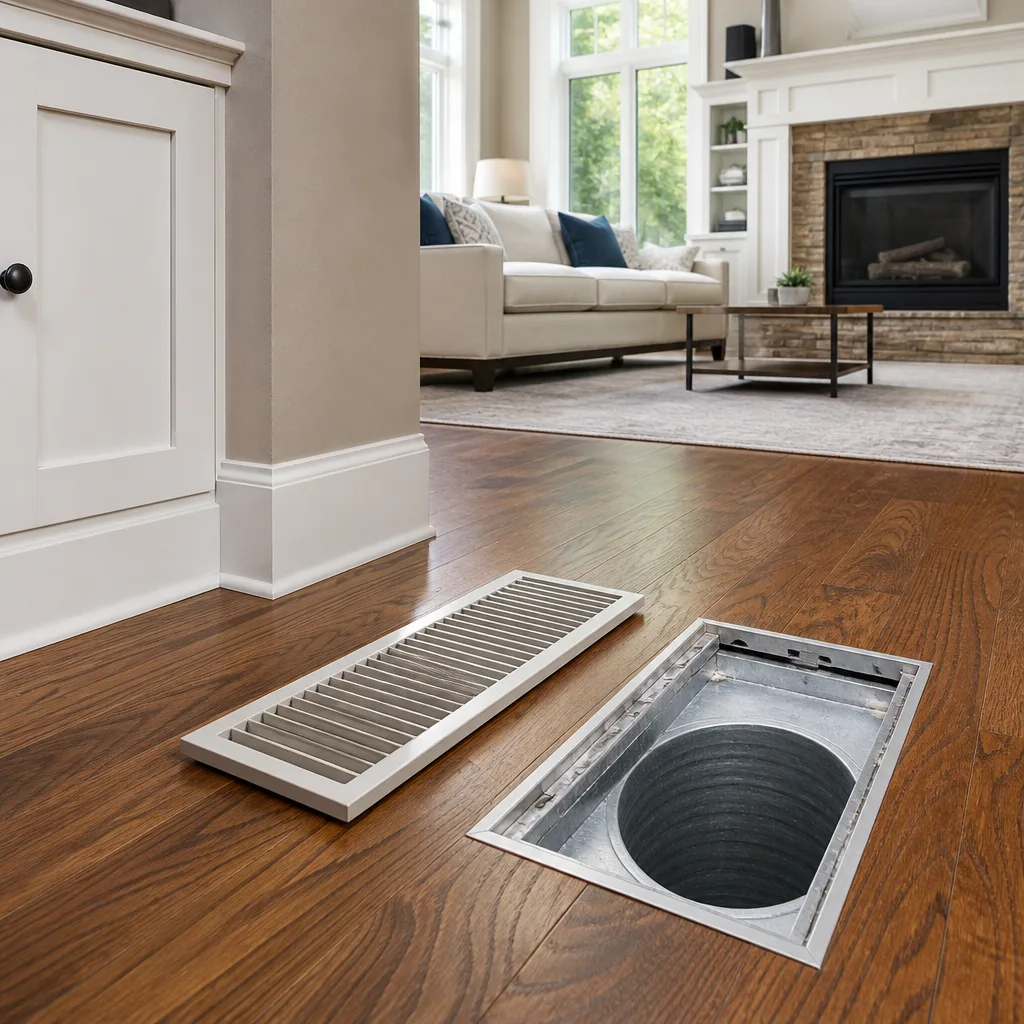 Whole-home duct cleaning
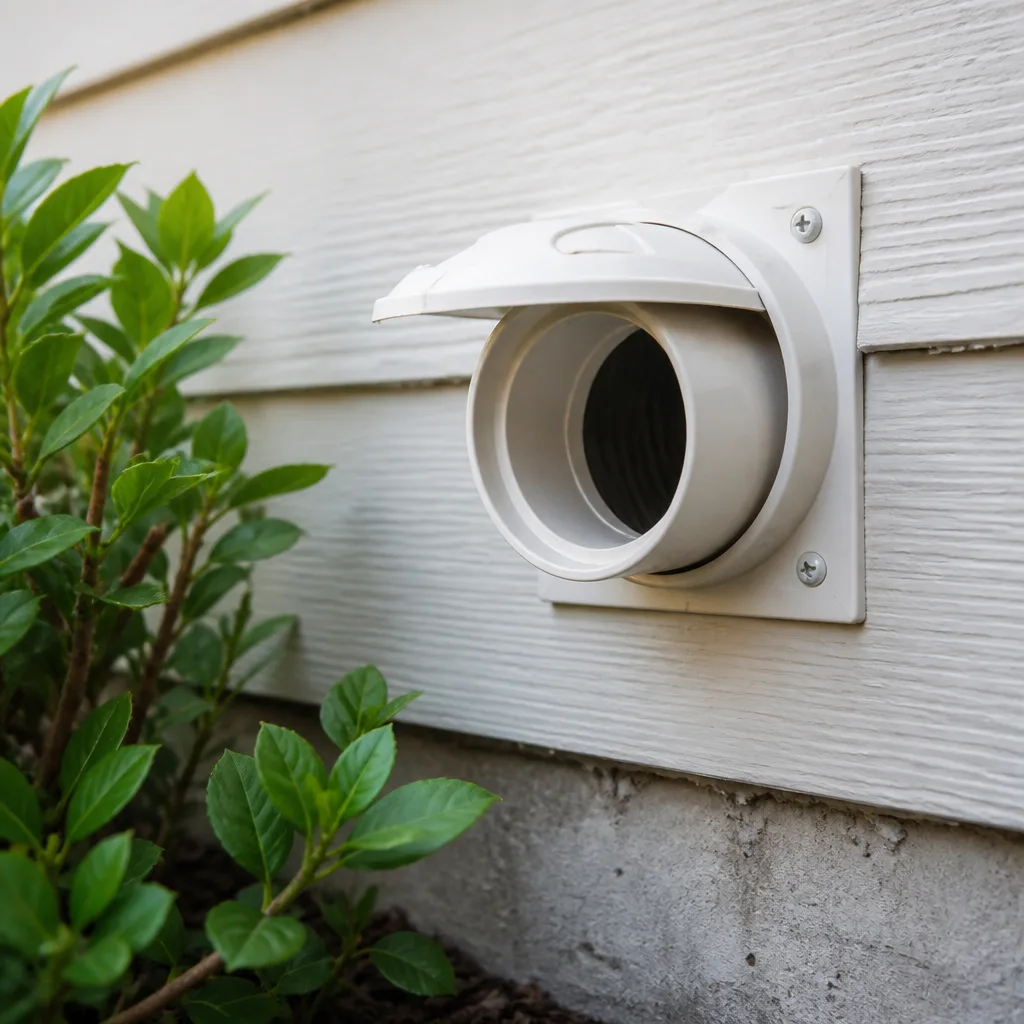 Dryer vent cleaning
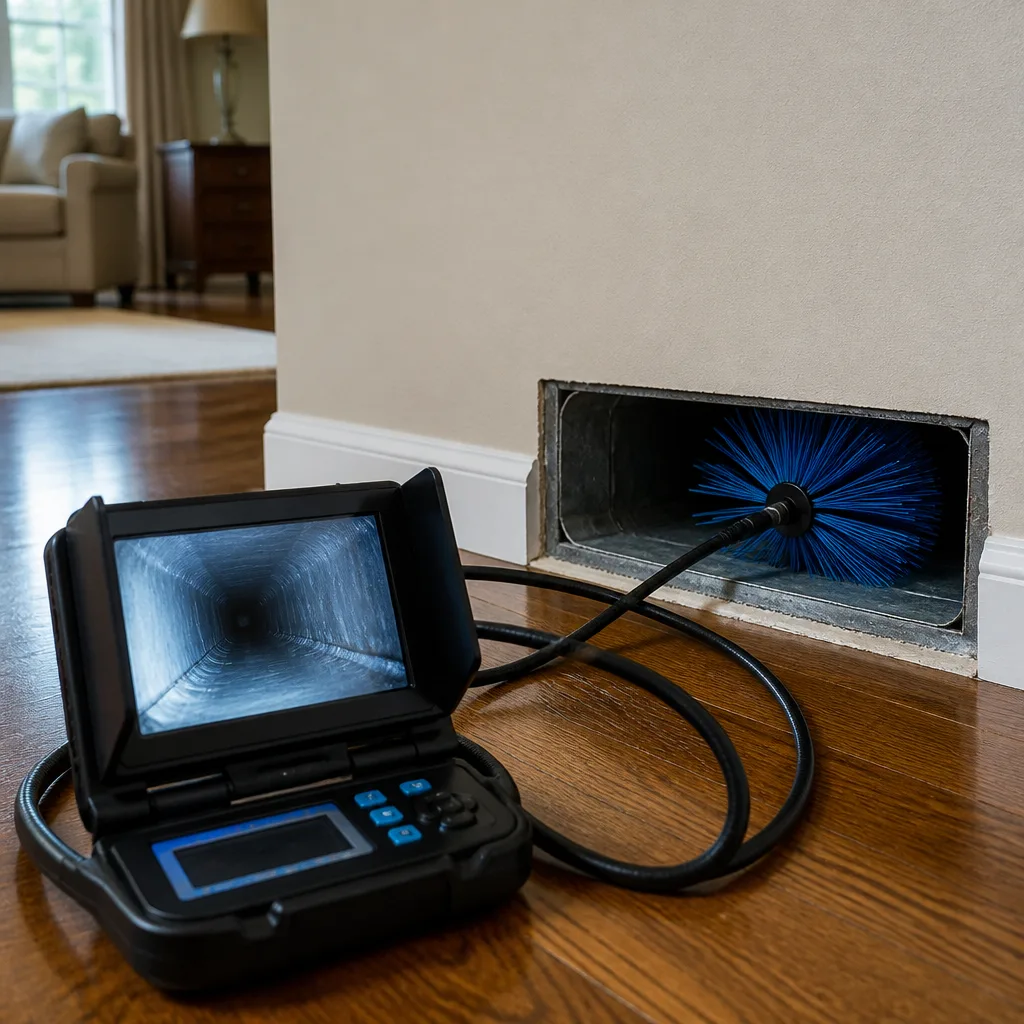 Camera inspection
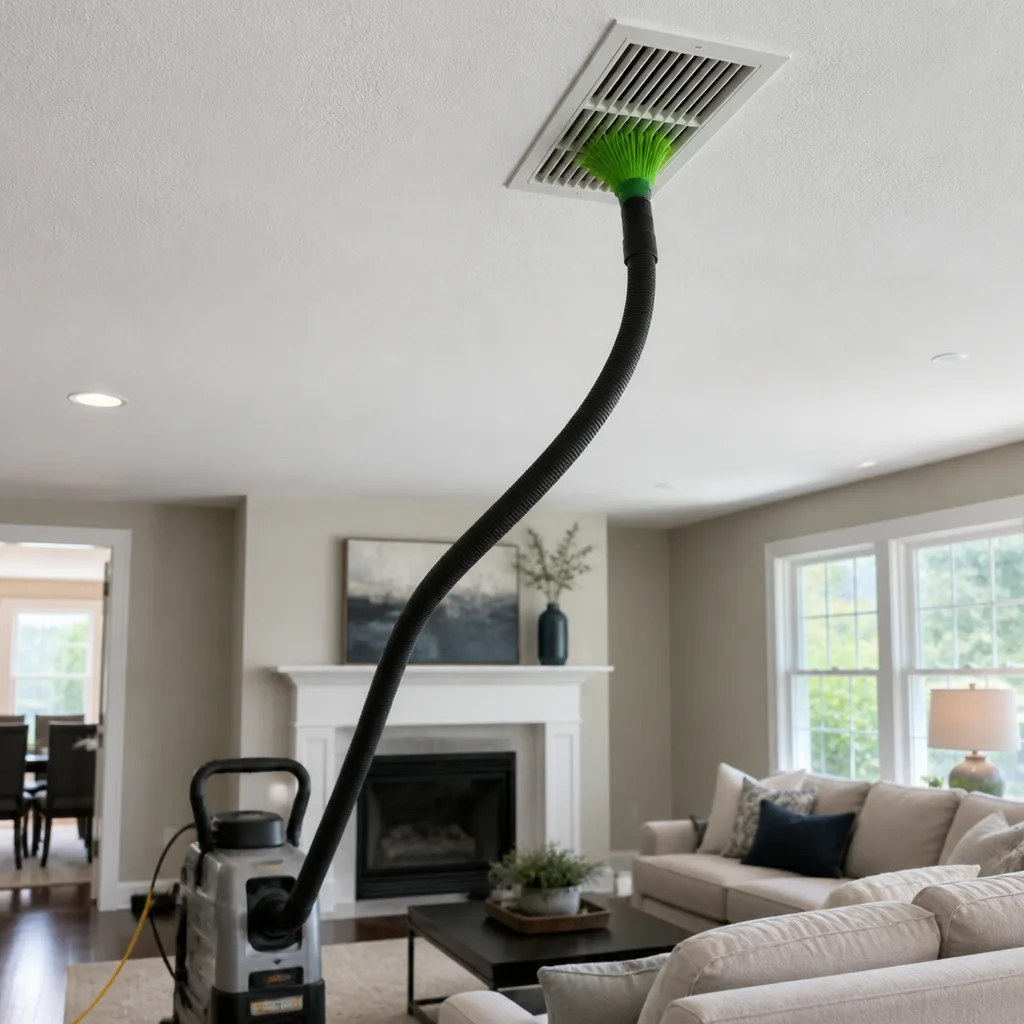 Sanitizing & deodorizing
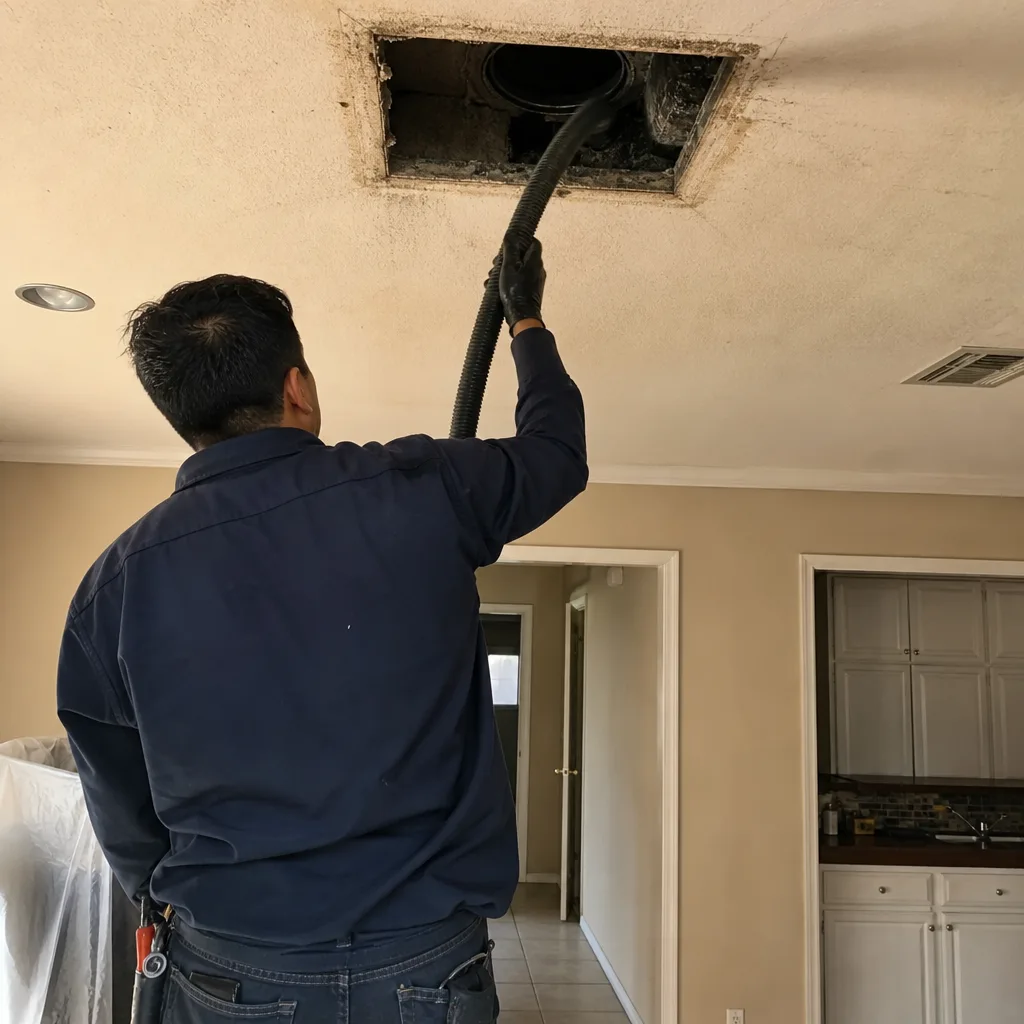
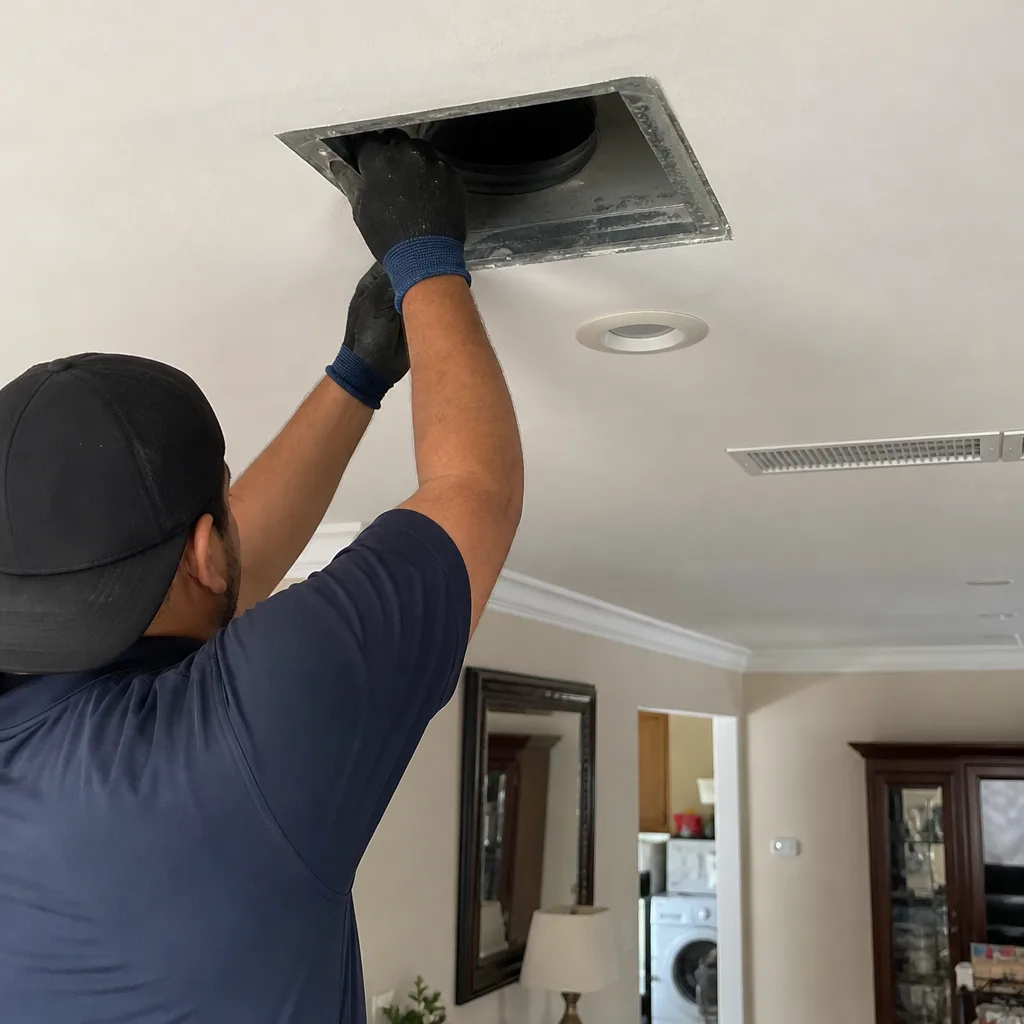
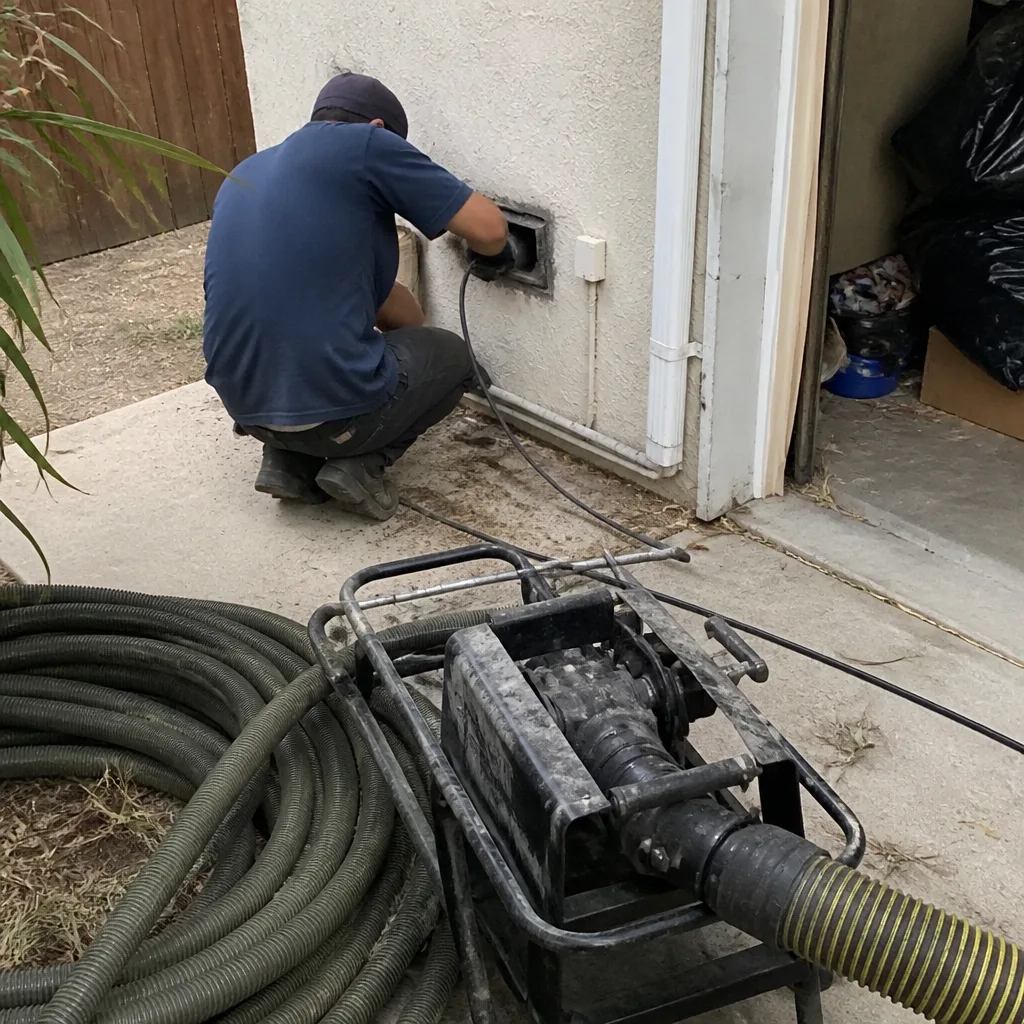
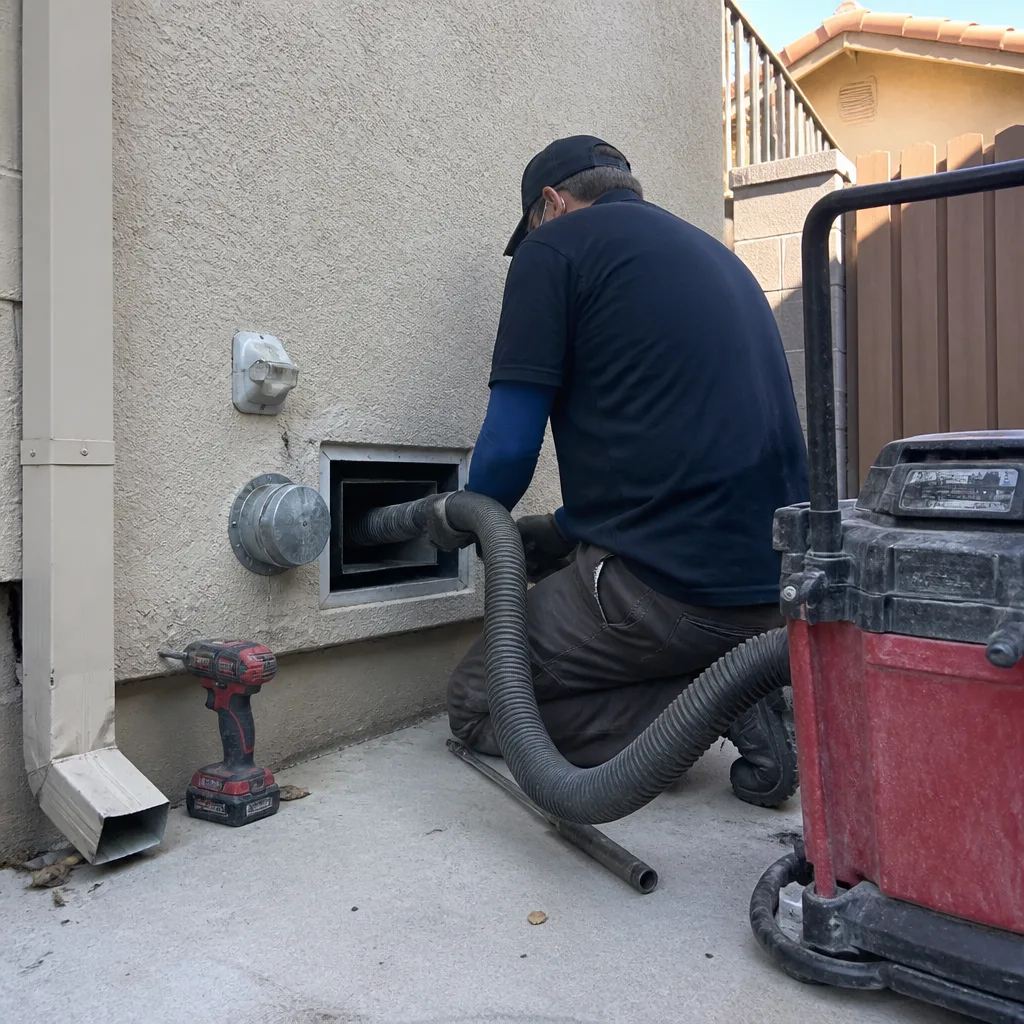
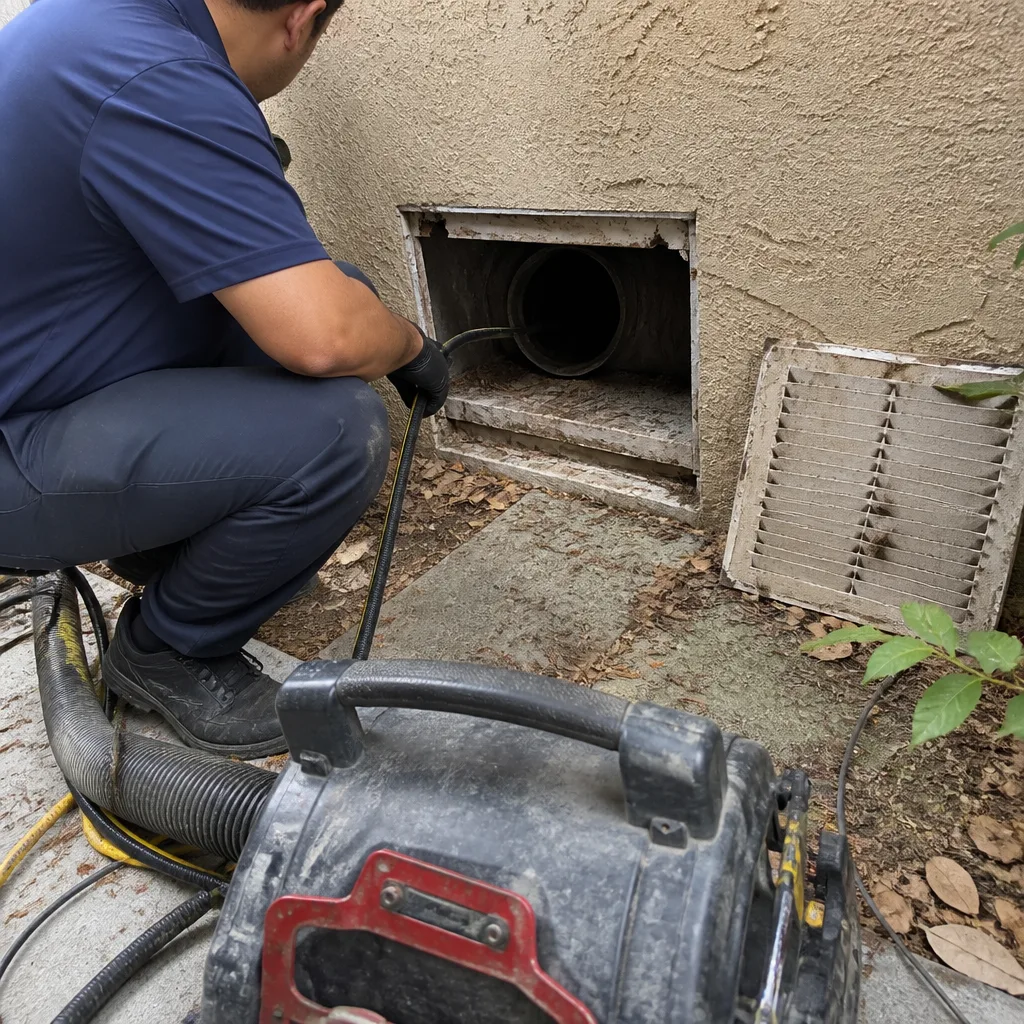
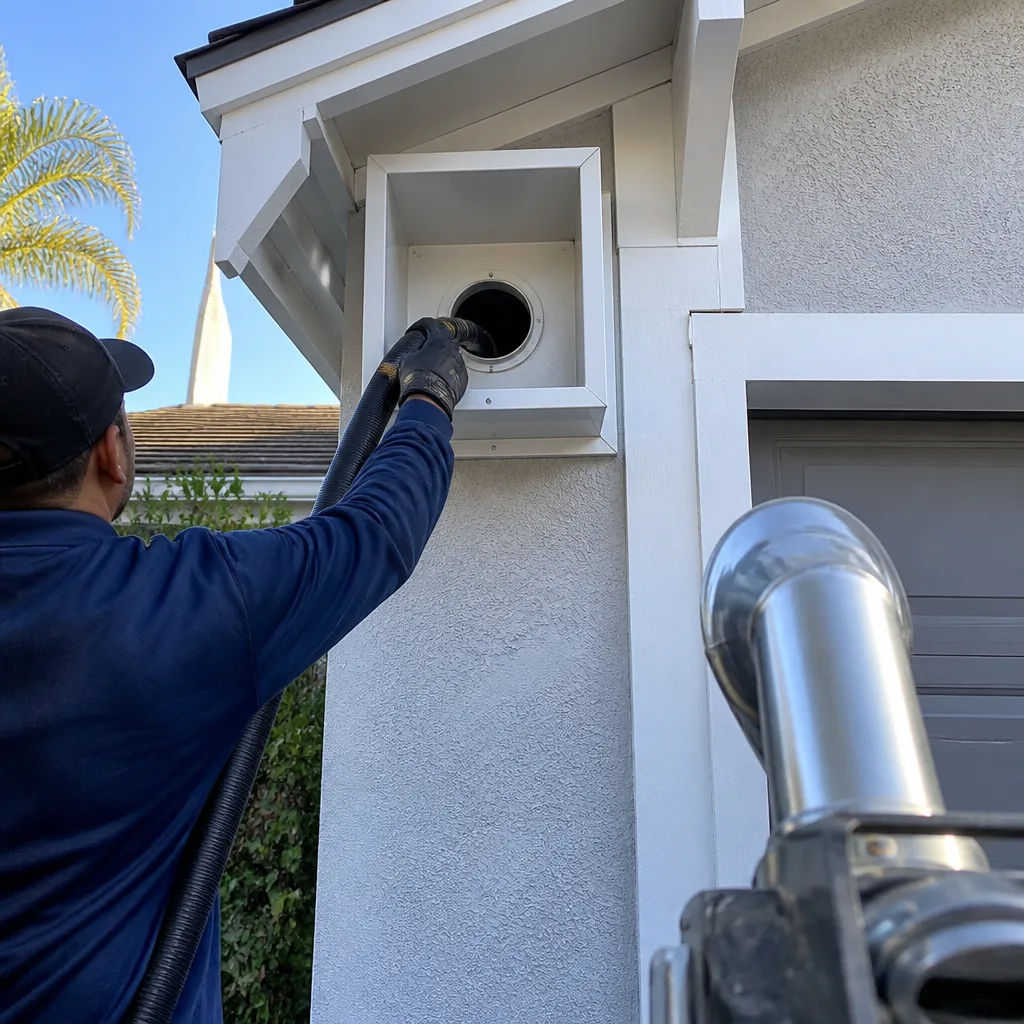
Whole-system duct and dryer vent check with before-and-after photos - you see exactly what came out of your vents
That "$99 whole-house special" is a bait ad - the real number appears once they are in your hallway, or the "clean" is a shop-vac at the register. We photograph the inside of your ducts before and after instead.
DIY vs Professional Air Duct Cleaning: The Anaheim Homeowner’s Decision Guide
A shop vac attached to a dryer vent brush, the standard DIY duct-cleaning setup, operates at roughly 100 cubic feet per minute (CFM) and cannot maintain negative pressure inside a duct system. A professional truck-mount unit runs between 4,000 and 16,000 CFM and physically pulls debris off duct walls through sheer air velocity. These are not different degrees of the same tool. They are different categories entirely. This guide draws a hard technical line between what an Anaheim homeowner can usefully do themselves and where our Air Duct Cleaning services, specifically source-removal systems like the Rotobrush rotary-brush platform and Nikro negative-pressure units, become non-negotiable. By the end, you will know exactly which tasks are safe for a Saturday morning and which ones require a specialist.
Styles & brands we work with
- Whole-home duct cleaning
- Dryer vent cleaning
- Camera inspection
- Sanitizing & deodorizing
Quick Answer
DIY air duct cleaning in Anaheim is limited to surface-level work: removing and washing vent grilles, replacing the HVAC filter, and doing a visual inspection with a flashlight and phone camera. Anything deeper, meaning removal of debris from inside the duct run itself, requires professional negative-pressure or rotary-brush equipment because consumer shop vacs cannot generate the airflow, measured in CFM, needed to pull debris off duct walls. For flex-duct systems common in Anaheim homes, DIY brush attachments also carry real risk of tearing the inner liner, which creates air leaks that bypass the filter entirely. Professional cleaning is unambiguously necessary after construction, rodent intrusion, visible mold, or a system idle for more than 12 months.
Table of Contents
- The Equipment Reality: CFM and Why It Decides the Whole Debate
- What Anaheim’s Climate and Housing Stock Mean for Your Ducts
- The Three Tasks You Can Legitimately Do Yourself
- Why DIY on Flex Duct Is Riskier Than You Think
- Four Scenarios Where Professional Cleaning Is Non-Negotiable
- How to Get Maximum Value From a Professional Visit
- Common Mistakes to Avoid
- When to Call a Professional
- Frequently Asked Questions
- The Bottom Line
The Equipment Reality: CFM and Why It Decides the Whole Debate
The entire DIY-versus-professional question collapses into a single technical number: CFM, or cubic feet per minute. CFM measures how much air a machine moves through the duct system in one minute. That airflow, combined with the static pressure it can generate, is what physically removes debris. Debris in a duct does not sit loose like dust on a shelf. Over months and years, it compacts, adheres to the duct wall, and mixes with moisture from Anaheim’s coastal humidity. Removing it requires mechanical agitation plus sustained airflow strong enough to carry the dislodged material out of the system.
A standard consumer shop vac, the one most homeowners already own and the one most DIY tutorials recommend, moves between 80 and 150 CFM. More importantly, it cannot hold that airflow once attached to a sealed duct run. The motor may peak at 150 CFM in open air, but once connected to a 20-foot flex-duct run with bends and restrictions, static pressure resistance drops effective airflow to a fraction of that number. The result is simple: the debris never lifts off the walls. The vacuum creates a localized draw at the vent opening, but the middle and far sections of the duct never experience airflow sufficient for source removal.
A professional portable unit, like the Nikro systems used by certified indoor air quality contractors, typically moves 2,000 to 5,000 CFM. That changes the physics entirely. At that airflow, a 20-foot flex run experiences air velocity high enough to pull compacted dust, pet dander, and debris into the collection filtration. A truck-mount unit runs even higher, 8,000 to 16,000 CFM, with sealed HEPA or multi-stage filtration on the exhaust side. The Rotobrush system adds a second dimension: a rotating brush head that mechanically agitates the duct wall while the negative-pressure airflow extracts the dislodged debris simultaneously. That combination, mechanical agitation plus sustained extraction, is what the industry calls source removal.
To put Anaheim-scale numbers on it: a typical one-story Anaheim home with a central HVAC system has 200 to 400 square feet of interior duct surface area. A shop vac connected to one vent opening can access maybe 2 to 3 percent of that surface. A professional negative-pressure system connected to the main trunk line, with branch runs sealed and stepped systematically, accesses the entire interior surface. That difference, more than any other factor, is why the DIY debate is not about effort. It is about whether the tool can physically reach the surface where the debris lives.
What Anaheim’s Climate and Housing Stock Mean for Your Ducts
Anaheim presents a specific set of duct conditions that homeowners in other climates do not face. This matters because it changes both the frequency at which ducts accumulate debris and the type of debris that accumulates. The first factor is marine-layer humidity. Even though Anaheim is known for dry, warm days, the overnight coastal influence pushes relative humidity into the 60 to 80 percent range during large parts of the year. That moisture infiltrates unsealed duct runs and causes dust to adhere to duct walls instead of staying loose. It is the difference between dust that falls to the bottom of a rigid duct and dust that cakes onto a flexible liner. The second factor is housing stock age and typology. Anaheim’s single-family homes span postwar tract construction from the 1950s and 1960s, large additions from the 1980s and 1990s, and a significant number of newer developments in the Anaheim Hills area. A 1960s-era home in the Colony district has a different duct reality than a 2005 build in East Anaheim. The older systems often have metal trunk lines, some with internal insulation that has begun to degrade over decades. The newer systems are almost entirely flex duct, which brings its own set of cleaning cautions we will cover in detail below.
There is also a practical maintenance factor unique to southern California homes: the “closed house” pattern. Anaheim residents tend to run air conditioning for long stretches during warm months, with windows closed, meaning the HVAC system is the primary air exchange mechanism for the home. We see the result across hundreds of Anaheim homes each year. The ducts become the filter, not the return grille. Dust that would otherwise settle on furniture gets continuously recirculated through the system. That is why a home with visibly dusty furniture and a clean-looking filter often has ducts that are considerably dirtier than the homeowner expects. For residents who notice persistent dust accumulation on surfaces within days of cleaning, the solution usually is not more furniture polishing. It is source removal from the ducts.
The Three Tasks You Can Legitimately Do Yourself
We are not going to tell you DIY is impossible. There are three specific tasks a homeowner can perform safely and usefully without professional equipment. Doing these well will improve air quality at the margins and, just as importantly, will make a future professional visit more productive. None of these tasks requires you to insert anything into the duct run itself.
Task 1: Grille Removal and Washing
Every supply and return grille in an Anaheim home accumulates a layer of dust, pet hair, and cooking residue on its surface and on the inside face of the register. These grilles are often the first thing you notice when rooms start looking dusty. The process is straightforward: unscrew the grille cover, take it outside or to a utility sink, wash it with warm water and mild dish soap, scrub the louvers with a soft brush, dry it completely, and reinstall. While the grille is off, use a flashlight to inspect the immediate opening. You are looking for visible dust accumulation, debris, or anything that should not be there. Do not reach into the duct with your hands or with a vacuum attachment. The goal at this stage is inspection, not intervention. A clean grille means air can flow freely into the room, and the inspection gives you an honest baseline. If the opening itself is coated in visible dust, that is your signal that the interior of the run needs professional attention.
Task 2: Filter Replacement and Documentation
The filter is the one component of your HVAC system that is explicitly designed for homeowner maintenance. Replace it on a schedule, and make sure you are using the correct MERV rating for your system. For most Anaheim homes, a MERV 8 filter is the safe default. Going higher, to MERV 11 or 13, without confirming your system can handle the increased static pressure, can reduce airflow and strain the blower motor. We regularly see homeowners in Anaheim install high-MERV filters advertised as “allergy filters” and then wonder why their system is short-cycling or rooms are unevenly heated. Document your filter size and the date you replace it. Write the date on the filter frame with a permanent marker. When a professional visits, that documentation tells them immediately how well the system has been protected upstream, and it helps you track whether you are changing the filter often enough for your specific household conditions, whether that is pets, cooking frequency, or remodeling dust.
Task 3: Visual Inspection With a Flashlight and Phone Camera
The single most useful DIY action for duct cleaning is not cleaning at all. It is documentation. Use a flashlight and your phone’s camera to photograph the inside of each accessible duct opening, particularly return registers, which pull unfiltered air from living spaces directly into the system. Record what you find: visible dust accumulation, pet hair, debris, discoloration, or anything that looks like pest activity. Photograph both the duct interior and the surrounding area for reference. This documentation serves two purposes. It gives you an honest, date-stamped record of your system’s condition, and when you contact a professional, those photos help them understand exactly what you are seeing. For How to Hire an Air Duct Cleaning Contractor in Anaheim: A Step-by-Step Guide, having this information ready streamlines the entire process. A homeowner who can say “the return in the hallway shows heavy gray dust accumulation along the bottom of the run” is far ahead of one who simply says “the house is dusty.” If you are in Anaheim and noticing black or gray material around supply vents, that is often discoloration from decades of air movement rather than mold, but it is impossible to know without looking. Document it and get an honest opinion.
Why DIY on Flex Duct Is Riskier Than You Think
Most Anaheim homes built since the 1980s use flex duct for the branch runs connecting the main trunk line to individual supply vents. Flex duct is a spiral wire-reinforced tube with a plastic inner liner, surrounded by fiberglass insulation, wrapped in a foil vapor barrier. It is functional, inexpensive, and flexible, which is why it dominates residential construction. It is also delicate in a way that rigid sheet-metal duct is not.
The inner liner of a flex duct run is a thin plastic or foil layer, typically 1 to 4 mils thick. When a homeowner inserts a rotating brush attachment, particularly one designed for dryer vents and repurposed for HVAC ducts, the brush tips can catch the spiral wire or tear the liner at any point along the run. Even a small tear creates a permanent air leak. That leak pulls attic air, which in Anaheim in July can exceed 120 degrees, into the supply run. The conditioned air you paid to cool leaks out into the attic. The system efficiency drops. And as the leak persists, unfiltered attic air enters the living space, bypassing the filter entirely. That is not a cleaning problem anymore. That is a system-integrity problem requiring Air Duct Repair in Anaheim.
We have also seen DIY attempts where the brush head detaches from the rod inside a flex run, typically at a bend, and the homeowner cannot retrieve it. The brush becomes a permanent obstruction. Removing it requires cutting into the ceiling or flooring above the run. That is the worst-case correction for a task that was intended to save money. The cost of the repair dramatically exceeds the cost of professional cleaning.
The reason professional systems avoid this problem is in the design. The Rotobrush rotary-brush head is sized to the duct diameter, so it makes controlled contact with the duct wall without snagging the wire spiral. The negative-pressure airflow, supplied by the Nikro-class extraction system, keeps the brush head centered and prevents it from binding. A DIY rod and brush assembly, driven by a cordless drill and inserted blindly, has none of those protections. The honest summary: if your Anaheim home has flex duct, and most do, the risk-reward calculation for DIY interior cleaning is heavily tilted against you. Professional Air Duct Cleaning in Anaheim is more than just equipment. It is knowing where the tool can and cannot go safely.
Four Scenarios Where Professional Cleaning Is Unambiguously Necessary
There is a difference between “it would be nice to have the ducts cleaned” and “the ducts need to be cleaned by a professional.” The four scenarios below fall into the second category, without qualification. If any of these describe your Anaheim home, the DIY debate is over, and the only remaining question is scheduling.
Scenario 1: Post-Construction or Major Renovation
Drywall dust, sawdust, paint overspray, and miscellaneous construction debris get pulled into duct systems during any renovation where vents are not sealed. The problem is that typical contractors do not seal the duct openings during construction; the homeowner discovers this only after the project ends and the HVAC system starts circulating fine white dust into every room. Construction dust is extremely fine, often in the sub-10-micron range, meaning it remains suspended in air far longer than household dust. It also packs into the fiberglass insulation of flex duct, where no consumer-grade tool can reach it. Professional cleaning after a renovation is not optional. It is standard practice for any responsible remodeling project.
Scenario 2: Rodent or Pest Intrusion
If you have evidence of rodents in your attic, crawl space, or walls, it is more likely than not that they have been inside your duct system at some point. Rats and mice nest in warm, enclosed spaces, and a flex-duct run in an Anaheim attic is exactly that. The signs are droppings at the vent openings, gnaw marks on the outer vapor barrier, or an ammonia-like odor when the system runs. If this describes your situation, do not attempt to clean the ducts yourself. Rodent waste carries hantavirus and other pathogens. The debris and contaminated insulation must be handled with professional containment. In cases of significant intrusion, the correct action may include duct replacement, not just cleaning. A professional inspection will tell you the difference.
Scenario 3: Visible Mold or Persistent Musty Odor
Anaheim’s humidity patterns mean attic duct systems are regularly exposed to condensation on the exterior of the duct, and if interior moisture accumulates, microbial growth can follow. If you see visible mold, which typically appears as black, green, or gray patches on the interior of the duct, around the vent opening, or on the insulation inside the return, you need professional assessment. But note a critical distinction: professional duct cleaning removes debris and surface contamination. It does not remediate mold in the way a mold-remediation contractor does. What a duct specialist can do is identify the extent of the contamination, clean what can be mechanically cleaned with containment-grade filtration, and recommend whether replacement is warranted. Our team runs Abatement Technologies air filtration during jobs with contamination concerns, because you cannot disturb contaminated material and blow it into the living space. Containment is a core part of the job, not an add-on.
Scenario 4: System Idle for More Than 12 Months
Anaheim has a meaningful number of second homes, rental properties, and inherited homes that sit empty for months or years at a time. A duct system that has been idle for 12 months or longer accumulates dust passively, becomes a home for insects and rodents, and sometimes develops interior corrosion or liner degradation. The first time the system fires up after a long idle, all that accumulated material gets pushed into the living space at once. If you have a home in Anaheim that has been unoccupied for a year or more, treat the duct system as a health and equipment-safety question, not a convenience. Clean it before you live in it.
How to Get Maximum Value From a Professional Cleaning Visit
If you decide professional cleaning is the right call, the work does not stop at the phone call. The difference between an average cleaning visit and a genuinely thorough one comes down to preparation. The steps below take an hour or less and directly improve the quality of the result. This is the difference between paying for a service and getting full value from it.
- Clear Access to Every Grille and Register. Move furniture, rugs, and stored items away from every supply vent and return grille in the home. The technician needs physical access to each opening to seal, clean, and inspect it. If the return is hidden behind a bookshelf or the supply is under a bed, that branch of your system will not get the same level of attention. This is the single most common thing homeowners overlook.
- Photograph the Existing Condition. Before the technician arrives, take photos of the interior of each accessible duct opening, the filter, and the grilles. Document what you see. After the job, compare your photos to the condition and, more importantly, to the before-and-after images any serious provider will share. Verification is the primary defense against unfinished work.
- Document Filter Size and Install Date. Write down the filter size, MERV rating, and the date you last replaced it. This tells the technician whether your accumulation pattern is consistent with normal filter-use intervals or whether something upstream is causing abnormal loading.
- Note Room-by-Room Airflow Observations. Before the visit, pay attention to which rooms feel consistently warmer than others in cooling months, which rooms are stuffy or stale, and which vents seem to move less air when you hold a tissue near them. Write these observations down. They give the technician a diagnostic map before any equipment is connected.
- Identify Any Odors. If you have noticed a musty smell when the system starts, a burning or dusty smell during operation, or any seasonal odors, note when they appear and which rooms they affect. Odors are diagnostic clues. They tell the technician where to look first.
When the technician arrives, share your notes before they start. The most useful thing you can give a professional is an accurate description of what you have observed. It directs their attention to the right areas of the system, which leads to a better outcome than a generic “clean everything” approach.
Common Mistakes to Avoid
- Using a shop vac with a brush attachment inside the duct run. The airflow is insufficient for source removal, and in flex duct the brush can tear the liner or detach and become trapped. The risk of turning a $500 cleaning into a $2,000 repair is real. We have removed detached brush heads from Anaheim duct systems more than once.
- Installing a high-MERV filter without verifying system compatibility. A MERV 13 filter in a system designed for MERV 8 increases static pressure, reducing airflow and forcing the blower motor to work harder. It can also cause the system to freeze up in summer, which is why we see this mistake primarily in warm months. Confirm compatibility before upgrading filtration. If whole-home air quality is the goal, that conversation usually involves Honeywell filtration or purification products, which are designed for integration, not improvised changes.
- Attempting to clean a duct with evidence of mold or rodent activity. Disturbing contaminated material without containment spreads it through the living space. If you see droppings, visible mold, or smell a persistent musty odor, this is a professional situation and a safety issue, not a DIY task.
- Using duct tape to seal leaks or reconnect separated sections. Duct tape, despite the name, is not rated for duct systems. It degrades under temperature cycling and falls off. Proper sealing requires foil-backed UL-rated tape or mastic. We frequently see old gray duct tape peeling off flex-duct connections in Anaheim attics, leaving gaps that have been pulling attic air for years.
- Cleaning ducts as a response to general household dust without checking the vacuum and filter first. In some homes, the primary dust source is not the duct system at all. It is a leaking central vacuum exhaust, an aging carpet, or a clogged dryer vent. A professional assessment will tell you which problem you are actually solving. If the dryer vent is the culprit, that is a fire-prevention issue and belongs with Dryer Vent Cleaning in Anaheim, not duct cleaning.
- Waiting until the ducts are visibly dirty at the grille to schedule cleaning. What you can see at the grille is a small fraction of what is in the system. By the time the visible accumulation is significant at the vent openings, the interior of the run is often heavily loaded. Visual grille condition is a late-stage signal, not an early warning.
When to Call a Professional
The clean answer: call a professional when you need anything more than grille washing, filter replacement, or visual inspection. That means post-construction or renovation work, post-rodent or pest intrusion, any visible mold or persistent musty odor, a system idle for more than a year, or a home where dust returns within days of cleaning and your filter is already being replaced on schedule. It also includes any Anaheim home with flex duct where you are considering interior brush cleaning. The risk of liner damage simply outweighs the cost savings. Duct Cleaning Anaheim offers free estimates in Anaheim, call (866) 596-8314 to schedule an inspection. We work with Rotobrush rotary-brush extraction, Nikro negative-pressure systems, and Abatement Technologies containment filtration, and if the inspection reveals damaged sections, we can repair them during the same visit.
Frequently Asked Questions
Professional air duct cleaning in Anaheim typically costs between $450 and $1,200 for a standard single-family home, depending on the number of vents, the accessibility of the system, the presence of contamination, and whether the home has multiple HVAC systems. A single-system home with 10 to 15 vents and accessible duct runs will generally fall in the $500 to $800 range. Homes with attic or crawl-space access challenges, significant contamination, multiple systems, or flex-duct damage will run higher. The only way to get an accurate number is to have a professional inspect the system and provide a written estimate based on what they see. At Duct Cleaning Anaheim, estimates are free and based on a walkthrough of your system, not a phone script. Call (866) 596-8314 for an exact quote.
The single biggest reason for price variance in duct cleaning is the difference between a surface pass and source removal. A company that runs a shop vac or a small portable unit through each vent for 10 minutes can offer an aggressively low price because the job takes 45 minutes and requires no expensive equipment. It also removes very little from the interior of the duct run. A company running a professional negative-pressure or rotary-brush system is doing a fundamentally different job, with equipment costs in the tens of thousands of dollars, longer service times, multistage filtration, and a trained technician. The low quote is not a better deal on the same service. It is usually a quote for a different, much shallower service. We recommend asking any provider what CFM their equipment moves and whether they perform mechanical agitation. A real answer to those two questions tells you everything you need to know. Call (866) 596-8314 if you want to hear exactly what equipment we run and why.
The answer is documentation, and the standard is before-and-after photography. Before the job starts, a serious provider photographs the interior of the duct system at the return plenum, the main trunk, and representative branch runs. After cleaning, the same locations are photographed again. You should see a visible difference in the images, not just a verbal assurance. Some providers use video inspection as an alternative or supplement to still photos. If a company does not offer before-and-after documentation, treat that as a red flag. This is the one deliverable that separates a legitimate source-removal cleaning from a sales call with a vacuum attachment. At Duct Cleaning Anaheim, the photos are part of the service, not an upsell.
Most Anaheim homes benefit from professional duct cleaning every 3 to 5 years, with significant variation based on household specifics: pets, smoking, cooking frequency, recent renovation, the home’s age, and whether the property sits near a construction zone or major road. A home with two large shedding dogs and a teenager who cooks nightly will load its ducts far faster than a two-person household without pets. The honest answer is not a fixed interval; it is a function of what the system looks like when inspected. We recommend a professional inspection if you have not had one in several years, if the home recently changed hands, or if you are noticing persistent dust despite regular filter changes. An inspection is not a commitment to clean. It is a factual answer to the question of whether cleaning is needed.
You can clear the first few feet of the dryer vent with the standard brush-and-drill kits sold at hardware stores, and for very short, straight runs that may be adequate. However, most Anaheim homes have dryer vent runs that extend 10 to 30 feet, often with multiple bends, through the wall, into the crawl space, or up through the attic. Consumer brush kits simply cannot reach the full run, and the lint accumulation at the far end is exactly where the fire risk concentrates. The U.S. Fire Administration links clogged dryer vents to thousands of house fires annually, and the agency recommends annual professional cleaning for most households. This is a fire-prevention service, not a convenience. If your vent run is longer than the brush you are using, the job is incomplete. Dryer Vent Cleaning in Anaheim is a separate service from duct cleaning, and any serious duct specialist should offer it.
Look for three things. First, equipment: ask specifically what brand and type of cleaning and extraction equipment they use. A real professional should be able to name the system, like the Rotobrush platform or Nikro negative-pressure units, and explain what it does mechanically. A company that cannot or will not answer is a red flag. Second, documentation: require before-and-after photography of the duct interior as a standard part of the service. Third, scope: a legitimate duct specialist will inspect first, quote a flat price for the defined scope, and be able to identify and address damaged duct sections during the same visit. If the company also handles dryer vent cleaning as a fire-safety service, rather than a casual add-on, that signals genuine HVAC hygiene expertise rather than a carpet-cleaning business with a duct attachment. Duct Cleaning Anaheim meets all three criteria, and we invite you to call (866) 596-8314 and ask us directly unless you would rather see it for yourself.
The Bottom Line
DIY duct cleaning is not a myth; it is a narrow thing with a narrow scope. You can wash grilles, replace your filter, and photograph your system. Those are legitimate tasks that improve your understanding and set up a better professional cleaning down the line. What you cannot do with consumer equipment is achieve source removal from inside a duct run, because no shop vac generates the CFM required to pull compacted debris off duct walls in a 20-foot flex run. The tools simply do not operate in the same category. In a city like Anaheim, where flex duct dominates and coastal humidity makes dust adhere rather than stay loose, that distinction has real consequences. If your ducts need actual source removal, call a professional. Duct Cleaning Anaheim home and our related service pages will tell you exactly what we run, how we document, and what it costs. Call (866) 596-8314 to schedule a free estimate.
Written by the team at Duct Cleaning Anaheim, serving Anaheim since 2011.
See the difference
 Before
 After
 Before
 After
 Before
 After