
Last updated November 3, 2026
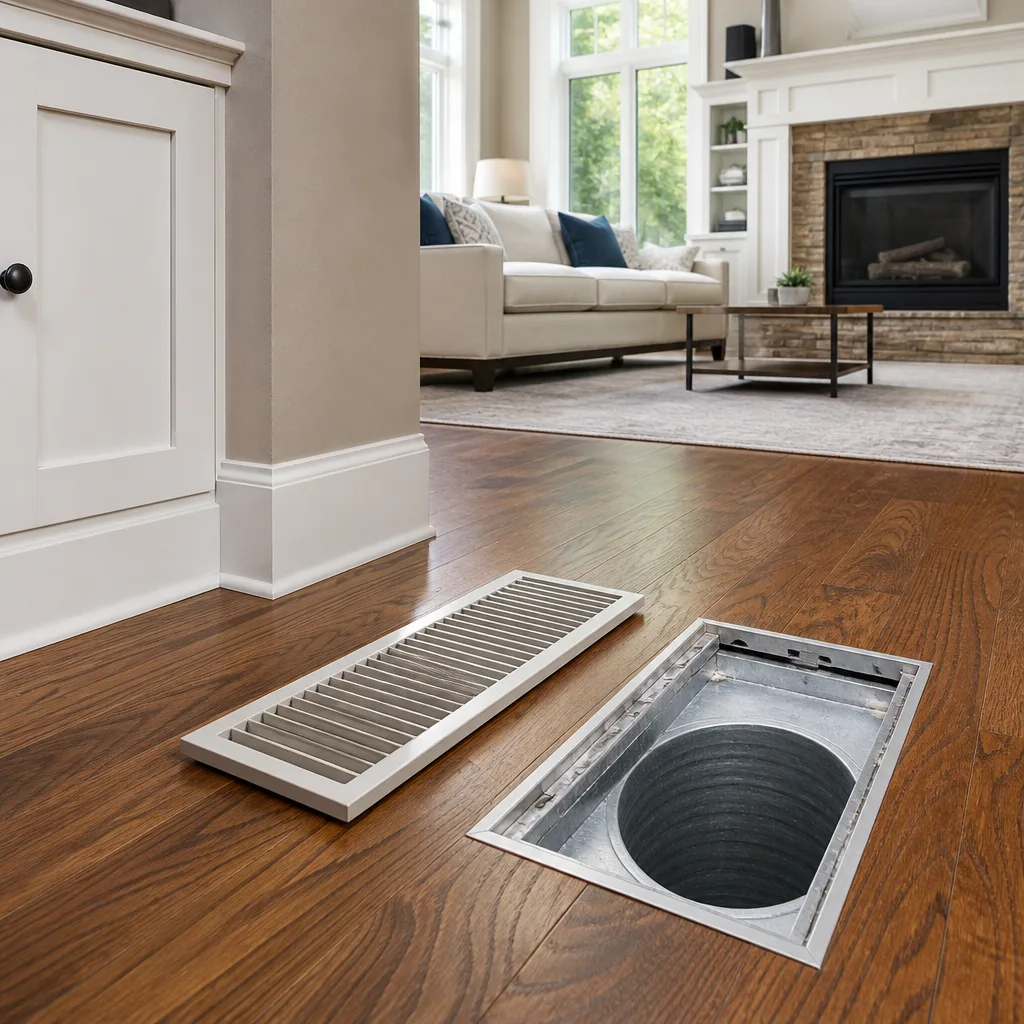 Whole-home duct cleaning
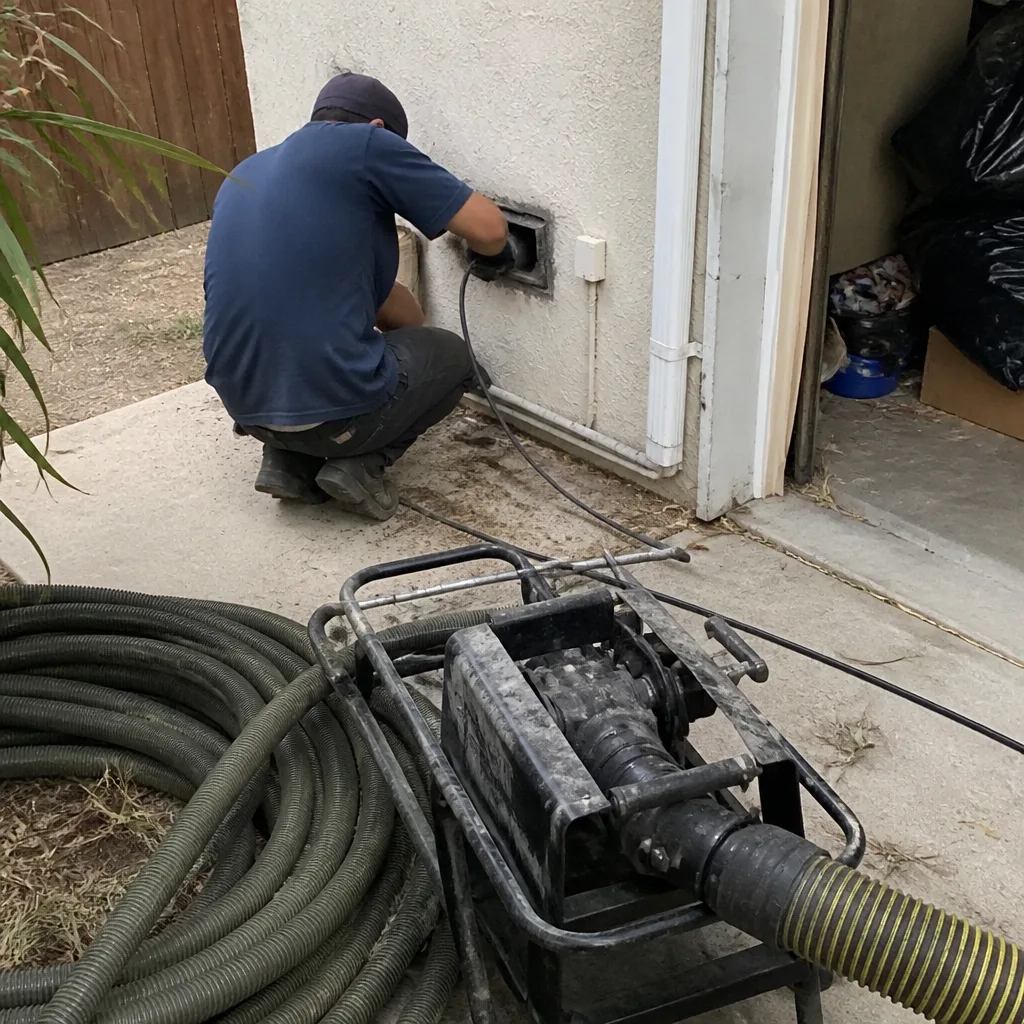
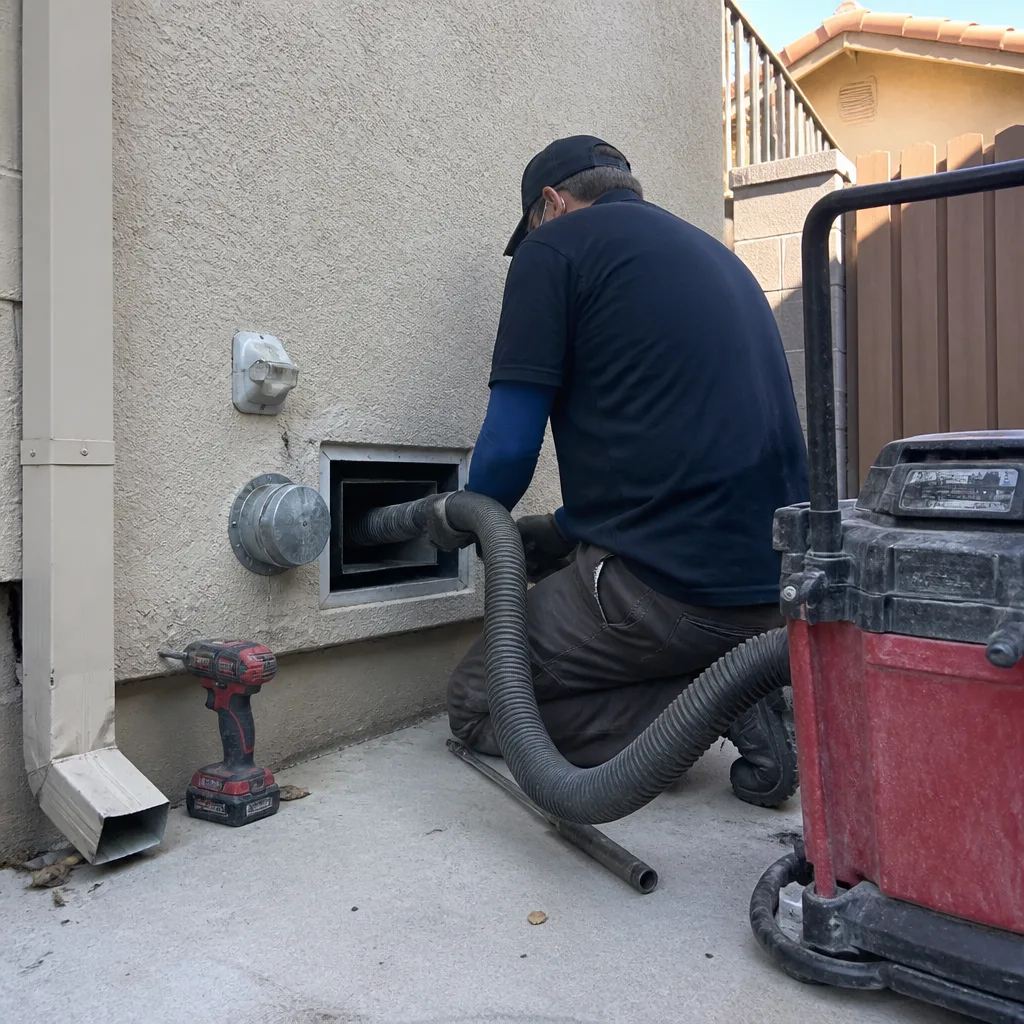
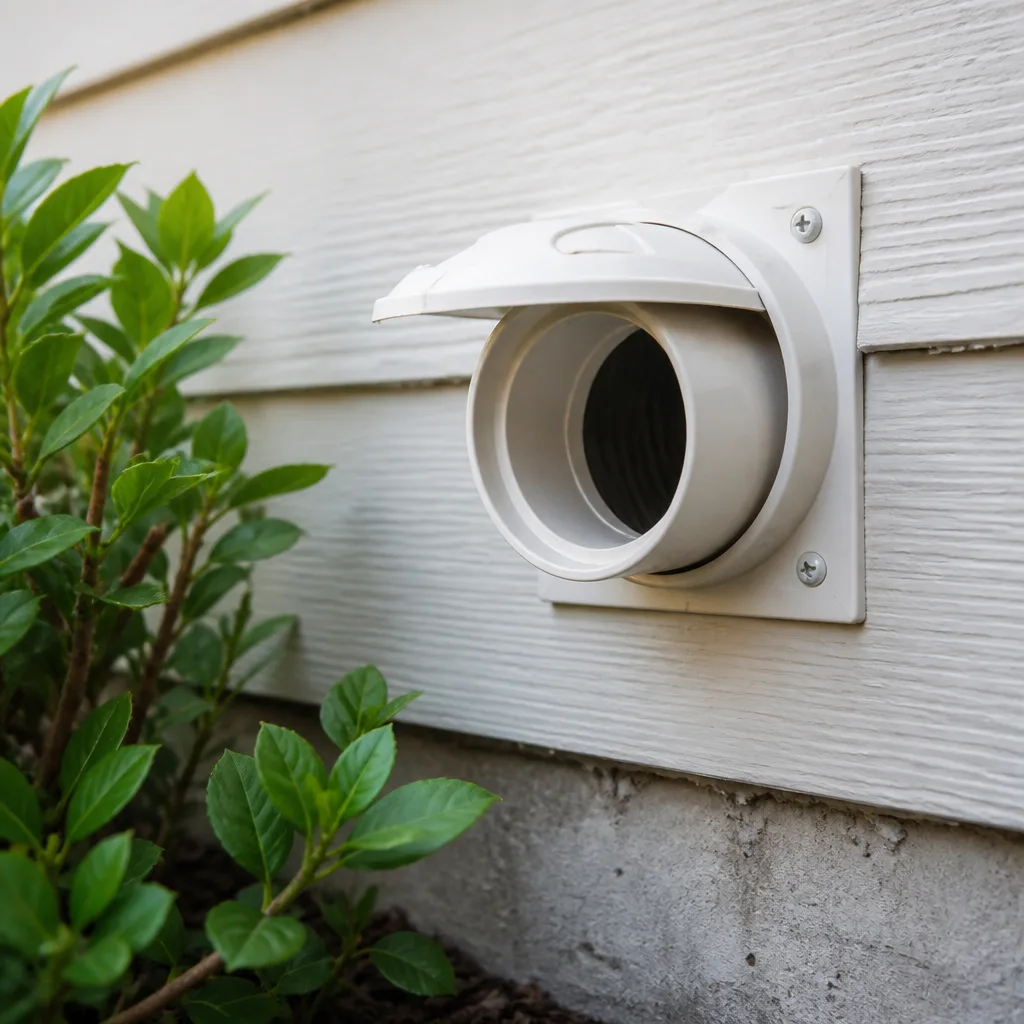 Dryer vent cleaning
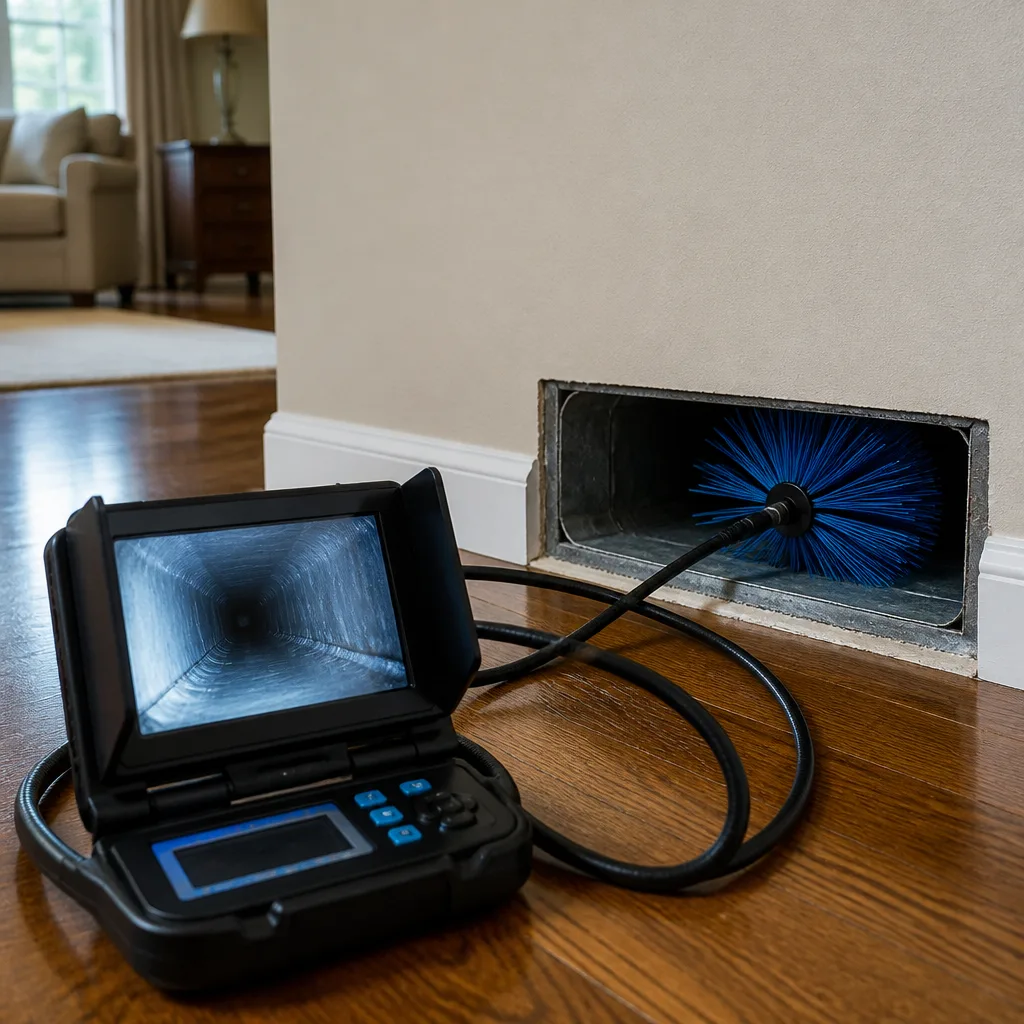 Camera inspection
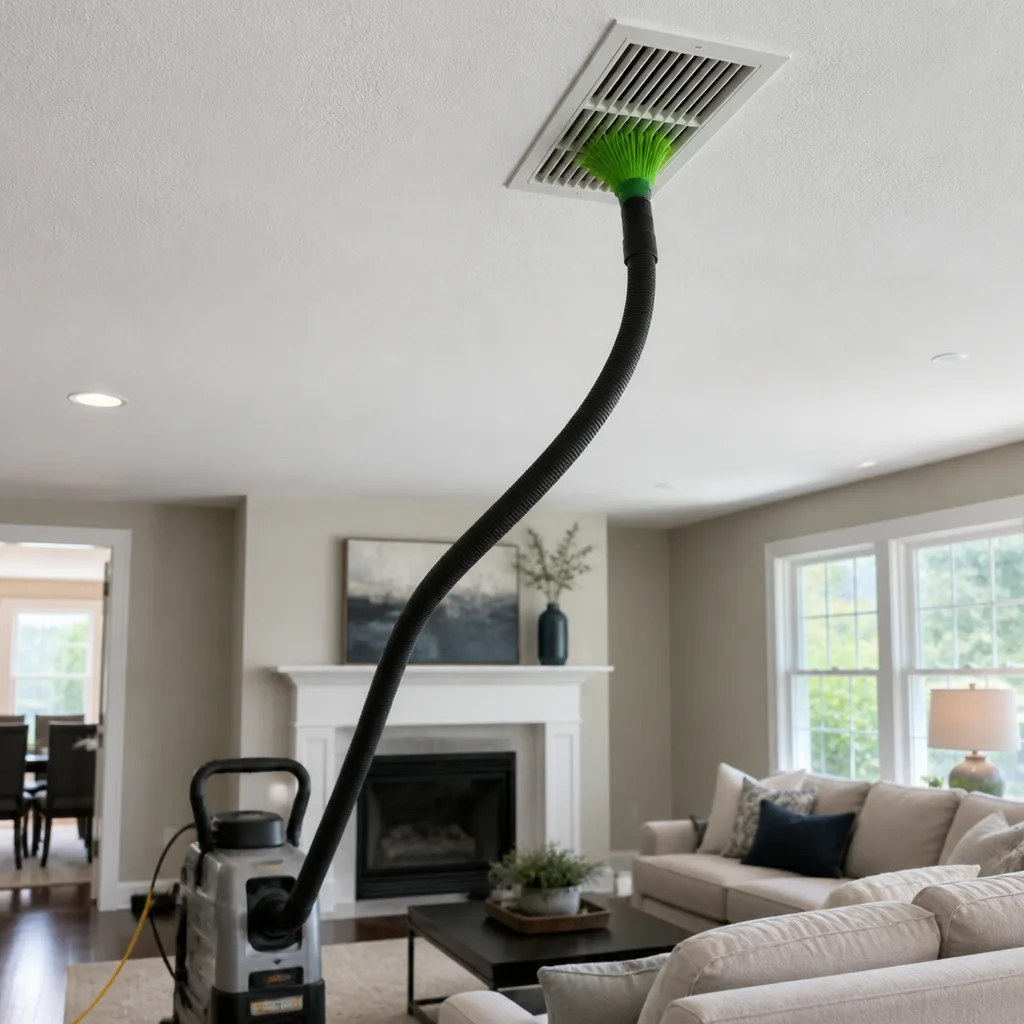 Sanitizing & deodorizing
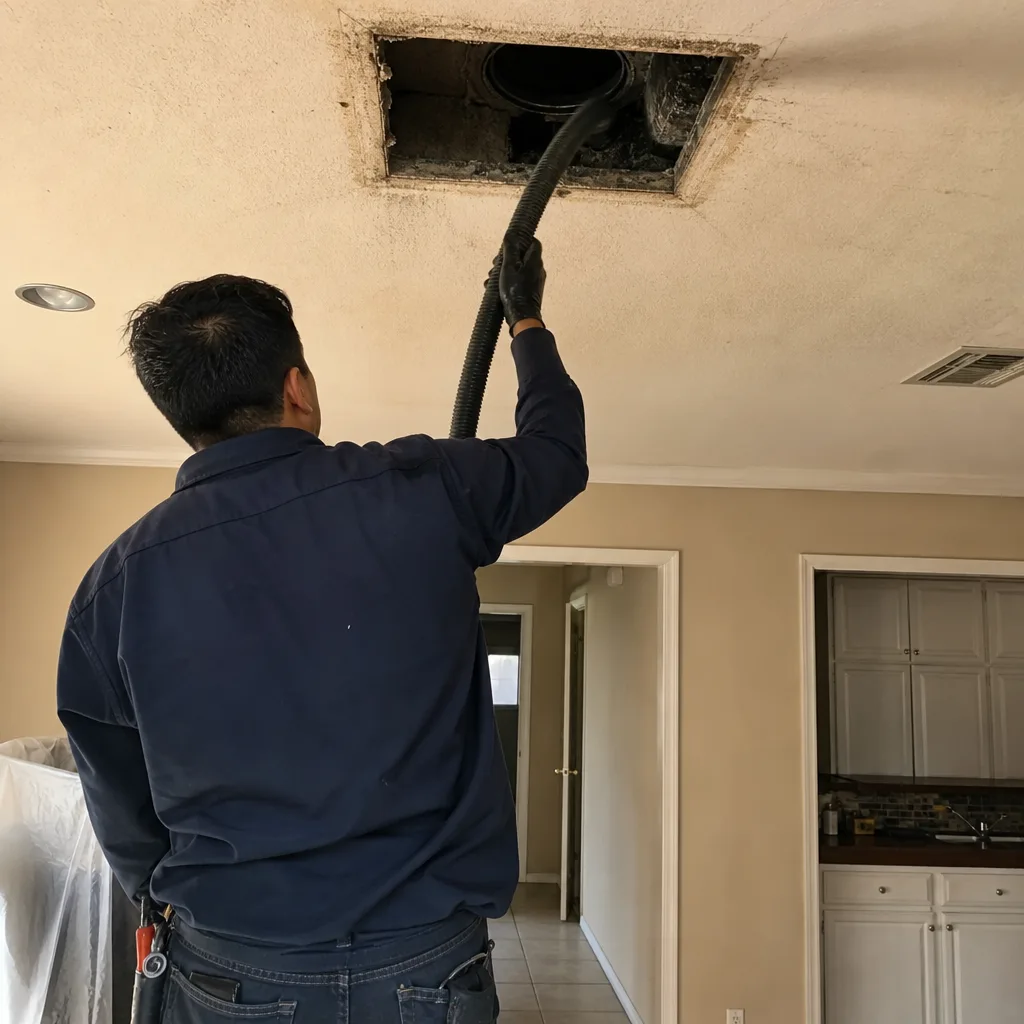
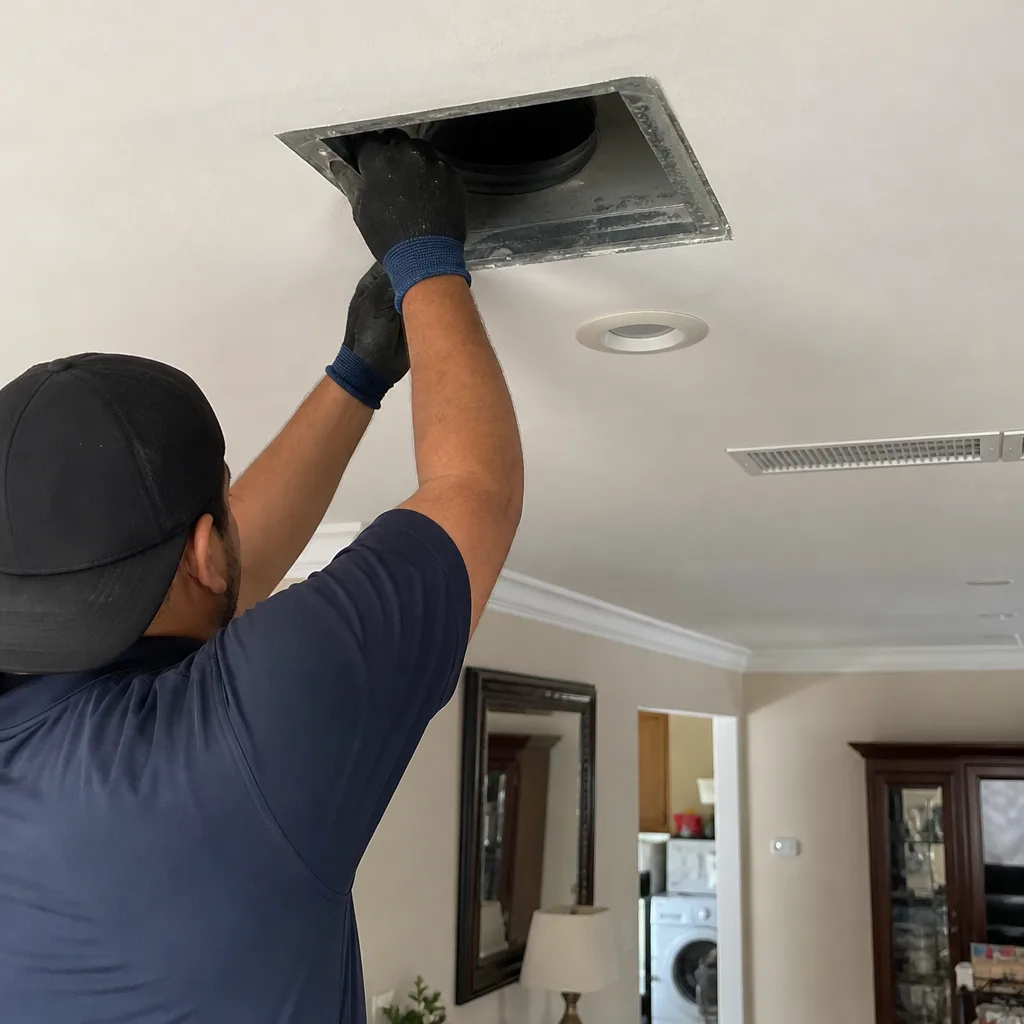
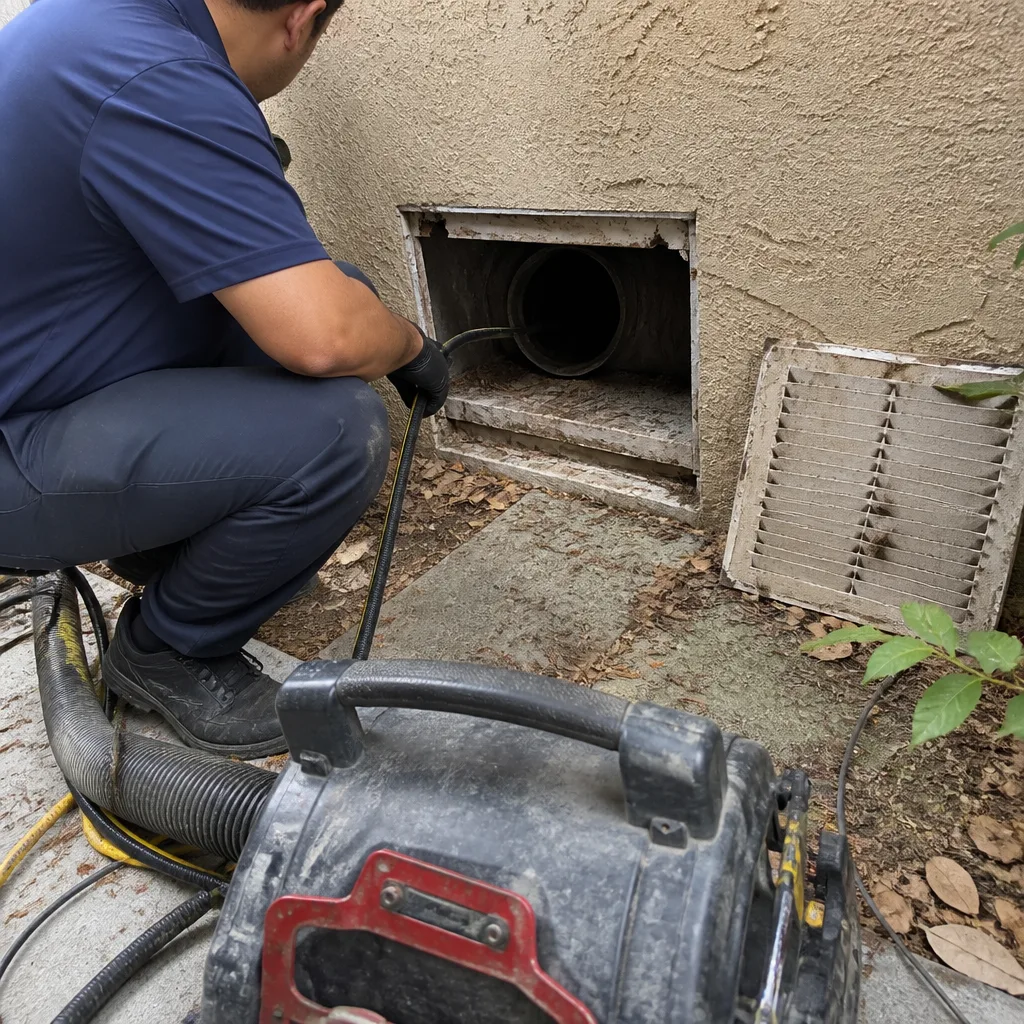
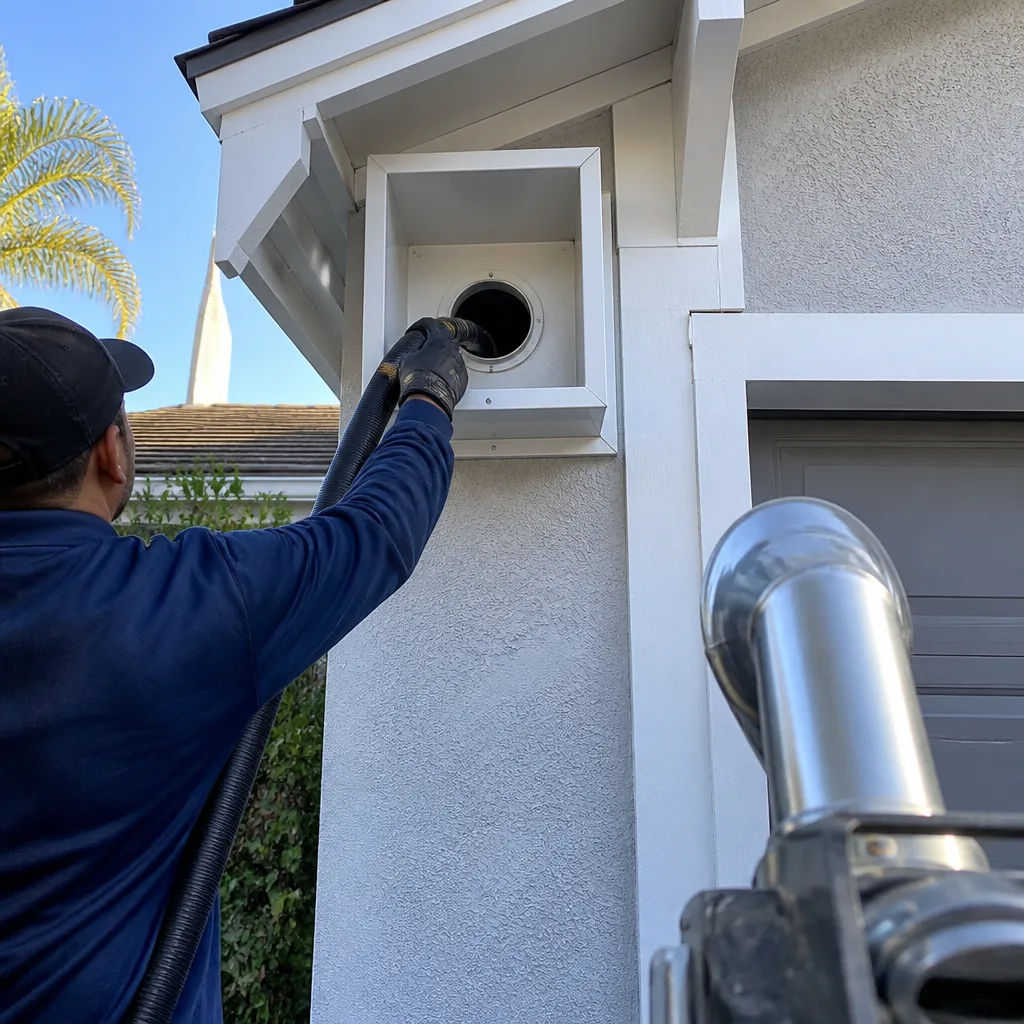
Whole-system duct and dryer vent check with before-and-after photos - you see exactly what came out of your vents
That "$99 whole-house special" is a bait ad - the real number appears once they are in your hallway, or the "clean" is a shop-vac at the register. We photograph the inside of your ducts before and after instead.
The Complete Air Duct Cleaning Guide for Anaheim Homeowners
Most duct cleaning guides were written for climates with four seasons. Anaheim runs its AC 10 months a year, which means your ducts accumulate debris at a rate that “clean every 3 – 5 years” advice was never designed for. Add Santa Ana wind events, wildfire smoke seasons, and the fine dust that settles into every tract home from the 5 and 91 freeways, and you have a duct contamination profile that generic national guides completely ignore. This guide treats Anaheim ducts as a local engineering problem, not a universal maintenance checkbox. For a deeper dive, see The Complete Guide to Air Duct Cleaning in Anaheim. You’ll learn what actually builds up in your system, which cleaning methods work on Anaheim’s typical flex-duct construction, and how to spot a contractor who’s improvising versus one following a real protocol.
Quick Answer
Air Duct Cleaning services in Anaheim typically costs $350 – $700 for a whole-home system and takes 2 – 4 hours when done to NADCA protocol with negative-pressure equipment. Homes in Anaheim should consider cleaning every 2 – 3 years due to continuous AC operation and wildfire particulate loading, not the 3 – 5 year interval quoted in national guides. The most important factor is equipment: a truck-mounted vacuum pulling at least 2,000 CFM with rotary agitation, not a portable unit or shop vac.
Styles & brands we work with
- Whole-home duct cleaning
- Dryer vent cleaning
- Camera inspection
- Sanitizing & deodorizing
Table of Contents
- Why Anaheim’s Climate Creates a Different Duct Problem
- Flex Duct vs. Sheet Metal: What’s in Your Anaheim Home
- The NADCA Protocol: What a Real Cleaning Actually Requires
- Why Negative Pressure Matters More in Anaheim
- Equipment Benchmarks: What CFM Actually Gets the Job Done
- Signs Your Ducts Need Cleaning in Anaheim
- What Air Duct Cleaning Costs in Anaheim
- Common Mistakes to Avoid
- When to Call a Professional
- Frequently Asked Questions
Why Anaheim’s Climate Creates a Different Duct Problem
Anaheim sits in a semi-arid climate zone with an average annual rainfall around 14 inches and relative humidity that often drops below 30% during fall months. That low humidity means one thing for ducts: fine, dry particulate that stays airborne longer and travels deeper into your system. In humid climates, dust gets heavy, settles quickly, and stays near return registers. In Anaheim, the opposite happens. Light particulate from the 5, 57, and 91 freeways, construction dust from infill development, and the fine silt that kicks up during Santa Ana wind events all get pulled into return grilles and carried through the entire duct network.
Wildfire season adds a second layer. Smoke from the Cleveland National Forest and San Bernardino Mountains burns contains PM2.5 particles, the kind small enough to lodge deep in lung tissue. These same particles, measuring 2.5 microns or smaller, penetrate standard fiberglass filters and deposit along duct walls, especially in the supply plenum where air velocity drops and particles fall out of the airstream. In our experience cleaning Anaheim systems after fire seasons, we regularly find a fine gray film coating the inside of supply ducts that standard brushing alone won’t dislodge. It requires negative-pressure extraction combined with mechanical agitation to actually remove.
Continuous AC operation compounds the issue. When your system runs 10 months a year, the air volume moving through ducts is roughly double what a four-season climate would see. Double the air volume means double the particle loading. A home in Minneapolis might need duct cleaning every 5 – 7 years. An Anaheim ranch home with a single-zone system running daily from March through November needs service on a 2 – 3 year cycle. That’s not an upsell; it’s arithmetic.
Flex Duct vs. Sheet Metal: What’s in Your Anaheim Home
Most Anaheim homes built since the 1980s use flexible duct, or flex duct, for the branch runs that connect the main trunk to individual supply registers. Flex duct is a wire coil wrapped in insulation with a plastic inner liner. It’s cheap to install, which is why tract builders liked it, but it has specific failure modes that sheet metal doesn’t. The inner liner develops pinholes, the insulation can separate from the liner, and the duct can sag or kink if supports weren’t spaced properly during installation. Those problems affect both air quality and system efficiency.
Sheet metal ducts, more common in Anaheim homes built before 1980 and in some custom builds, are rigid and durable. They hold up better to aggressive cleaning methods. But they also have seams and joints that can separate over time, especially in a climate where the house moves slightly with temperature swings. When a joint separates, your system pulls attic air, crawlspace air, or wall-cavity air into the supply stream, bypassing the filter entirely.
The cleaning method matters by material:
- Flex duct: Requires controlled agitation. Rotary brushes must be gentle enough not to tear the liner. Excessive negative pressure can collapse the duct if it’s already sagging or kinked. Cleaning flex duct requires an operator who knows how to read the duct’s condition before applying mechanical force.
- Sheet metal: Can handle more aggressive rotary brushing and higher negative pressure. The risk here is at joints and seams, where aggressive brushing can loosen connections that were already marginal. After cleaning, joints should be inspected and sealed if needed.
- Mixed systems: Very common in Anaheim, especially in homes with additions or partial renovations. The original trunk might be sheet metal with flex branch runs. A proper cleaning treats each section according to its material, not one-size-fits-all.
We run Rotobrush rotary-brush systems for mechanical agitation on both materials, but the operator adjusts brush pressure and speed based on what we’re actually looking at. A technician who treats flex duct and sheet metal identically is guessing, not cleaning.
The NADCA Protocol: What a Real Cleaning Actually Requires
NADCA, the National Air Duct Cleaners Association, publishes the ACR standard, Assessment, Cleaning, and Restoration of HVAC Systems. It’s the closest thing this industry has to a real protocol, and it’s what separates a professional cleaning from someone running a vacuum hose around your registers. Here’s what the standard actually requires, step by step, in plain language:
- System inspection: Before any cleaning begins, the contractor should inspect the supply side, return side, coil, blower, and plenums. This identifies material types, access point locations, and any damage that already exists. If a contractor starts cleaning without inspecting, they’re not following a protocol.
- Source removal: The standard requires “source removal” methods, meaning mechanical agitation that dislodges debris from duct surfaces. Brushing, compressed air, or other agitation tools must contact the duct walls. Suction alone is not source removal.
- Negative pressure containment: The system must be placed under negative pressure during cleaning so that dislodged debris flows out of the duct and into the collection equipment, not back into the living space. This requires a vacuum unit that exceeds the airflow volume of the duct system being cleaned.
- Access creation: Cleaners should cut or open access points at strategic locations to reach all sections of the system. After cleaning, access points must be sealed with proper caps or patches. In flex duct systems, access is often created at the plenum or trunk rather than through branch runs.
- Component cleaning: The standard includes the blower motor, housing, coil, drain pan, and plenums, not just the duct runs. Many low-bid cleaners skip these components entirely, which means the system re-contaminates within weeks.
- Final inspection: After cleaning, the contractor should show you the interior of the ducts, typically with photos or video, so you can verify the work. If a contractor won’t show you the inside of your own ducts before and after, that’s a red flag.
We use Nikro industrial duct cleaning equipment built for NADCA-compliant work. The negative-pressure units and rotary brushes are professional-tier, the same category of gear certified IAQ contractors run. When you’re getting quotes, ask the contractor to walk you through their process against these six steps. If they can’t, they’re improvising.
Why Negative Pressure Matters More in Anaheim
Negative pressure, in duct cleaning terms, means the cleaning vacuum pulls more air out of the duct system than the duct system normally carries. That creates a pressure differential where any dislodged debris gets pulled toward the vacuum intake rather than drifting out of registers into your home. It’s the difference between cleaning your ducts and redistributing the dust from your ducts into your bedrooms.
This matters more in Anaheim for a specific reason: the contaminants are finer and more hazardous. Wildfire PM2.5 particles and fine road dust don’t just settle on the bottom of ducts. They coat the entire inner surface, including the top and sides of vertical risers and the underside of horizontal runs. Dislodging that film requires agitation, but agitation alone without proper negative pressure sends those particles airborne in the worst possible place: your living space.
Abatement Technologies air filtration equipment, the same category used in mold remediation and asbestos abatement jobs, adds a second layer of protection. During cleaning, we run containment filtration that captures displaced particles before they can re-enter the home. This is containment-grade gear, not a box fan with a filter taped to it. In a city where fire-season particulate is a genuine indoor air quality concern, that level of containment isn’t overkill. It’s the minimum that makes sense.
A proper negative-pressure setup also changes how cleaning feels from the homeowner’s perspective. You shouldn’t see dust billowing from your registers during cleaning. You shouldn’t smell a musty odor that lingers. You shouldn’t find a layer of dust on your furniture when the crew leaves. If any of those things happen, the vacuum wasn’t pulling enough air, and the crew was cleaning by pushing debris around instead of extracting it.
Equipment Benchmarks: What CFM Actually Gets the Job Done
CFM, cubic feet per minute, is the airflow rating you need to understand when comparing duct cleaning equipment. It’s the single most useful number for separating professional gear from consumer-grade rigs. Here’s the practical math for Anaheim homes:
- Portable electric units (400 – 800 CFM): Found on discount cleaning rigs. Capable of pulling air through maybe 25 – 40 feet of 6-inch duct. A typical Anaheim ranch home has duct runs of 40 – 80 feet. These units cannot maintain negative pressure on a whole-home system. They’re adequate for spot cleaning, nothing more.
- Mid-range truck-mounted units (1,200 – 1,800 CFM): Can handle smaller single-story homes with short runs. For a 1,200 sq ft Anaheim condo or small ranch, this range can work if the operator is skilled and the system is in good condition.
- Professional truck-mounted units (2,000+ CFM): This is the benchmark for a 2,000 sq ft Anaheim ranch-style home with standard flex-duct branch runs. At 2,000 CFM, the vacuum can maintain proper negative pressure across the entire system while the rotary brush agitates duct walls. This is what Nikro and comparable industrial systems deliver.
The math is straightforward: your AC system moves a certain volume of air when it runs. The cleaning vacuum needs to move more air than that to create negative pressure. A 2,000 sq ft home in Anaheim typically has a 3 – 4 ton AC system moving 1,200 – 1,600 CFM. A cleaning vacuum at 2,000+ CFM exceeds that comfortably. A portable unit at 600 CFM doesn’t come close.
Ask any contractor what CFM their vacuum pulls and what size home their equipment is rated for. If they can’t answer both questions immediately, they don’t understand the physics of what they’re doing. If you’d like to see this math applied to your specific Anaheim home, our Air Duct Cleaning in Anaheim page covers our equipment specs in detail.
Signs Your Ducts Need Cleaning in Anaheim
Some signs are obvious. Others are specific to Anaheim’s climate and construction patterns. Here’s what we tell homeowners to look for:
- Dust returns within 48 hours of cleaning surfaces: If you dust your furniture and it’s visibly coated again within two days, your ducts are recirculating particulate. This is especially visible in Anaheim homes during Santa Ana wind events, when outdoor dust load is highest.
- Gray or black film around supply registers: This is not always mold. In many Anaheim systems, it’s a combination of wildfire particulate and fine road dust that’s been deposited and then blown back out. But it deserves inspection either way.
- Uneven airflow between rooms: Some rooms blast cold air while others stay warm. This can indicate duct blockages, crushed flex duct, or disconnected joints, all of which are common in Anaheim tract homes.
- Musty odor when the AC kicks on: This suggests moisture has been present somewhere in the system. In Anaheim’s dry climate, mold growth in ducts is less common than in humid regions, but it can occur at the coil and drain pan if condensation isn’t draining properly. Continuous AC operation in summer raises the amount of condensation produced, which is why coil inspection should be part of any cleaning.
- Recent renovation or construction: If you’ve had drywall work, flooring replacement, or any project that generated dust, that dust went somewhere. In most cases, it went into your return registers and through your system.
- First year in a previously owned home: You have no documentation of when the ducts were last cleaned. In Anaheim’s resale market, systems are routinely neglected for years before a sale. Many buyers discover this the first summer, when the AC runs constantly and dust appears everywhere.
If your ducts show damage during inspection, cleaning alone won’t solve the problem. Our Air Duct Repair in Anaheim service handles torn flex duct, disconnected joints, and collapsed sections in the same visit as the cleaning. There’s no point cleaning a system that’s pulling attic air through a gap.
What Air Duct Cleaning Costs in Anaheim
Anaheim pricing follows the structure of the local housing market. Here’s what a proper NADCA-compliant cleaning with professional equipment should run:
| Home Size | Typical Duct Configuration | Price Range | Time Required |
|---|---|---|---|
| Up to 1,200 sq ft (condo, small ranch) | Single system, 8 – 12 registers | $350 – $450 | 2 – 3 hours |
| 1,200 – 2,000 sq ft (standard Anaheim ranch) | Single system, 12 – 16 registers | $400 – $600 | 3 – 4 hours |
| 2,000 – 3,000 sq ft (larger tract or two-story) | Single or dual system, 16 – 22 registers | $550 – $750 | 4 – 6 hours |
| 3,000+ sq ft (custom, multi-zone) | Dual system, 20+ registers | $700 – $1,100 | 6 – 8 hours |
These ranges assume a standard cleaning with no major repairs. If inspection reveals damaged flex duct, disconnected joints, or a coil that needs separate attention, the price adjusts. Any contractor quoting significantly below these ranges is either not doing source removal, not cleaning the full system, or planning to find “problems” once they’re inside.
The single most important pricing position is this: one flat price per system, agreed before work starts. No per-vent pricing, no pressure to add services you didn’t ask for. If a quote is built on per-vent pricing, that’s the bait-and-switch model the industry is infamous for. You get a low number over the phone, then the technician finds “additional vents” or “extra contamination” and the bill doubles. The honest model is a flat price based on home size and system configuration, quoted before anyone starts work.
For information on air quality products that complement duct cleaning, our experience with Honeywell and Aprilaire filtration and humidity control systems helps homeowners understand their options beyond just clearing debris. And if your dryer vent hasn’t been cleaned recently, that’s a separate fire-safety service, which our Dryer Vent Cleaning in Anaheim page covers in detail. The U.S. Fire Administration links clogged dryer vents to thousands of house fires annually, and Anaheim’s dry climate makes lint ignition risk real year-round.
Common Mistakes to Avoid
- Hiring based on coupon price alone. A $99 whole-home duct cleaning in Anaheim is not a real duct cleaning. It’s a loss leader designed to get a technician in your home to find upsell opportunities. The equipment needed to do the job properly costs more than $99 per job to operate and maintain. If the price doesn’t make sense for the contractor, the job doesn’t make sense for you.
- Skipping the pre-cleaning inspection. Any legitimate contractor will inspect your system before cleaning, usually with a camera or scope. If a crew shows up and immediately starts cutting access holes without showing you the interior condition, they’re working blind. You want before-and-after documentation, and that requires a before.
- Accepting “suction only” cleaning. A vacuum hose without mechanical agitation does not clean ducts. It might remove loose debris near the registers, but the film coating the duct walls stays put. NADCA requires source removal, which means agitation. If the contractor’s process description doesn’t include brushing or air washing, walk away.
- Ignoring the coil and blower. Your AC coil is the coldest surface in the system, and in Anaheim’s continuous-cooling environment, it condenses moisture constantly. That’s where microbial growth starts. Cleaning the ducts while leaving a contaminated coil in place is like washing your car but leaving mud on the wheels.
- Not checking for duct damage before cleaning. Flex duct in Anaheim tract homes is often 20 – 40 years old. Torn inner liners, sagging sections, and disconnected joints are common. Cleaning a damaged system can worsen existing problems. Have the system inspected for integrity first, and if damage is found, get it repaired in the same visit rather than cleaning around it.
- Assuming your HOA or builder handled it. New construction in Anaheim, especially in master-planned communities, often leaves construction debris in the ducts. Drywall dust, sawdust, even fasteners and small debris. Builders do not clean ducts before turnover, and HOAs don’t include duct cleaning in their maintenance scope. If you’re the first or second owner of a tract home, that debris may still be in your system.
- Waiting for a problem to become obvious. By the time you see visible mold or dust pouring from registers, the system has degraded significantly. In Anaheim’s continuous-use climate, problems compound quickly. A cleaning every 2 – 3 years is preventive maintenance in this market, not an optional luxury.
When to Call a Professional
Some duct situations are genuinely beyond what any homeowner should attempt. If you see visible mold growth inside ducts or on the coil, you need professional assessment, not DIY treatment. If your flex duct is torn, sagging, or disconnected, that’s a repair job requiring proper materials and sealing methods. If your dryer vent hasn’t been cleaned in more than a year, the fire-safety risk warrants professional equipment, especially in Anaheim’s dry air. If you’ve had a wildfire smoke event in your area, fine particulate has almost certainly entered your system, and standard HVAC filter changes won’t remove what’s already deposited in the ducts. Duct Cleaning Anaheim offers free estimates in Anaheim – call (866) 596-8314 to schedule an inspection.
Frequently Asked Questions
Every 2 – 3 years in Anaheim is the honest answer for most homes. The city’s continuous AC operation, wildfire-season particulate, and freeway-adjacent dust load mean your system accumulates debris faster than national averages. If you have pets, someone with allergies or asthma in the home, or you live near a freeway or construction site, the 2-year end of that range is more appropriate. Call (866) 596-8314 for a free assessment based on your specific home and situation.
Expect $350 – $700 for a standard single-family home in Anaheim, depending on size and system configuration. A 1,500 sq ft ranch should land around $400 – $550. Prices below $200 for a whole-home cleaning are not for real NADCA-protocol work with professional equipment, and quotes should be flat per system, not per vent. Call (866) 596-8314 for an exact quote – estimates are free.
Cheaper quotes almost always mean one of three things: the contractor is using under-powered portable equipment, they’re skipping source removal and doing suction-only passes, or they’re running a bait-and-switch operation where the low price gets them in the door and the “findings” generate the real invoice. A proper cleaning requires truck-mounted negative-pressure equipment rated 2,000+ CFM, mechanical agitation, and 2 – 4 hours of labor. That costs money to deliver. If the price is suspiciously low, the work is suspiciously incomplete.
Demand before-and-after photos or video of the duct interior. A legitimate contractor will scope your system with a camera before cleaning, show you what’s there, then show you the same locations after cleaning. If a contractor resists showing you the interior of your own ducts, that’s a red flag. Our crews document every job, and you’ll see the difference in writing on the duct walls, not just a clean bill from the technician. Call (866) 596-8314 to ask about our documentation process.
Yes. Dryer vent cleaning is a different service from air duct cleaning, with different equipment and a different purpose: fire prevention. The U.S. Fire Administration links clogged dryer vents to thousands of house fires every year, and lint accumulation inside the vent is a leading cause. In Anaheim’s dry climate, that lint is tinder. Our Dryer Vent Cleaning in Anaheim service treats this as fire-safety work, not a bolt-on upsell. If you can’t remember the last time your dryer vent was cleaned, it’s overdue.
It can reduce the amount of particulate circulating through your home, which matters for people with respiratory conditions. But duct cleaning is not a medical treatment, and it’s not a substitute for proper filtration. For Anaheim homes dealing with wildfire-season particulate, we often recommend pairing duct cleaning with better filtration. Our familiarity with Honeywell and Aprilaire filtration systems helps us advise on whole-home air quality, not just duct condition. Cleaning removes what’s already deposited; filtration reduces what keeps coming in.
The Bottom Line
Anaheim’s duct systems face a specific set of challenges: continuous AC use, wildfire particulate, freeway dust, and aging flex-duct infrastructure in tract homes. The national advice to clean every 3 – 5 years doesn’t apply here. Every 2 – 3 years is the realistic interval for most Anaheim homes, and the cleaning method matters as much as the timing. Source removal with mechanical agitation, negative-pressure containment from professional equipment, and inspection of the coil, blower, and duct integrity are non-negotiable parts of a real job. The price should be flat per system, documented with before-and-after evidence, and delivered by a contractor who understands Anaheim’s specific contamination profile. If you’re in Anaheim and your system is due, get an inspection before you get a cleaning. For more guides & resources on keeping your indoor air clean, explore our blog. You’ll know exactly what you’re dealing with.
Written by the team at Duct Cleaning Anaheim, serving Anaheim since 2011.
See the difference
 Before
 After
 Before
 After
 Before
 After